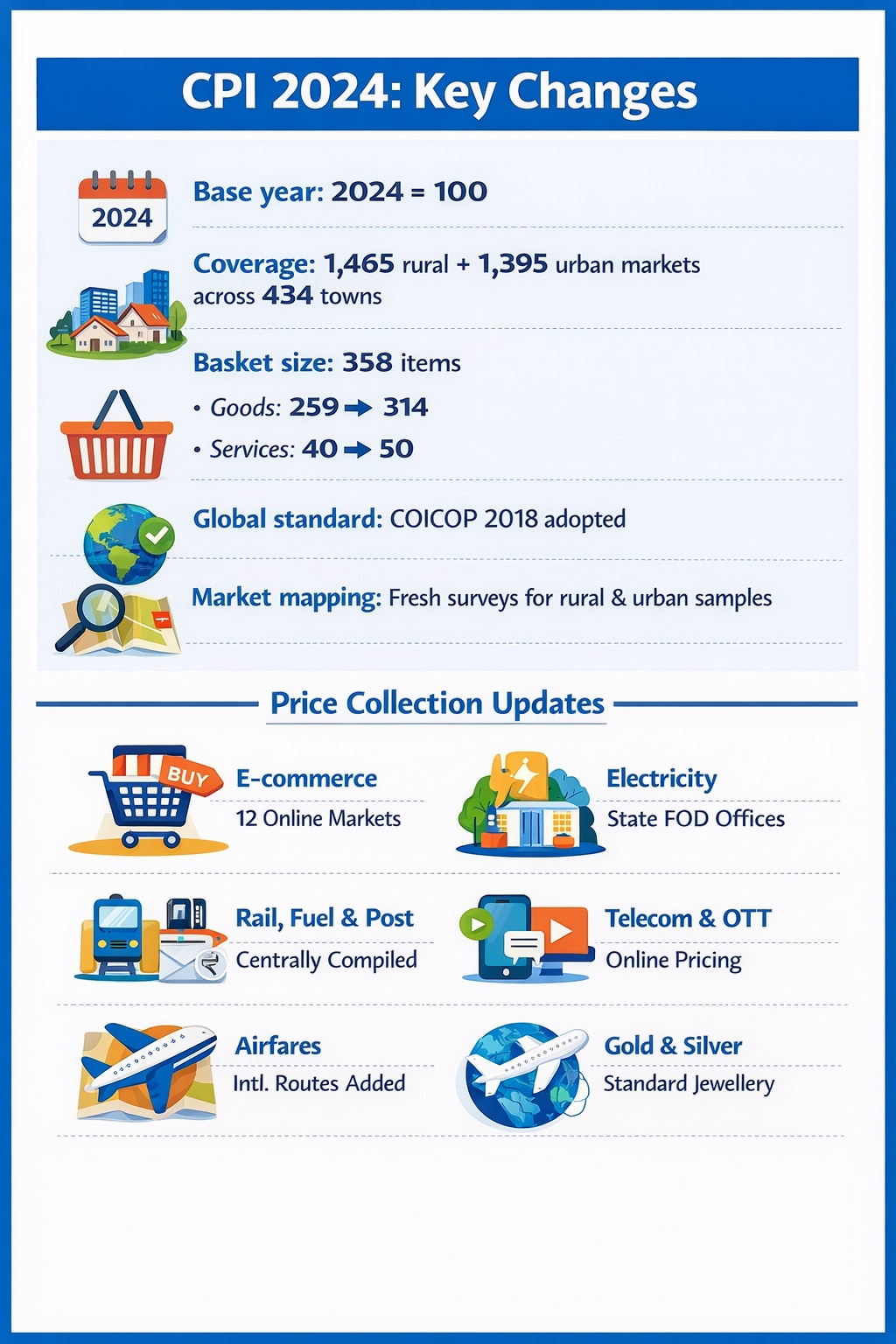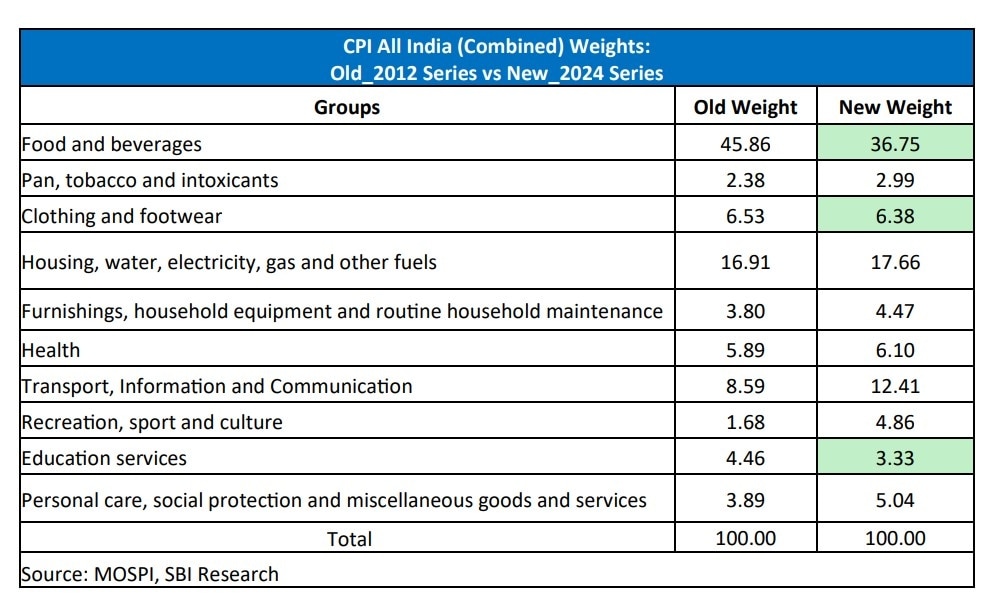



 The first release under the new CPI series is scheduled for February 12, 2026, along with a back series for rural, urban and combined indices from January 2013 onwards.
India’s consumer inflation measurement is set for a major overhaul, with the base year of the Consumer Price Index (CPI) proposed to be revised to 2024 from the current 2012 series, according to an Ecowrap report by SBI Research, citing recommendations of an expert group constituted by the Ministry of Statistics and Programme Implementation (MoSPI).
The revised CPI, with 2024=100 as the new base, aims to better reflect changing household consumption patterns, rising services usage and the growing role of digital platforms. The first release under the new CPI series is scheduled for February 12, 2026, along with a back series for rural, urban and combined indices from January 2013 onwards, the report said.
 Japan’s semiconductor push in India: Why Japanese companies are betting on materials, equipment and technology
  How big is Apple Pay? US payment giant to enter India as UPI dominates digital payments
 Delhi airport gets its third runway operational; optimise aircraft movement
 Tata Sons crisis: Why the 1-1 split among Tata Trust nominees matters
 Disney taps Indian-origin former Character.AI CEO Karandeep Anand as its first CTO. Who is he?
 CEA On India’s 7.8% Growth, Rural Incomes And Government’s Job Creation Push
  Gold Price Outlook: Why Dollar Weakness Could Keep Gold And Silver Prices Attractive Ahead
 Gold vs Silver Investment Strategy: Is This The Right Time To Buy For Long-Term Returns?
 Corporate Vs Personal Health Insurance: Which Is Better On A Budget?
 Gold Price Outlook: Why Gold Could Rise Despite Global Interest Rate Hikes | Silver Market Update
 Jindal Supreme, SS Retail, Hero Motors IPOs subscribed up to 181 times on final day; details here
 Sensex, Nifty post sixth weekly loss; TCS, Titan among top laggards, slip up to 4%
 How AI collapse could benefit Indian equity market; Jefferies' Christopher Wood explains
  Banks are no more secular growth story, prefer NBFCs: Chris Wood
 Jefferies' Christopher Wood sees gold at $10,000 'sooner or later'; likes India's small, midcaps
 Lalbaugcha Raja receives ₹3.18 crore in 3 days: Check gold, silver and cash breakdownJapan’s semiconductor push in India: Why Japanese companies are betting on materials, equipment and technology
  India faces fresh US tariff threat over Russian oil: What happens next? GTRI explains
 US sanctions bill may threaten India’s textile exports; CITI calls for urgent government engagement
 AI spending is surging, but when does it create value? Morgan Stanley’s ROIIC lesson for India