
 |
Target audience: All investors |
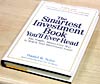
The title of the book, The Smartest Investment Book You’ll Ever Read, not only sounds pretentious, it also raises hope that it will provide strategies that will help you get fabulous returns on your investments. So does the book live up to its name? Not entirely. Yet the book is worth a read to clear some basic concepts on investing.
It’s more a what-notto-do guide than a whatto-do book. It concentrates on busting myths and hype about the stock market and tells you what pitfalls to avoid while investing. The author, Daniel Solin, emphasises throughout the book that investors do not need financial brokers or advisers. He claims that most of them are charlatans, and that investors will make their own best financial advisers. He suggests that investors deal directly with known mutual fund families or use exchange traded funds.
Solin shuns “hyperactive investors” who constantly search for “hot” stocks and funds and trade frequently in a fruitless endeavour to beat the markets. He repeatedly stresses that one can never beat the markets in the long term and points out that it is foolish to time the markets or even believe those who claim to be able to do this. “Smart” investors, he says, look for market returns and invest in the broad market indices.
According to Solin, the best and safest investment choice is to put your money in index funds. He claims that simply achieving market returns will beat 95% of all professionally managed portfolios. The whole book revolves around this concept.
Most chapters are devoted to disputing the claims of brokers and advisers that small investors need “handholding” since investing is a very complex matter. But Solin opines that small investors need only two things for superior portfolio performance— low transaction costs and appropriate asset allocation. Solin provides credence to his claims by backing it with data gathered over a period of nearly 80 years.
He has compared returns of 20 years or so (he considers five years as short term). Though the data has been collected from stocks of the S&P 500 index and mutual funds in the US, a similar analysis with Indian data is likely to show similar results. You can always check out the forecasts made by financial wizards and topnotch analysts for certain periods and then compare those predictions to how the market actually behaved. You might come up with a few surprises.
The author begins each chapter with quotes extracted from interviews, books, journals, etc. which are instructive for seasoned as well as new investors. Sample this: “Properly measured, the average actively managed dollar must underperform the average passively managed dollar, net of costs”, by Nobel Laureate William F Sharpe. Another quote is by Benjamin Graham: “If I have noticed anything over these 60 years on Wall Street, it is that people do not succeed in forecasting what’s going to happen to the stock market”.
Virtues of passive investing | |
| Being a smart investor isn’t the same as being an active investor. Find out what you are | |
Hyperactive investors | Smart investors |
The language of the book is simple and easy to understand. The questionnaire on asset allocation at the end of the book and the five questions one needs to ask a broker are quite instructive. But the book also has the possibility of including a lot more visual displays such as more comprehensive graphs to engage a reader. For those who want to know more about investing, chapter 44 provides an informative bibliography.
Solin is also quite caustic about the role of the financial media and technical analysts in misleading investors. According to him, they are self-styled experts who heap confusing and often conflicting information on the investors. To him the whole idea about which stock or fund to buy on the basis of past performance is bunkum.
Solin provides evidence about how rarely analysts have ever been right. He backs it with anecdotes that are amusing as well as shocking, including the contest run in 2002 by the Financial Times of London to build a winning portfolio. After a year the results were declared. The winner was a five-year-old girl who had chosen stocks randomly. Her stocks gained 5.8% while the portfolio of a professional analyst lost 46.2%. Or the “top picks” listed by Fortune magazine in 2000. Over a period of three years the stocks gave a return of -80%.
Solin sprinkles the book with many such interesting facts. But at times one is forced to ask if he is not presenting just one side of the picture. Granted that some successes can be attributed to plain luck, but then the failures could equally be because of bad luck.
Your personal finance book library on books.moneytoday.in
The New Buffettology by Mary Buffett and David Clark
The Intelligent Investor by Benjamin Graham
Personal Finance by Jeff Madura













