
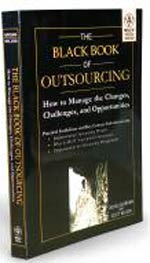
This book should be read by all the 53,000 employees at Satyam Computer Services. Not because it will help them find solace, but because it will enable them to find new jobs. Although it is written for the American techies, who are seeing their jobs vanish and fly away to emerging nations like India due to outsourcing, it does have golden nuggets of advice for the Indian IT employees. For example, one of the strategies that the book mentions is that "you must be a job hunter, following all leads". Experts can tell you how and where to start looking for an excellent outsourcing job, but "it's up to you to track down each lead and 'snare your prey'". Especially since the competition for such jobs is intense these days.
Similarly, it advises job seekers to master "online job search with due diligence". We are sure that the Satyam employees will never forget this lesson after the 'Ramalinga Raju bomb' exploded in their faces. But this should now become a habit for every IT staffer. With Google and Internet, it's easy to ferret out information about companies. You should also read corporate press releases carefully, review outsourcing blogs, and use search engines of other countries (beyond Google, AOL and Yahoo). Most often, the real, and true, information comes from unexpected quarters.
Networking is another critical requirement to get an outsourcing job. A recent poll by the Outsourcing Career Center found that almost 95% of new outsourcing jobs are not advertised publicly. In IT and ITeS, it is not just what you know but who you know that matters. "You are going to need everyone—former employees, colleagues, competitors, suppliers, and employees—to make it in the outsourcing marketplace," states the book. Such relationships, besides your knowledge, skills and experience, will be important to look for better jobs in the future.
The Black Book Of Outsourcing |
|---|
| Price: Rs 399 Pages: 366 Authors: Douglas Brown and Scott Wilson Publisher: Wiley India Pvt Ltd |
| Target Audience: IT employees and managers in other firms Quick Read Tip: Go through only those sections that are of use to you |
| Language: Difficult Style: Academic Visuals: Graphs, tables and charts |
The book also details the hot jobs in outsourcing. It provides hints to measure your own "professional temperature". For example, Jane Fiona Cumming, a director with Article13, a global business consultancy, told the authors that the "managers who are capable of getting the best out of a workforce that's becoming increasingly diverse, and are aware of the challenges that accompany (diversity), are in huge demand". What this implies is that "transcultural competence is, simply, the single hottest job qualification in the outsourcing industry".
Now that you are equipped to land a great job, we are sure you are also ready for the next quantum leap in outsourcing: to become an entrepreneur. The book clearly states that the days are gone when fire in the belly and a decent idea were all that you required to launch a start-up. Today, you should have other qualities like passion for outsourcing, game plan, tenacity, ability to manage cash flows and, obviously, leadership traits. Most importantly, you will need your own seed capital to fund the venture. "To date, worldwide, VCs (venture capitalists) have funded no more than 0.5% of entrepreneurs in outsourcing business," warn the two authors.
Once the business plan and capital are in place, the start-up has to sell its value proposition. This too isn't easy these days. To do so, the entrepreneur has to assure the customers that his firm will free them to focus only on their core competencies, that it can build global expertise within the organisation and will have the ability to scale up within a short period. He also has to convince them that their overall costs will come down. "The most critical factor for success… is, ironically, the one most often overlooked: relationship management. Dun & Bradstreet research indicates that 20-25% of all outsourcing relationships fail after two years; and 50% fail after five years."
Even if you are not in the outsourcing industry, this book can be of help. The reason? In the first section, it outlines the emerging trends in outsourcing, which can be pointers to you as a manager. It can answer the following questions: Which processes can I outsource? How should I choose a vendor? How should I assess costs and benefits of outsourcing? How do I measure both qualitative and quantitative performances of my vendor? How do I navigate through contracts and negotiations? Finally, how should I manage my various vendors?
The one problem is that it is difficult to navigate through the book; it has too many boxes, blurbs and tips. It also has a textbook feel, both in terms of visuals and writing style. But as the information is valuable, we think the readers will not mind such trivial issues.













