

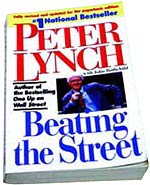
 Price: Rs 375 Pages: 332 By: Peter Lynch with John Rothchild Published by: Simon & Schuster Paperbacks Target audience: All investors Quick read tip: Designing a Portfolio, a chapter that tells you how to make a stock fund portfolio Language: Easy Style: Illustrative, academic |
Lynch’s principles on effective stock picking • Never invest in any idea you can?ft illustrate with a crayon • The extravagance of any corporate office is directly proportional to management?fs reluctance to reward shareholders • The best stock to buy may be the one you already own • If you like the store, chances are you will love the stock • When insiders are buying it?fs a good sign • All else being equal, invest in the company with the fewest colour photographs in its annual report • Gentlemen who prefer bonds don't know what they are missing • As long as you're picking a fund, you might as well pick a good one |
Lynch’s 21 principles make for a good lesson in selecting a stock and are supported by examples of companies that he bought or dealt with. In fact, more than half the book— chapters 7-20—is a chronicle of how Lynch went about picking the 21 stocks that he had recommended to the readers of Barron’s—a magazine he wrote for—in 1992. Each chapter deals with a specific company from sectors like restaurant, retail, automobile, chemicals, and beauty and hygiene. Unless you invest in global stock markets, chances are you may not have heard of two-thirds of these companies. Lynch outlines his strategy for buying all kinds of stocks. At the same time he emphasises on checking the stocks every few months and not losing patience when everyone else is selling.
But for a fund manager who took care of billions of dollars, Lynch’s strategy of using logic to understand businesses and invest in them, seems too simple. For instance, he chose a company like Taco Bell because a) he liked the tasty tacos—people will like it, b) 90% of the people had still not been exposed to it—shows potential, c) it had a strong balance sheet— numbers will talk and d) its office was not extravagant— no wasteful expenditure. His logic was that after succeeding in one region with a combination of these factors, chances were that the format would duplicate itself in other cities, thereby increasing the earnings.
Successful stock picking, according to Lynch, can be attributed to how well you understand a company’s business through research, by talking to company representatives, company visits, industry analysis as well as studying the competition. The book comes across as a great read, especially in the current market situation when pessimism is in abundance. Stock picking does not need to be rocket science; it’s a simple matter of how you identify and research stocks.
Lastly, Lynch focuses on the fact that every stock you buy requires a constant follow-up and that no matter how well you know a company, it may not reward you for investing in it. The point has been highlighted from pages 284-304—“the sixmonth check up”— where Lynch reviews each stock in his portfolio and describes the action taken. Also, don’t miss the set of “25 Golden Rules”.
Also read our review of the book The New Buffettology









