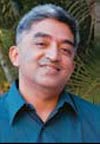
Sometimes life begins again when you least expect it to. A flight from London to Washington changed Harish Bijoor’s destiny; for M.V.S. Rao, it was writing a technical paper for a journal. Bijoor survived two stints with MNCs with the aim of retiring at 40, while Rao retired after 30 years with Tata Steel, dreaming about returning to his hometown to be involved with an NGO. The two men with diverse backgrounds have one thing in common: both are successfully entrenched in their second careers.
If you’re tired of the corporate rat race and are looking for a fresh challenge, you might also be fantasising about a rocking second innings. There are enough success stories to prove that there is a career even after retirement. Says 45-year-old Bijoor: “I knew I wanted to take the start-up route, but I wanted a well-rounded marketing and sales perspective first.”
After stints with HUL and Tata, he was on his way to the US to take over as president (marketing) for a company that was to be launched in India when a co-passenger suggested that he head their venture capital outfit. “I decided to visit their office and realised I was close to my dreams of starting off on my own,” he says. Harish Bijoor Consults now has a presence in the markets in the UK, Hong Kong, Dubai and India.
 He gave up a promising career in marketing to set up a business, using running events to connect brands and businesses. “To succeed in your venture, meet other entrepreneurs. Open your mind to new thoughts and fresh ideas.” |
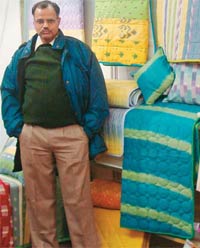 A government statistician, he left the bureaucracy to join a private-sector cluster development initiative. “I took a government job as it offered me security. Over time, I figured out my strengths and worked on these.” |
Rao had not planned to continue working after retirement. Says the former head (geology), Tata Steel, Jamshedpur: “I was writing for a journal in March 2007, six months before my retirement, when I realised I did not want to stop working. There was still so much that I could contribute to this field.”
The smartest thing that Rao did, which everybody seeking a second career would do well to emulate, was to network and leverage his contacts to land his current assignment as a general manager at Jindal Steel in Orissa. Of course, it also helped that he had worked in the same industry before.
Finding the perfect second career is not a cakewalk; the key is finding an area where you can utilise your transferable skills. H.K. Chari, a trained statistician, worked in the market research wing of the Ministry of Textiles for 21 years. After ensuring that his daily bills would be taken care of, he was ready to shift to the private sector.
“I joined the Pochampally Handloom Park as CEO against the advice of friends and well-wishers,” says the 48-yearold. Two years down the line, the project is not just a business success but is considered a model cluster development initiative. His tip for those looking for a second career: match the job to your interests and personality.
“Find out where your heart is and specialise in a field where you can be sure that you will be the best,” he says. One can’t make a fresh start in an industry where there is little or no job growth, so take time to research before taking the plunge.
This is really not the place for spontaneity. But you don’t have to take up a similar job after you retire. There is a growing tribe that is not afraid to try something new, even if it means learning new skills or starting at the bottom.
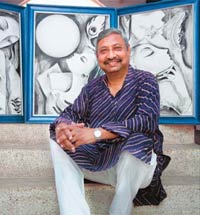
Ask Rahul Verghese. The 48-yearold IIM, Ahmedabad, graduate spent 25 years rising through the corporate ranks. Then, while posted in Chicago as Motorola’s director, Global Consumer Insights, he discovered running.
One marathon later, he was inspired to gun for at least 50 more in his lifetime, but on his return to India two years ago, he was disappointed by the lack of scope.
So he decided to launch a Website, www.runningandliving. com, initially as a hobby. Says Verghese: “With my experience in marketing and my passion for running, I thought I would try my hand at a venture where I could work with brands and use running events to connect them to their audiences and create value for them.”
“Getting out of the salary mindset opens up your mind and allows you to think beyond the obvious.” |
POTENTIAL PITFALLS Varying cash flows: If you’re starting a new venture, there may be months without income. Credit risk: Banks might not be very willing to lend you capital because of your age. Insurance risk: Age works against you when it comes to insuring your life and business. |
It became a fullfledged business from late-2007. His current designation: Chief Believer in Running and Living. For the record, he insists that he has not retired. “I view this as a definite business in its early stages.”
Today, more senior citizens are seeking second careers. Industry experts say that almost 90% of senior citizens want to work after retirement to remain busy and not necessarily for money. Says Mathew Cherian, CEO, Helpage India: “Construction companies and educational institutes prefer senior citizens for administration jobs. Also, BPOs are quite keen on hiring them for their complaints and redressal cells as they have the required maturity to attend to callers.” Telemarketers working for up to four hours a day can earn Rs 4,000 a month.
Sanjeev Bhikchandani, CEO, Naukri.com, says, “Start-ups specially look for experienced professionals even if they are not willing to work full time.” Those who retire from the armed forces find it easier to land a second career. “From administrative jobs to security management, they are readily absorbed,” says Rajesh A.R, CEO, TeamLease, a temping firm.
But change comes at a cost. Sometimes a second income may be required. Says Verghese: “My wife resumed working a few months into my venture, which gives me some breathing time.” Each of these people insist that money is not the overriding factor when it comes to a second career. Verghese sums it up best, saying, “You only have one life. So rather than saying I could have, would have, or should have, I want to say that I did!” You can’t put a price on that.
— Inputs from Rajshree Kukreti and Tanvi Varma