
Engineering graduate Hitendra Kalia, 24, had his first brush with a slowdown in mid-2008 when he set out to find a job in the coveted IT services sector. “IT was the dream sector to be in,” he says. After a few months of searching in vain, Kalia decided to switch not just sectors, but functions. He landed a job in marketing in a Gurgaonbased financial services multinational.
“I am better off in marketing,” shrugs Kalia. “It’s time I acquired a degree in marketing.” With an education loan and now a car loan, Kalia can ill-afford to take chances.
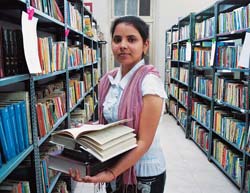 Pooja Bansal Age: 23, Indore What happened: The Analyst Programmer was working with a Mumbai-based software firm that wanted to move her to the KPO division Current status: Re-skilling, filling up forms for govt. Jobs in banking and IT in her hometown Indore |
Little surprise then that techies are taking the road less travelled. Take the case of Delhi-based Devender Kumar Saini. IT was a dream he nurtured from Class VIII. A native of Narnaul in Haryana, Saini, 23, graduated from University Institute of Engineering and Technology, Kurukshetra University, in 2008. He waited till August for two campus hire offers to fructify, but they didn’t. “They kept postponing the joining and finally said we do not have positions,” says Saini. Result: He decided to enter event management and joined a professional conference organiser in Delhi Augustend. Yet, Infosys remains his dream company to work for.
If Saini were to ever meet Vijay Prasad (name changed on request), he might just change his mind about the Bangalore-headquartered major. The investment plans of the 25-year-old techie with Infosys got a rude jolt recently when Infosys announced a salary and promotion freeze. “I had planned to invest in a house over the next few months, but now I will have to reconsider,” says Prasad. But he is glad that he at least has a job with a blue-chip IT major, the freeze on hikes notwithstanding. “I am thankful to have a job at a time when there is an extremely rigorous assessment in place,” he says. “We have zero tolerance for poor performers in this economic environment,” says T.V. Mohandas Pai, Director (HR & Administration), Infosys.
 Ketaki Kode Age: 23, Pune What happened: The engineering graduate did manage to find a job in Mumbai, but was not keen on relocating Current status: Self-employed. Runs a start-up called Sark Software; her graduating friends want to join her |
Who would have thought that a time would come when IT services head honchos would actually be telling engineers to look at other sectors! “I think it will be a good thing if fewer engineering graduates join IT. India needs civil and mechanical engineers.... In a weird sort of way, the slowdown in IT recruitment might be good for the country in the long run,” says Nayar.
But that is unlikely to happen anytime soon. In the last four years, India has seen an unprecedented proliferation of engineering colleges, especially in the North.
 Rehan Mark D’Almeida Age: 22, Bangalore What happened: The final semester student has been attending job interviews for the past six months, but sans luck Current status: May do some certification courses; if offers don’t come, may opt for a masters programme overseas |
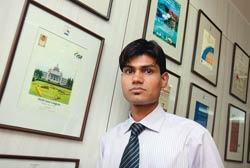 Devender Kumar Saini Age: 23, Delhi What happened: Two campus offers failed to fructify, after many postponements Current status: Plunged into event management; joined a professional conference organiser |
Yet, Bansal would be better placed than (over)experienced techies. Juxtapose her against Delhi-based Ambalika Sanyal, another techie who lost her job, but whose experience is coming in the way of new options.
In her 30s, Sanyal, who was a Quality Analyst at her last job, has seven years of experience. “In this market, companies invariably think a candidate with experience will ask for a higher salary and techies with less experience are hired,” she says. Sanyal is scouting for offers and is wary of investing in re-skilling till the time she is sure of a return on that investment. Sanyal could, perhaps, take a cue from Pune-based Ketaki Kode, who has decided to take the road less travelled. Kode, 23, an engineering graduate from Pune University, passed out in 2008.
She did find a job in Mumbai, but wasn’t too comfortable shifting. Much to her parents’ surprise, she decided to strike out on her own. “I had a tough time explaining to them that the job market was bad.” Kode is self-employed and her fledgling outfit is christened Sark Software. Since July 2008, she has carried out 7-8 small projects. In her current three-month project, she is developing software for barcodes for retail shops for a client.
The perky youngster is listed on a couple of job sites, but insists till the time she has projects, she is committed to them. The good news is that a few of her graduating friends want to join her. Now here’s one sanctuary where there’s no job freeze!
Additional reporting by Rahul Sachitanand and Kushan Mitra













