
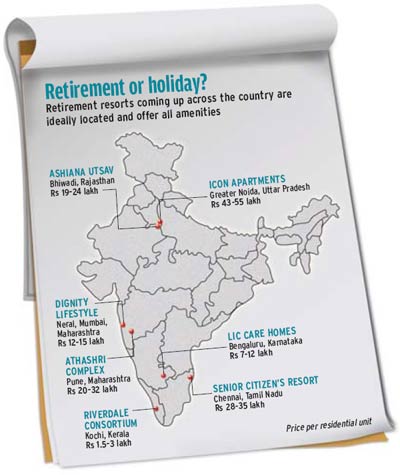
 The couple moved from Mumbai to a retirement resort in Pune, where they had bought an apartment for Rs 12 lakh. “All our daily needs are taken care of at the resort and we do not have to move out for anything.” |
 The Ghaziabad-based businessman enjoyed his Bengaluru holiday so much that he decided to retire there. He bought an apartment at the LIC Care Homes project for Rs 11 lakh. “I plan to retire when I am 50. That’s when I will be eligible to stay at the retirement resort.” |
Many of these empowered retirees are buying retirement homes in desirable locations, sometimes as an investment. Given that different locations offer varied advantages, geographic and otherwise, it becomes difficult to choose a retirement destination. However, advance planning can make the task easier.
One obvious benefit of planning ahead is that you can take advantage of low realty prices before others discover the place. Also, if you have made the decision to relocate or stay put in a particular city early on, you can start saving according to the cost of living in the city.
It has now become even easier to plan things early as the banks are ready to finance the purchase of property even if the borrower doesn’t stay in the same city. Planning early allows you to own an asset that you can leverage later when you need funds—even without selling it.
But where should you move? Retirees who relocate generally prefer a safe, uncrowded destination with good medical facilities and a low cost of living. There are three main reasons why retirees move to a new location. The first is to live in a beautiful place with a better climate.
Some people move because they want a place that is more interesting and exciting than their present location. Wanting to be closer to a support structure is another motivation. Some retirees may want to move to another city because they want to be closer to their children and grandchildren.
If you want to retire to the hills or a seaside resort town, it’s a good idea to start planning early. Real estate is expensive in popular tourist destinations, as many people, including non-retirees, want second homes there. Also, even after you have bought property at one of these locations, be prepared to shell out more for maintaining it.
And, remember, that you would have seen these places at their best if you have only holidayed there. For instance, while the weather at a hill station in summer is ideal, it can be taxing in the winters.
If your budget and schedule permit, you should try living in the place of your choice before actually investing in any property.
"If retirees buy homes at a late age, they usually do not want to spend much on lifestyle facilities." |
| Myth: If I need cash urgently, I can sell my property. Fact: Unlike other investments, real estate cannot be sold at the right price for short- term requirements. People who buy homes for retirement aren’t typically thinking of selling, but should they choose to do so, they should realise it could take several months, even years, to get their money back. |
If you’d rather move to another city, there are several options available. For those who live in the north, Chandigarh is a good option. It offers good civic amenities and easy access to hill stations. The property here costs around Rs 2,600 per sq ft. Its southern counterpart is Coimbatore, which is also close to the hills. This city is known for its healthcare facilities, and real estate costs about Rs 2,500 per sq ft.
Dehradun is fast emerging as a viable option to Chandigarh, with the added advantage of cheaper property (Rs 1,800 per sq ft). In the south, for the same price, you can buy property in Puducherry.
Other popular destinations are towns in Himachal Pradesh and Kerala, Mangalore and Mysore. Many retirees want to buy property in Goa but the legality of ownership makes it a complicated affair. So even at an attractive rate of Rs 2,100 per sq ft, senior citizens are not advised to buy here.
A lower cost of living in another city can mean a much higher standard of living. Use the cost of living indicator to figure out how expensive a city is, but understand that your own living standards will decide what you spend every month.
So, if you live a spartan life, you can have money left over even in the most expensive city. Then the only question that remains is whether you want to live in an expensive, cosmopolitan city or retire to a rustic retreat. Take your pick.