













The escalation of the conflict in West Asia, which is impacting oil and gas supply across the world, underscores the importance of diversified sourcing, flexible procurement strategies, adequate inventory buffers, and active risk management frameworks.
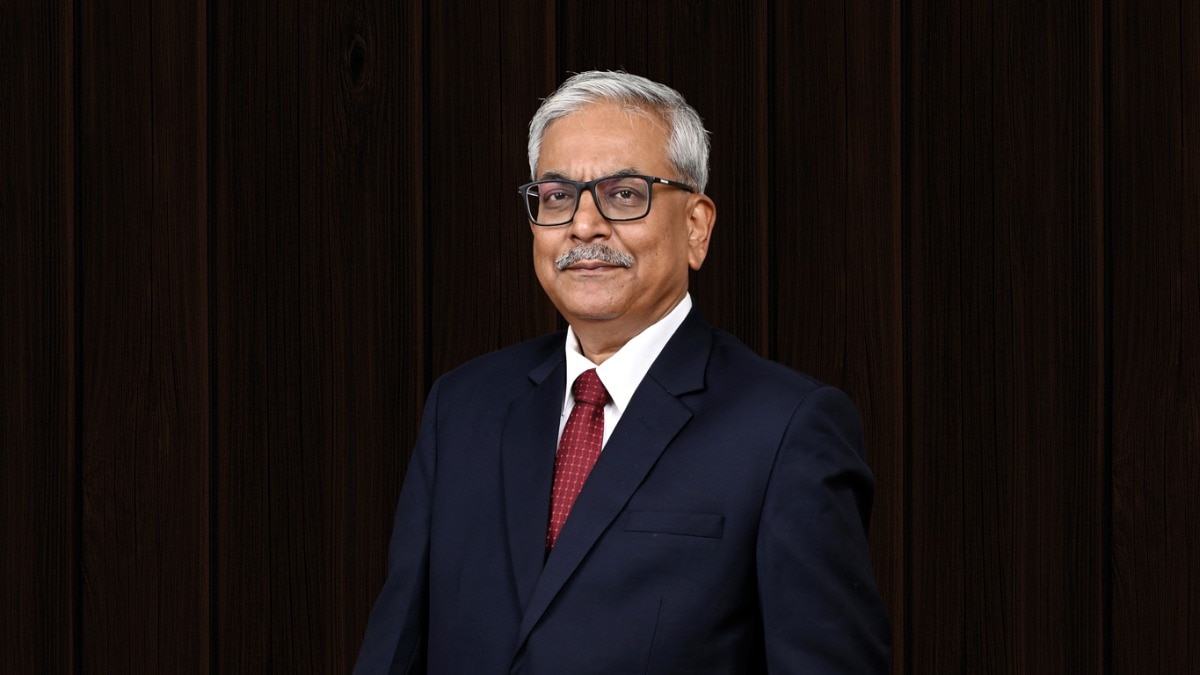
This is exactly what Bharat Petroleum Corporation Ltd (BPCL), a public-sector oil and gas company, is doing. In view of these initiatives, ex-BPCL CMD G. Krishnakumar has been recognised as the Urban Visionary in the BT-PWC India’s Best CEOs this year. He retired in April 2025.
“During 2022 to 2025, we navigated a global landscape where ‘weaponisation’ of energy and geopolitical disruptions, such as the Russia-Ukraine war and Red Sea supply chain realignments, fundamentally redefined crude sourcing,” says Krishnakumar.
On realising the impact of geopolitical risks on energy security of the country, BPCL undertook structural shifts in crude oil sourcing. The approach moved from closely monitored government purchases to pure economics.
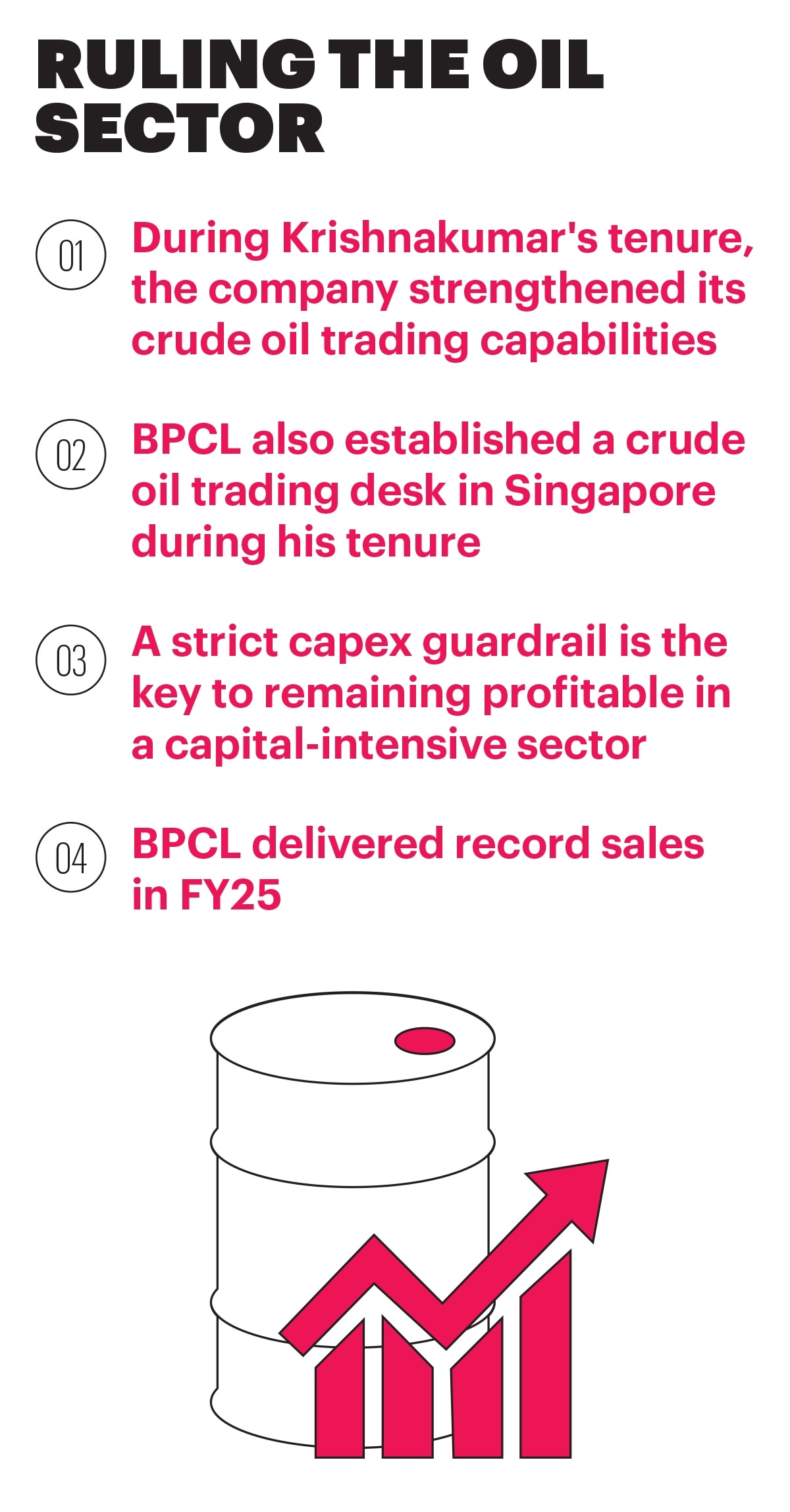
During his tenure, BPCL strengthened its trading capabilities and took a significant step to establish a crude oil trading desk in Singapore. This will bring the company closer to the market, enhance its effectiveness through real-time participation in global trading, and position it alongside leading international oil majors. Another primary structural change has been the aggressive move towards the spot market; for instance, the share of spot procurement increased from 30% in FY19 to 45-55% in recent years, and BPCL diversified its crude basket across 39 countries, enhancing optionality, reducing concentration risk, and capturing arbitrage opportunities.
Other measures include petrochemical integration as a natural hedge. BPCL has strengthened its refinery and petrochemical integration through projects such as the ethylene cracker at Bina refinery in Madhya Pradesh, the polypropylene project at Kochi refinery, and the petro residue fluid catalytic cracking project at the Mumbai refinery, converting fuel streams into higher-value material products and stabilising earnings across cycles.
Having a strict capex guardrail is the key to remaining profitable in a capital-intensive sector. BPCL has zero net debt on a standalone basis, follows a project internal rate of return threshold of 12-15% for long-term investments, and structures major projects with a calibrated 65:35 debt-to-equity mix to optimise the cost of capital.
Krishnakumar says in the near term, global markets are likely to remain adequately supplied, as major producers retain spare capacity and strategic reserves provide buffers. However, the real risk lies in escalation, as prolonged disruptions could tighten prompt supplies, compress margins, and heighten energy security concerns for Asia’s import-dependent economies.
“For Indian OMCs, this underscores the importance of diversified sourcing, flexible procurement strategies, adequate inventory buffers, and active risk management frameworks. The ability to quickly recalibrate crude oil baskets and optimise logistics becomes critical in managing cost and continuity,” he says.
Recalibrating crude baskets and optimising logistics during uncertain times is also critical in managing both cost and continuity, and it allows refiners to capture immediate market opportunities and navigate sudden supply voids.
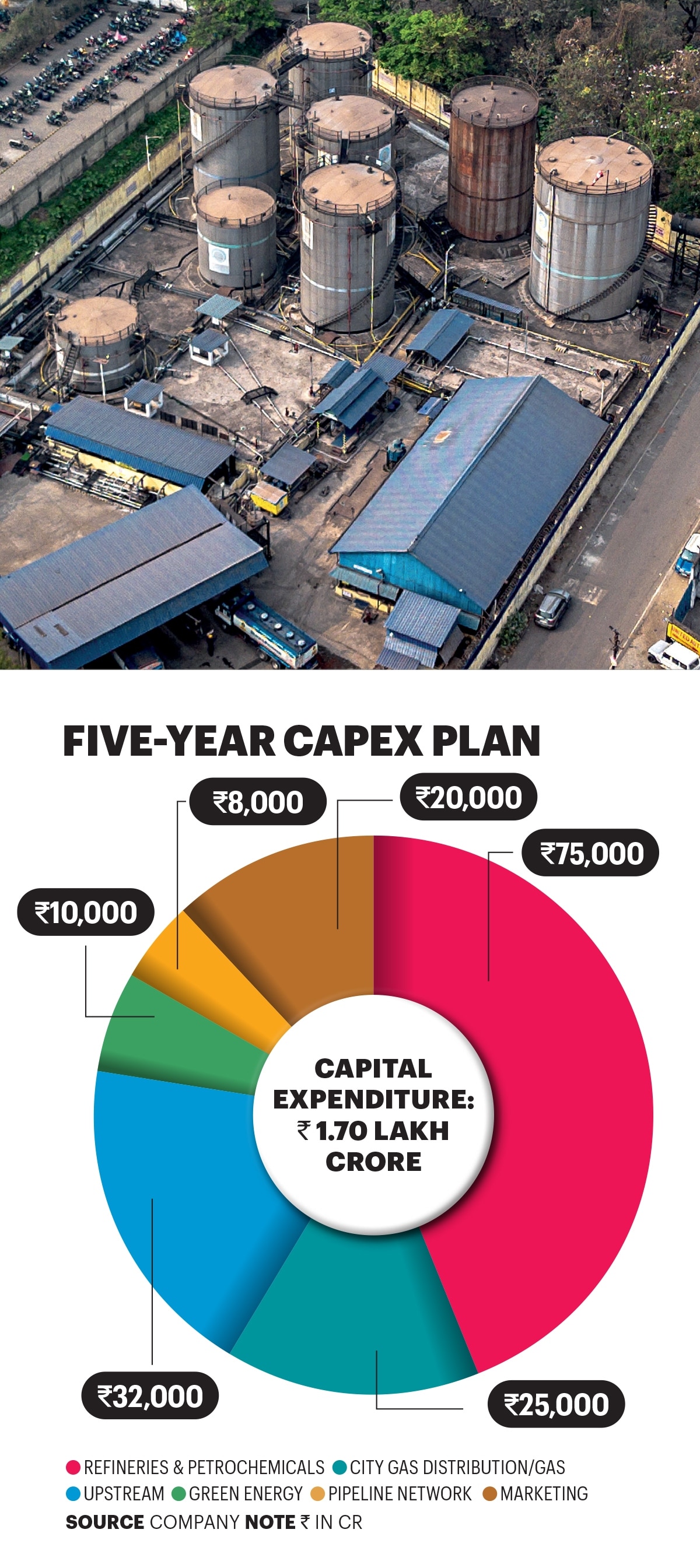
“More broadly, such episodes accelerate some long-term trends—greater diversification of crude sourcing, increased investment in equity oil and overseas assets, more emphasis on Open Acreage Licensing Policy or OALP (exploration and production in India), faster policy push towards energy transition and reduced import dependence,” he says.
BPCL has widened the crude oil basket to 106 types from 39 different countries and upgraded refineries like Bina and Kochi to process 100% high-sulphur crude, providing the flexibility to choose “challenging but discounted” crude oils that lower feed costs.
Tools like BPMARRK (real-time crude characterisation) and the K Model (for compatibility) enable experts to adjust operating parameters dynamically, preventing fouling and maximising yields from diverse crude recipes.
BPCL refineries achieved a record throughput of 40.51 MMT at 115% utilisation in FY25. According to Kirishnakumar, it extended its market dominance by delivering record market sales of 52.40 MMT in the same period. Every marketing strategic business unit (SBU)—retail, LPG, lubes, aviation, industrial and commercial and gas—achieved highest-ever sales.
BPCL is building a future-ready portfolio by not merely reacting to the energy transition but leveraging it as a growth engine.
Krishnakumar says OMCs such as BPCL must follow a two-pronged strategy: strengthen and expand the existing core business to capture current market opportunities, while simultaneously investing in future growth areas and bold diversification bets to stay ahead of long-term demand shifts.
“The core goal is to build a resilient and modernised refining system capable of handling global volatility. Beyond volume, we focused on crude sourcing flexibility, enabling our refineries to process over 100 varieties of crude. This operational agility ensures we can always opt for the most cost-effective feedstock, maintaining our industry-leading gross refining margins,” he says.
The aim is to transform BPCL from a pure refiner-marketer into a vertically integrated energy player. The company aims to achieve equity oil security by moving discoveries in Mozambique and Brazil towards production. This will de-risk the supply chain from geopolitical disruptions and redraw trade routes while ensuring the upstream business delivers a positive cash flow for the company. “We must prioritise monetisation of world-class assets in Mozambique and Brazil to secure reliable access to equity oil, de-risking ourselves from the volatile global market. Strengthening strategic petroleum reserves is a critical buffer against sudden shocks,” says Krishnakumar.
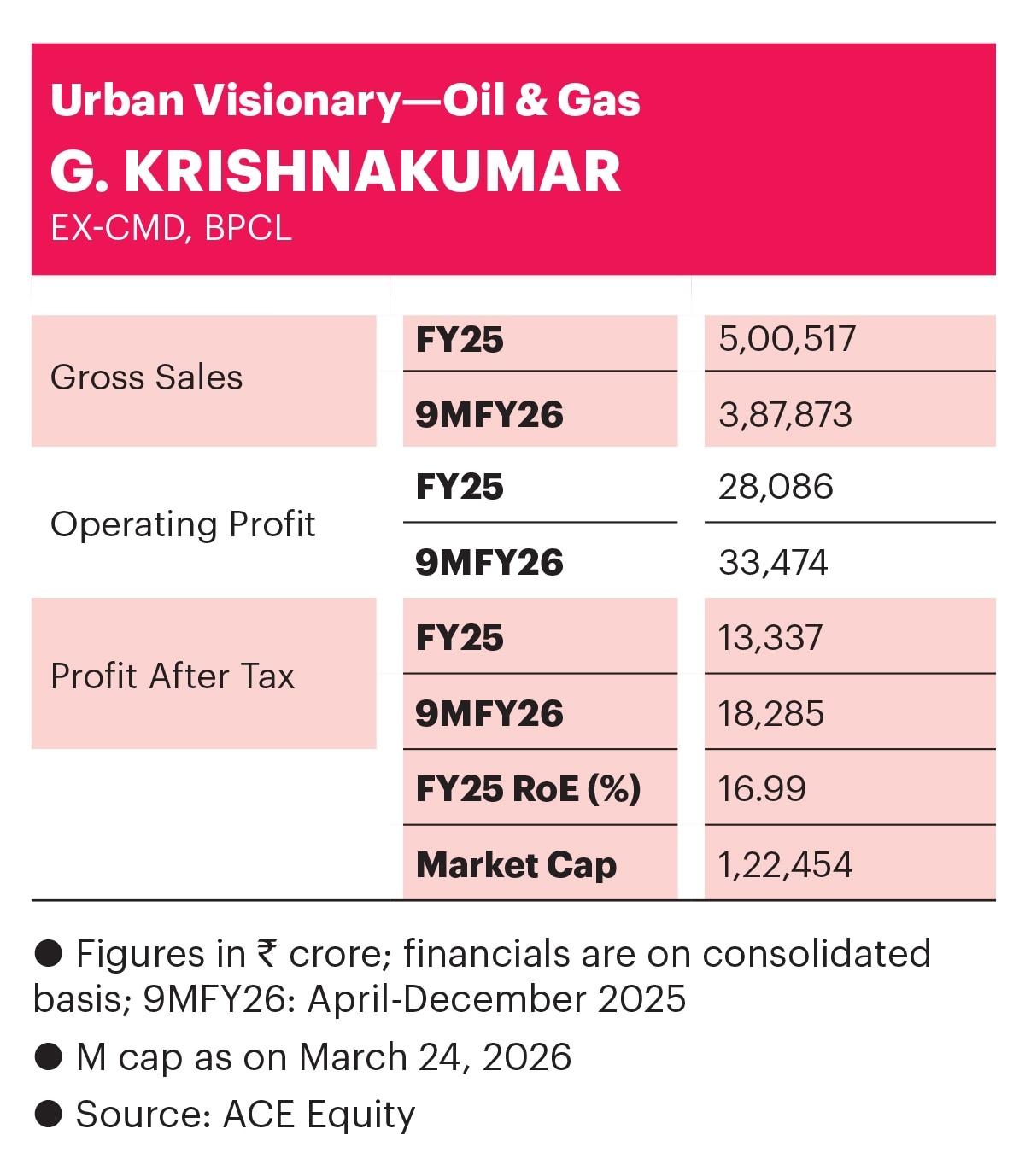
For Krishnakumar, who took over as CMD in 2023, a key milestone during his tenure was achieving the highest-ever profit of `26,000 crore in FY24. In 2020, the government decided to divest BPCL, but called off the plan in 2022. The divestment proposal affected the company; it undertook limited investments and few projects. Also, the morale of employees was low, with some people leaving the organisation.
“When I took over, there was a lot of uncertainty, so rebuilding trust and confidence was my priority. The team rose to the occasion and delivered a superlative performance, which was the icing on the cake,” he says.
It’s a cooling-off period till April 2026 for him, but Krishnakumar, who spends his time between Mumbai and Kozhikode, is looking forward to using his knowledge and expertise for the betterment of the country.
@richajourno


