












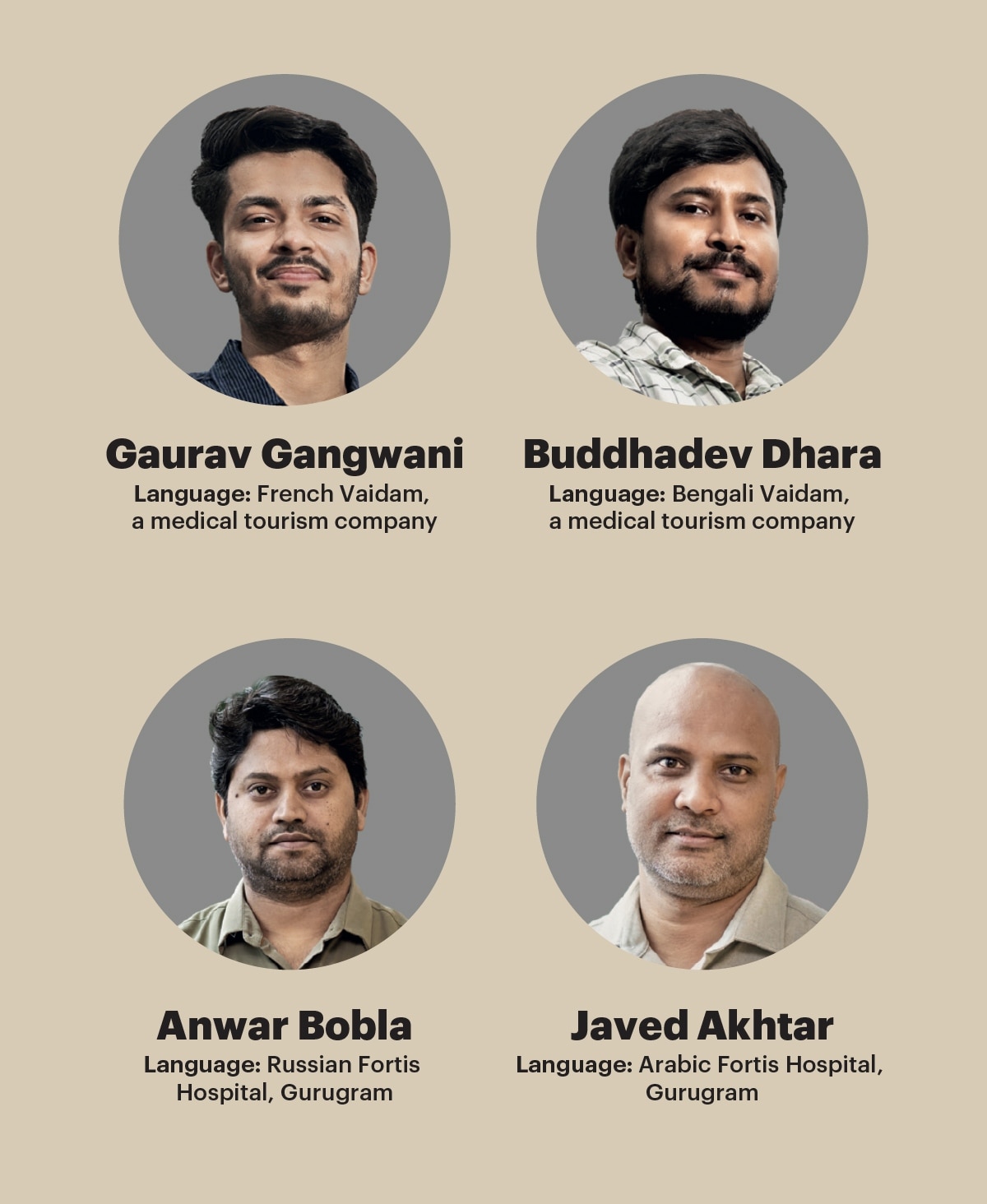

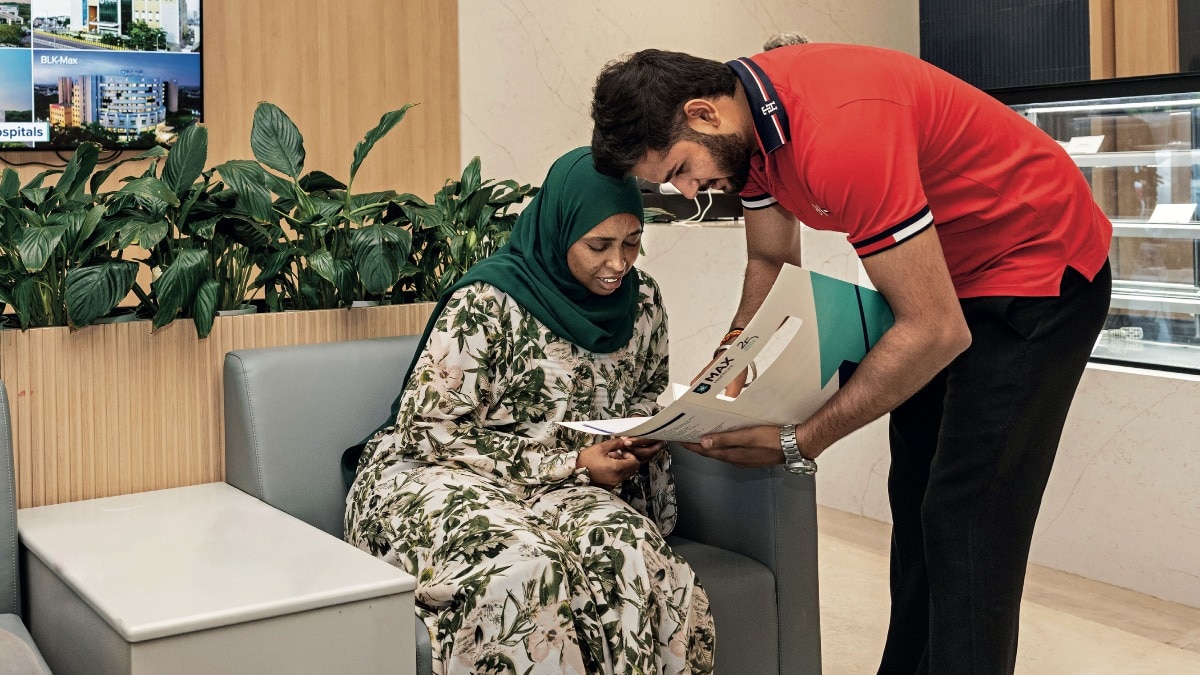
As one steps into the international lounge at Fortis Memorial Research Institute (FMRI) in Gurugram, you come across a narrow corridor lined with flags of countries from around the world. There it is easy to forget that just beyond its doors lies the bustle of a busy hospital, where patients and families hurry between appointments, tests and consultations. Inside the lounge, which feels like an oasis of calm, Javed Akhtar, 40, is attending a patient from Iraq.
Akhtar, who learnt Arabic at New Delhi’s Jamia Millia Islamia over a decade ago, is one of the first faces many international patients encounter when they arrive in India for treatment. While the hospital helps secure visa invitation letters, Akhtar meets patients at the airport, arranges hotels and transport, accompanies them through medical consultations, and remains on-call for everything—from finding familiar food and SIM cards to navigating the city itself.
“I pick up patients right from the airport and help them with all their needs inside and outside the hospital such as hotels,” says Akhtar. “They come to me for their needs, including, hotels, cabs, food, sim card, and sightseeing among others.”
Most of the patients come from Iraq, though he also assists visitors from other Arabic-speaking countries such as Algeria and Sudan. On any given day, he juggles several patients, acting not just as an interpreter but as a cultural bridge and trusted guide. Akhtar is now learning Hausa in anticipation of a growing number of Nigerian patients.
Akhtar’s colleague, Anwar Bobla, 40, a Russian graduate from the University of Delhi's Faculty of Arts, looks after patients arriving from Turkmenistan, Kazakhstan, Uzbekistan, Kyrgyzstan, and Tajikistan. On most days, he accompanies four or five patients through outpatient consultations or hospital admissions. “My job is to make sure that patients feel that they are not in an alien place,” he says.
While many hospitals employ in-house interpreters, for medical tourism facilitators such as Vaidam, medical translators are indispensable. Gaurav Gangwani, a 25-year-old translator, is fluent in French. Gangwani handles patients for French-speaking West Africa nations: Congo, Cameroon, Guinea, Ivory Coast, and Senegal.
“We can’t detach from what’s happening with patients. If we detach ourselves, we will not be able to give a personal touch to the patients,” says Gangwani. “Some patients lose their patience if their stay extends in India. Some get angry. In such situations, we are advised to keep calm. We deal with different kinds of patients,” he adds.
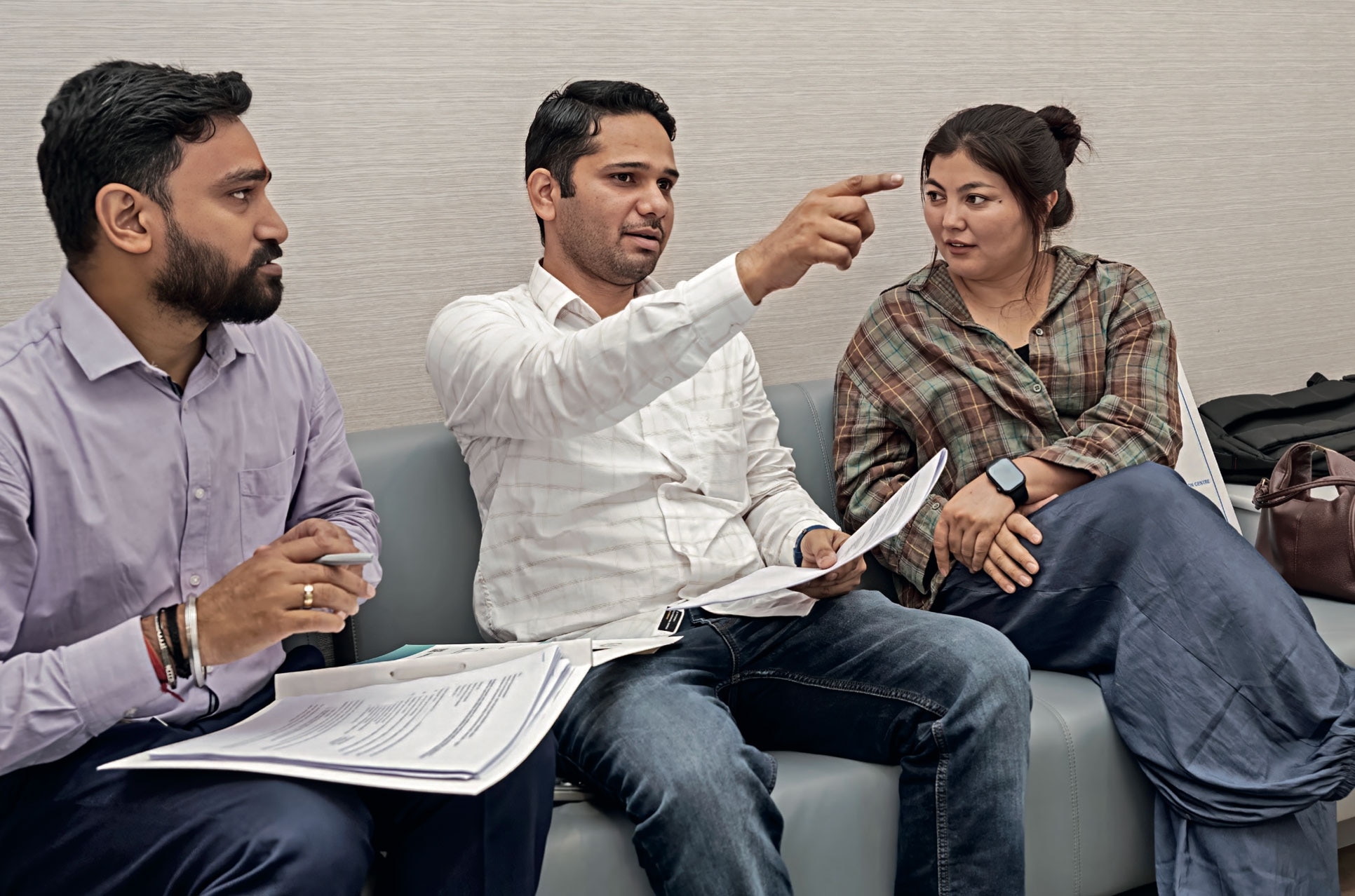
Buddhadev Dhara, 29, began his career at Gurugram’s Artemis Hospitals as an inpatient department associate and has spent the last three-and-a-half years working as a medical interpreter with Vaidam. For Dhara, the role extends beyond translation. “Patients are worried most of the time, but when they see us, they feel comforted,” he says. The job requires interpreters to pick up basic medical terminology so they can accurately convey complex clinical information. Most of the Bangla-speaking patients Dhara assists are seeking treatment for cancer or undergoing orthopaedic surgeries. For them, a familiar language and a trusted face can make the experience feel less overwhelming.
Bangladesh contributes the largest share of medical tourists to India, with Chennai and Kolkata as the preferred destinations, while patients from Iraq primarily seek treatment in Delhi. “Patients from Oman favour Mumbai and Kochi, Yemenis prefer Pune and B engaluru, and Sudanese and Somali patients mostly travel to Hyderabad,” says Pankaj Chandna, co-founder, Vaidam.
@karandhar11


