













The government launched its flagship regional connectivity scheme (RCS)—Ude Desh Ka Aam Nagrik (UDAN)—in 2016. The ambition? What the name says. Making flights accessible and affordable for the common man.
The first phase of the scheme, ending this year, ensured regional connectivity to unserved destinations. In the last 10 years, 92 unserved and underserved airports were operationalised under the scheme, of which 14 are now non-operational, with the government footing the Rs 900 crore bill on their maintenance. Half the routes have been discontinued and only a quarter remain self-sustainable at the end of the three-year subsidy period.
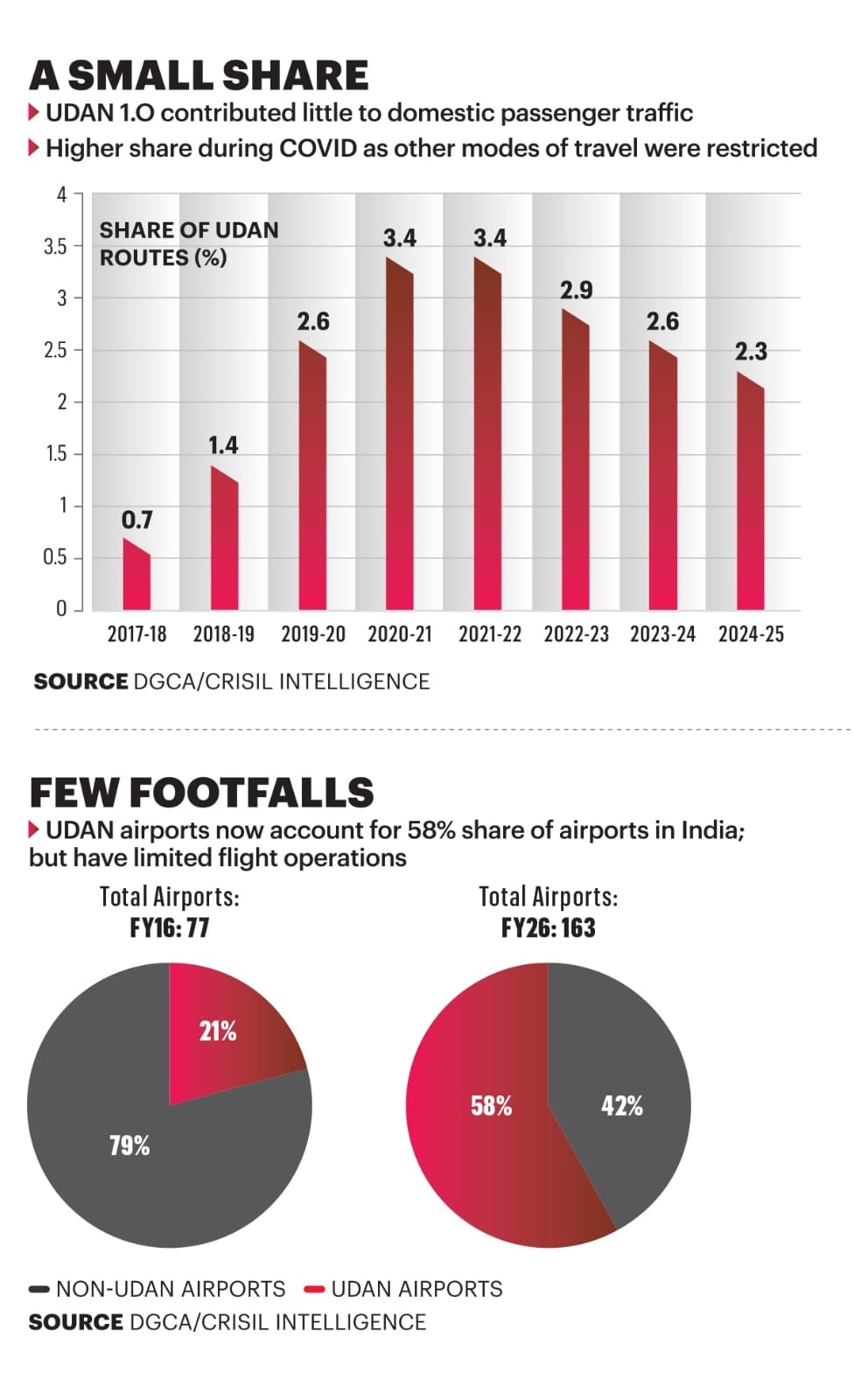
UDAN airports now account for 58% share of airports in India. However, these typically have limited flight operations. Despite expansion, UDAN airports contributed a relatively small share to domestic passenger traffic in 2024-25—a mere 2-3%—according to Crisil Intelligence.

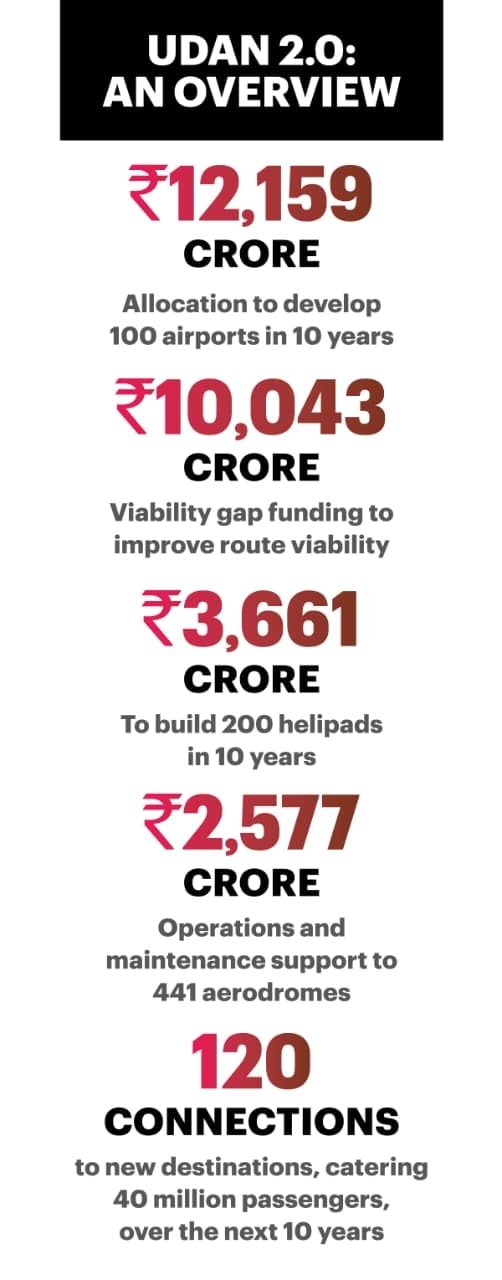
Taking into consideration the hurdles, and to address the route sustainability issues, the government announced a modified UDAN earlier this year. Among other measures, it has increased the viability gap funding (VGF) period from three years. Also, the government will support airport operation and maintenance costs for three years at some airports to aid early-stage traffic. It has allocated Rs 28,840 crore to connect 120 new destinations and cater to 40 million passengers over the next 10 years. The new scheme transitions from a connectivity-first model to an ecosystem-driven approach focusing on developing aviation infrastructure.
Captain Simran Singh Tiwana, CEO of regional air carrier Star Air, says the modified UDAN framework marks a shift from simply connecting cities to integrating India’s most remote geographies into the national aviation network.
“With a substantial outlay of Rs 28,840 crore and a long-term vision extending to FY35–36, the modified UDAN Scheme is poised to deepen connectivity across underserved and unserved regions of the country. By focusing on infrastructure development, operational sustainability, and last-mile connectivity, it creates a robust foundation for the next phase of aviation-led economic growth,” Tiwana tells Business Today.
The reinvention comes at a time when the West Asia conflict has badly impacted the aviation sector, with domestic airlines expected to post huge losses in FY26 due to the adverse operational environment. Higher ATF prices and capacity reduction are adding to their woes. Things are equally challenging for regional players, with high air fares expected to hit demand.
What’s New
UDAN 1.0 focused on enhancing regional connectivity by incentivising airlines through route-based VGF, fare caps, revival of unserved/underserved airports, and strong emphasis on expanding network reach. VGF is provided to bridge the gap between operational costs and expected revenues on thinner routes.
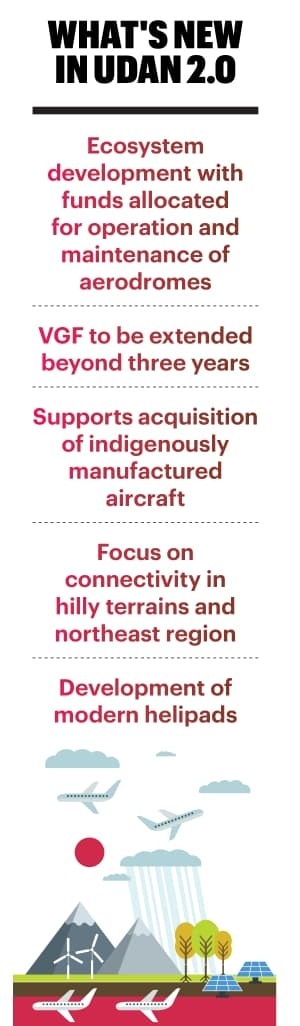
The modified scheme adopts a more holistic approach. Dedicated allocations towards airport operations and maintenance (9%), development of helipads (13%) for serving underserved and far-off regions, extended VGF support (35%), and acquisition of indigenously manufactured aircraft (1%) to strengthen domestic aircraft manufacturing capabilities, apart from the core initiative of developing airports (42%), lie at the heart of UDAN 2.0.
It is also fully funded by the central government, unlike the earlier phase, where states shared a part of the cost.
The industry had flagged aircraft shortage, supply chain issues, aircraft maintenance, airport/runway maintenance, and low passenger demand on some routes, among others, as bottlenecks in case of UDAN 1.0.
Pushan Sharma, Director, Crisil Intelligence, says UDAN 2.0 marks a pivotal shift in India’s regional aviation strategy, moving beyond the initial goal of expanding connectivity to focus on the sector’s long-term sustainability.
“While UDAN 1.0 successfully opened unserved and underserved routes through mechanisms like route-based VGF, fare caps, and airport revival, it also exposed structural challenges such as low traffic density, high operating costs, and underutilised infrastructure. Building on these insights, UDAN 2.0 adopts a holistic, ecosystem-driven approach,” Sharma tells BT.
He explains that extended and enhanced VGF support from three to five years is designed to improve the viability of thinner routes, addressing the sustainability gap that emerges once initial subsidies taper off. Importantly, the inclusion of helipad development broadens connectivity to remote and geographically challenging regions, where traditional fixed-wing operations may not be feasible.

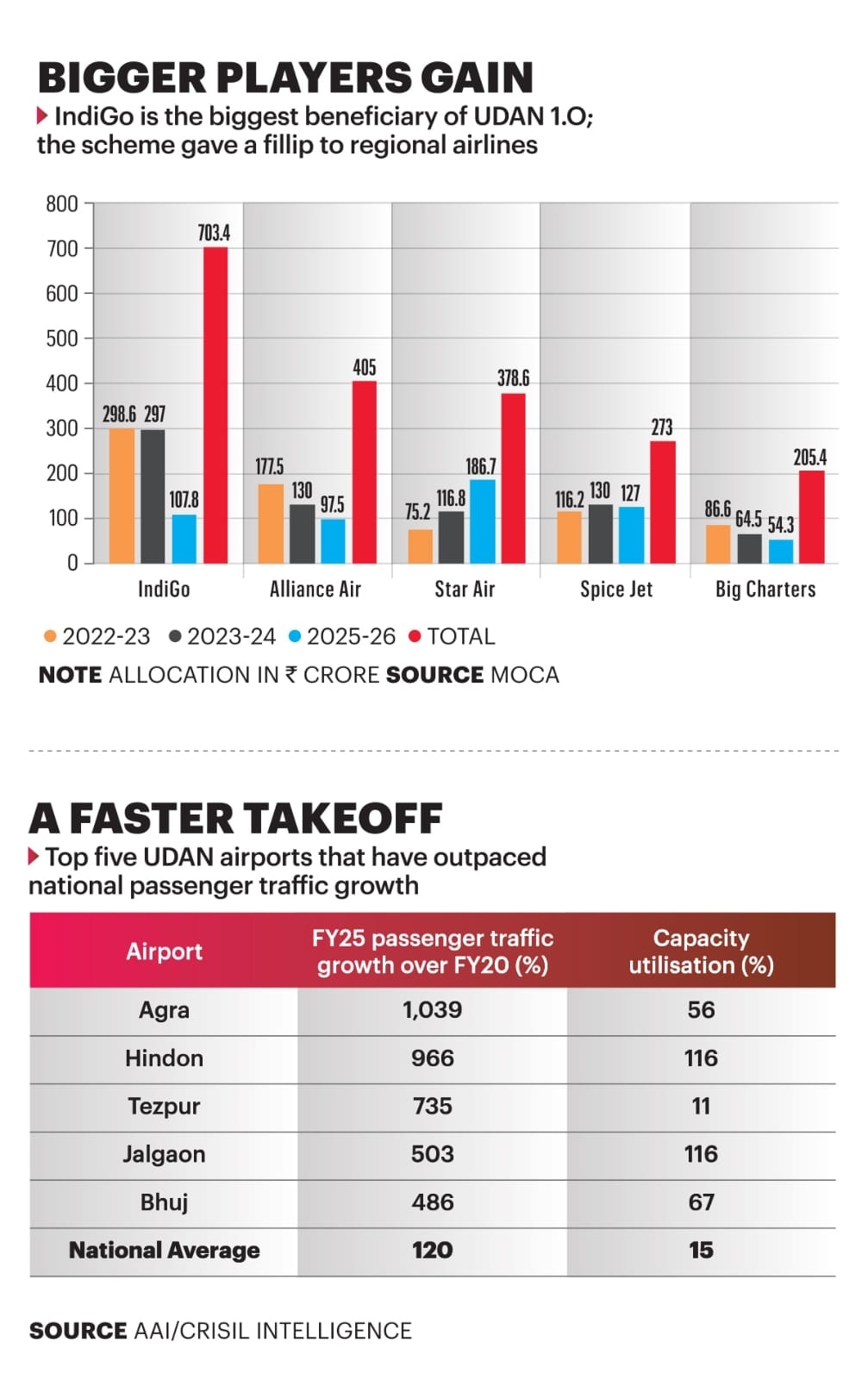
The UDAN 1.o supported the growth of regional aviation players such as Sanjay Ghodawat-run Star Air and FLY91. However, the biggest beneficiary in terms of VGF was IndiGo, followed by Alliance Air.
Manoj Chacko, MD and CEO of another regional airline, FLY91, says the modified UDAN framework, with its more structured and sustained support mechanism, provides airlines greater stability to build regional connectivity.
“Continued support through VGF, along with investment in infrastructure such as new airports, strengthened aerodromes and improved last-mile connectivity, will be important in enabling routes to mature over time. These measures, combined with a broader focus on operational efficiency and ecosystem development, will help regional routes move towards long-term viability beyond the subsidy period. This integrated approach will be essential to the long-term success of regional connectivity initiatives,” says Chacko.
The modified scheme is expected to deepen connectivity in pockets that are still underserved, particularly in the North-East and northern hilly terrains, along with remote and aspirational districts in central and eastern India.
Additionally, the scheme is likely to enhance last-mile access in island and coastal regions, and expand helicopter and small aircraft connectivity in challenging terrains, thereby shifting the focus from broad regional coverage to more granular connectivity gaps.
Learnings
UDAN 1.0 ensured connectivity in Tier II and Tier III cities with operators flying smaller aircraft having an average seating capacity of 70. IndiGo has been using turboprops while Star Air uses Embraer jets. However, operators stopped flying to some destinations at the end of the subsidy period, while some destinations like Jalgaon, Agra, and Hindon are still attracting passengers. Since the inception of the scheme, 925 valid RCS routes have been awarded, out of which 663 have been operationalised, and 327 discontinued.
UDAN has demonstrated that regional India, many parts of which are connected to Tier II and Tier III regions, has real, untapped demand, with VGF playing a critical role in seeding these markets, says Chacko.
“As the scheme evolves, the focus needs to be on improving sustainability through better route selection, deployment of right-sized capacity and stronger network integration. At FLY91, we believe that regional aviation is a key driver of economic growth, tourism development, and social integration. The modified UDAN scheme not only reinforces this foundation but also creates new opportunities for airlines like ours to expand responsibly and sustainably into underserved markets,” he adds.
Star Air says sustainability beyond the subsidy period is the real test of success. “In our experience, routes that integrate into a broader network rather than operate in isolation tend to sustain well after subsidies are phased out. We are encouraged by the extent of stakeholder involvement in drafting the modified UDAN framework. Even the smallest of details have been carefully addressed, with every concern and suggestion thoughtfully considered,” says Tiwana.
RCS-UDAN is a market-driven scheme in which unserved and underserved airstrips/airports are listed for bidding by airlines to provide connectivity. Bidding rounds are conducted from time to time to cover more destinations and routes. Interested airlines submit their proposals during bidding based on their assessment of demand on particular routes.
From an investment perspective, UDAN’s share in total airport capex has remained limited at 2–5%. Under the modified scheme, this is expected to double to 6% over FY27–FY31, driven by the higher capital outlay.
An analysis by Crisil shows the impact of UDAN in stimulating demand and improving connectivity in Tier II-III cities, where incremental capacity deployment has led to disproportionately higher traffic growth vs the overall aviation market.
Another encouraging factor is the passenger traffic at UDAN and regional airports, which have sharply increased post-Covid-19 (FY20-25), significantly surpassing the national average.
While overall Indian passenger traffic grew 1.2x over the period, several regional airports have grown in multiples. Agra, Hindon, and Tezpur airports have seen exponential growth (7-10x), whereas Jalgaon, Bhuj, and Diu have grown 3-5x. This indicates that traffic growth has been much stronger at smaller airports, albeit on a lower base. The highly coveted and recently inaugurated Jewar airport in Noida is also expected to boost revenues.
The Roadmap
The government is looking to double the number of airports (to 350-400) by 2047. The RCS is expecting to play a major role in achieving this target.
Chacko says the continued provision and expansion of VGF, along with a more sustainable support mechanism, will be critical in enabling airlines to establish regional connectivity.
“The emphasis on last-mile connectivity and infrastructure readiness will further enhance operational efficiency and improve the passenger experience,” he says.
One more important point is the emphasis on indigenous aircraft acquisition, signaling a commitment to strengthening domestic manufacturing capabilities mainly focused on regional aircraft, providing a cheaper alternative and making regional/UDAN routes more viable, says Tiwana. “Although, fund allocation may need to be bolstered for this,” he adds.
Going forward, while the share of passenger traffic from UDAN routes is expected to be broadly stable, the continued expansion of airport infrastructure and route connectivity is likely to strengthen India’s regional aviation network by adding more underserved airports and making air travel accessible to the wider Indian populace and enable airlines to expand their network, says Crisil.
Several newer players, such as Alhind Air, Shankh Air, and Air Kerala, are looking to enter the regional aviation space, eyeing opportunities to enhance regional connectivity.
The modified UDAN seemingly provides a smooth launch pad for the newbies looking to put more destinations on the country’s aviation map. But survival is the key. With competitive pricing and unpredictable demand, the regional aviation space is poised to become an interesting one in the coming years.
@richajourno


