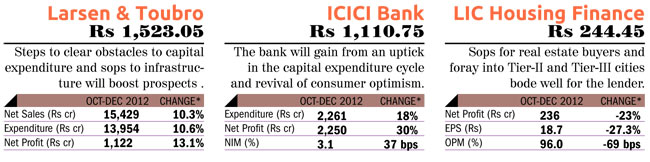
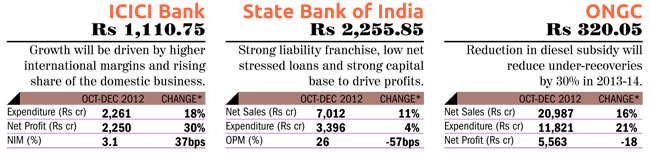
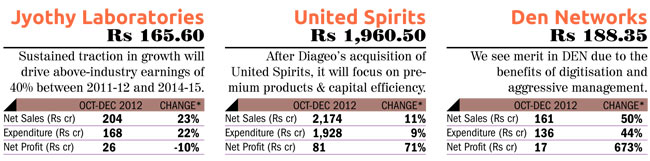
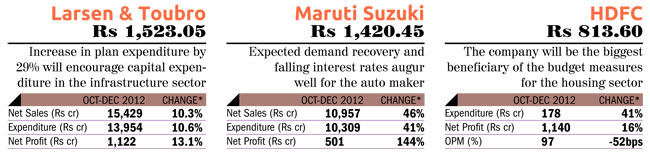
The Budget often changes the investing arena and offers fresh investment opportunities. A few experts recommend best post-budget buys -
"Tough decisions will pave the way for the next big rally in markets"The finance minister has
avoided populist measures and has stuck to fiscal prudence. The tough decisions on cutting unproductive expenditure and thereby putting the economy on the path of fiscal consolidation will pave the way for the next big rally in equity markets.
The finance minister has taken several steps to curb expenditure and increase revenue in the second half of the current financial year. This will ease concerns over "rating downgrade". At the same time, higher investments in infrastructure, education, rural development and social services will revive the market sentiment.
Anand Rathi Chairman, Anand Rathi Financial Services"The upside in stocks will be driven by earnings growth"The Budget has done a good job of balancing growth and macroeconomic challenges. Especially commendable is the focus on reducing the fiscal deficit. It will be neutral to mildly positive for the stock markets. However, the market does not depend on one event like the Budget. Other things, such as current account deficit and GDP growth, are more material. The upside in stocks will be driven by earnings growth. We are positive on the banking sector. The sector will benefit from a revival in economic growth.
Gautam Sinha Roy Vice President, Equities, Motilal Oswal Securities"Individual companies will be better bets than a broad-based strategy"We expect rapid economic recovery to be elusive, clouding prospects of growth in corporate earnings in the near term.
With a lot of additional equity likely to hit the market. The government has a big disinvestment target for the year. Along with this, the June deadline for reducing promoter holding to 75 per cent is looming. Also, there will be the private sector's need for growth equity. We believe the markets will remain range-bound in the near term.
Further, with likely earnings growth of just 10 per cent in 2013-14 and possible rupee depreciation, the case for near-term investments seems to be off the table for now.
We reiterate our view that India is a bottom-up market and continue to believe that individual companies will provide more attractive opportunities than a broad-based "all boats rise in a rising tide" strategy.
Nikhil Vora Managing Director and Co-head, Research, IDFC Securities"Markets could rise if govt sticks to its objective of fiscal correction"History suggests that the impact of Budget measures on macroeconomic fundamentals is visible after a lag. The finance minister has delivered on the promise of fiscal consolidation. A lower fiscal gap will check inflation as well as the current account deficit. This will give the Reserve Bank of India room to loosen its monetary policy, and it may cut the repo rate by at least 50 bps in 2013-14. This may take some time to materialise, though, and therefore the markets may not benefit a great deal in the near term. However, equity markets tend to discount future events well in advance. So there could be a fresh rise over the medium term, provided the government sticks to its stated objective of fiscal correction and undertakes economic reforms.
The markets will try to discount the Budget in the near term and could gradually move higher as the government's economic measures begin to take effect. Valuation-wise, the Indian market is trading at 13.4 times 2013-14 earnings, a discount to the historic average of 15-16 times forward earnings. Therefore, we have a constructive view of Indian equities from the medium- to long-term perspective.
Vinay Khattar Head, Research, Retail Capital Market, Edelweiss Securities