












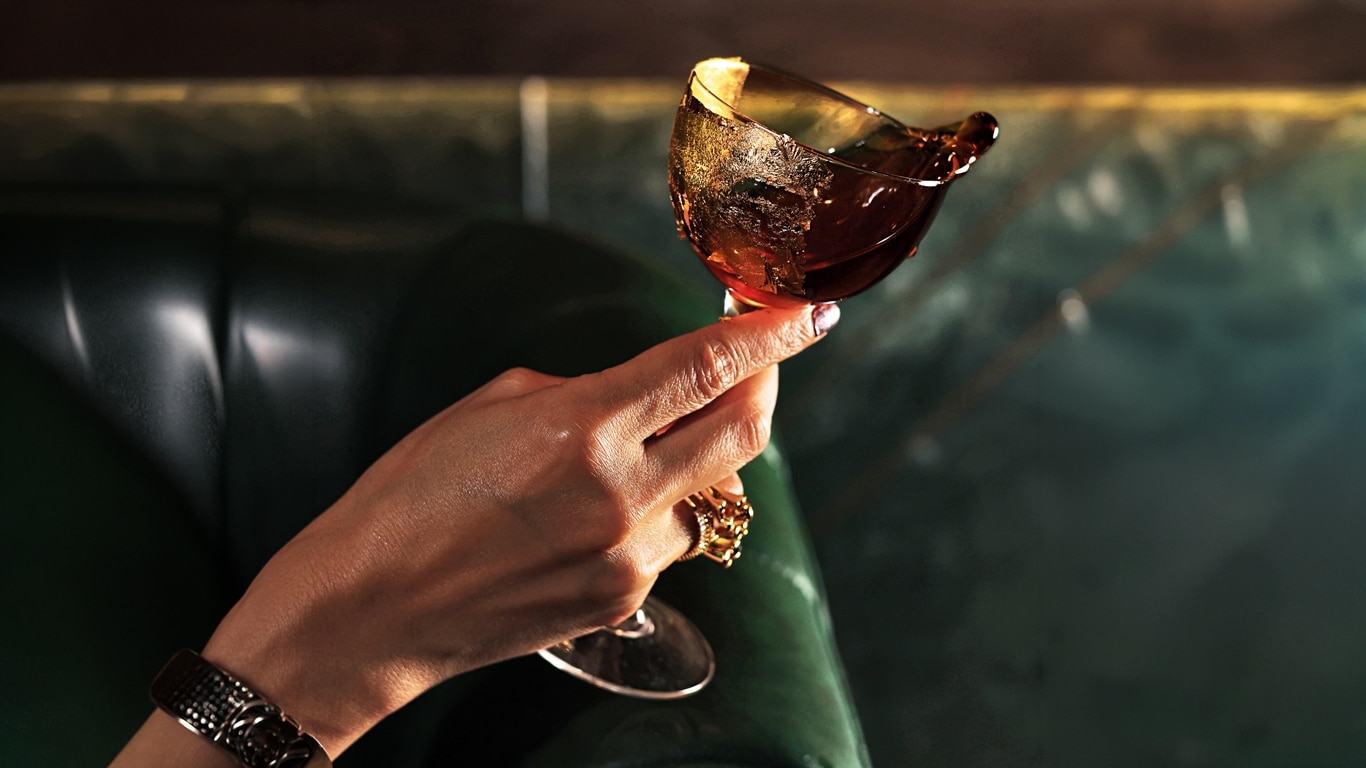

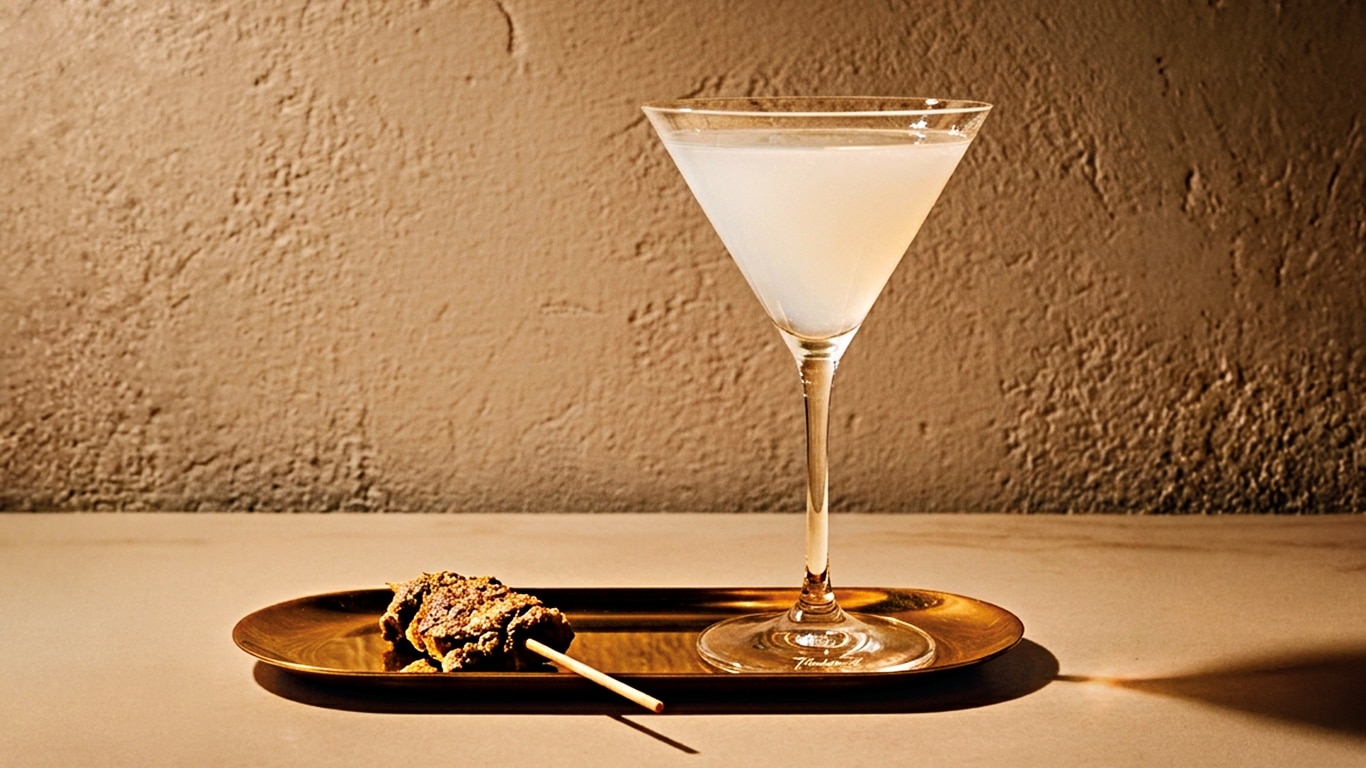
The Martini at Upstairs arrives looking austere—pale, served without ornament, in a classic V-shaped glass. Hinting towards its secret ingredient, that is more likely to be found simmering in a pot than swirling inside a cocktail glass: bone marrow.
For Varun Sharma, Head of Bars, EHV International, that opened Upstairs in December right above Indian Accent in New Delhi, the drink was never conceived as a gimmick. It was an attempt to distil the restaurant’s culinary philosophy into liquid form.
“While designing the menu, I wanted to do a cocktail which was very Indian yet global, an ode to the cuisine served at Indian Accent,” says Sharma. The resulting Bone-Dry Martini, made with bone marrow-washed vodka, nihari-spiced vermouth (made in-house) and smoked tamarind, took more than 90 days and an entire crate of spirits to perfect. “We tried it with everything—from cognac to whisky—and finally settled on vodka and a martini.”
The cocktail is a collaboration between kitchen and bar, using the left-over bone marrow from the restaurant’s signature nihari. More importantly, it reflects a larger shift underway in contemporary drinking culture. “People are more experimental now. They are not drinking cocktails to get drunk, they just want to try more flavours,” says Sharma.
Increasingly, the boundaries between the pantry and the back bar are dissolving.
That blurring of lines is evident at Top Banana in New Delhi, where chef Tarannum Sehgal, founding chef and brand lead, Top Banana (Bright Hospitality) and beverage head Sushil Pant devised an unlikely martini featuring fish sauce to celebrate World Martini Day. Although never formally added to the menu, it quickly developed a following among guests who have been requesting for it by name.
“It’s a psychological fact that once the brain tastes salt, it wants another sip or another bite. The whole idea of adding fish sauce to the drink, for me, was like opening a packet of salted Lays. You can’t stop eating. You take a sip, and you want another,” says Sehgal.
The success of the drink depended not on amplifying fishiness but disguising it. Sehgal credits Pant’s technical skill for transforming an ingredient associated with Southeast Asian kitchens into something elegant and deeply drinkable.
“We’ve taken a leap beyond savoury, now we are actually deep diving into umami,” wwshe says.
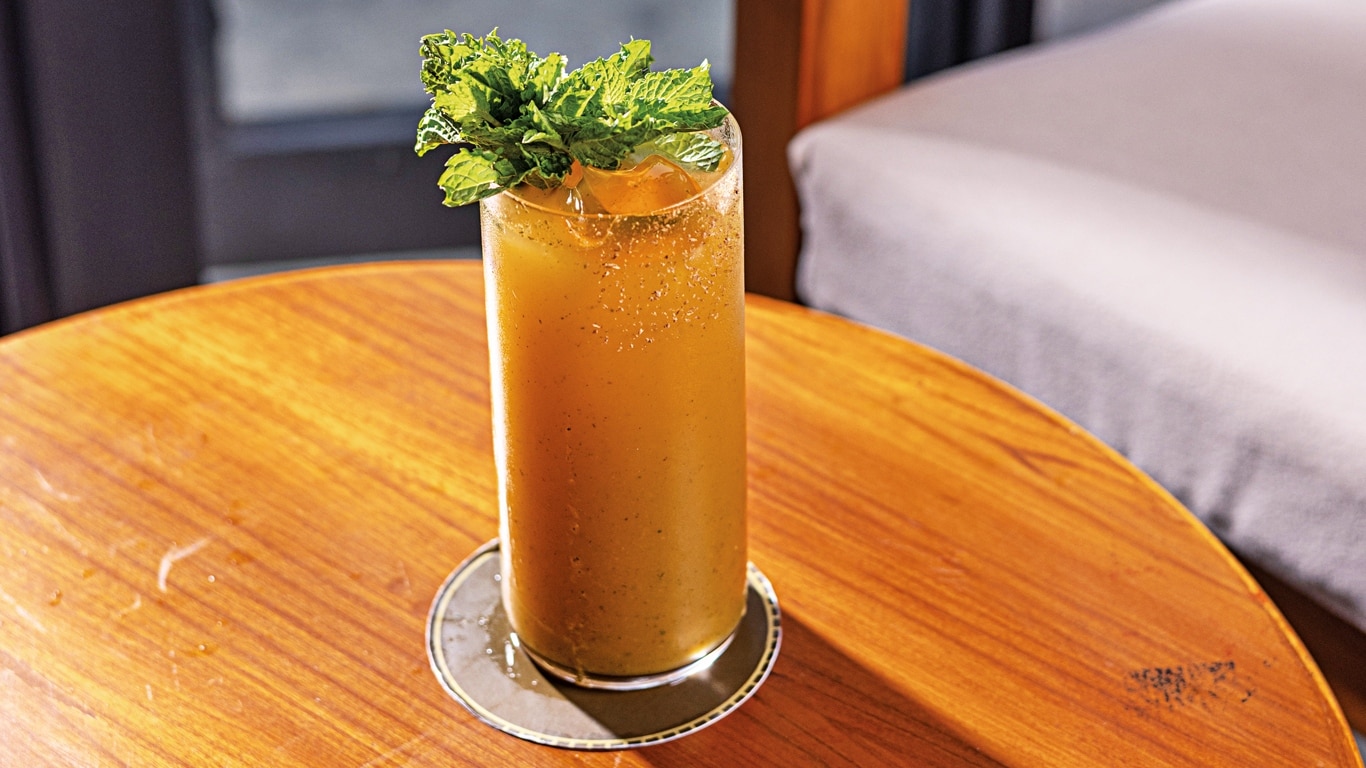
She believes today’s drinkers are increasingly willing to embrace these layered flavours because they have travelled, eaten more adventurously, and witnessed the evolution of cocktail culture around the world. The result is an audience that is just as comfortable ordering bacon, fermented ingredients or fish sauce as it is requesting a perfectly executed Bloody Mary.
For Jeet Rana, Co-Founder of Barbet & Pals in GK’s M-Block market, the conversation never revolves around novelty for its own sake. “We believe an ingredient is only ‘unusual’ until someone finds the right way to use it. India has an incredible pantry that traditionally belongs in kitchens rather than bars, and our approach is to translate these flavours into balanced, memorable cocktails.”
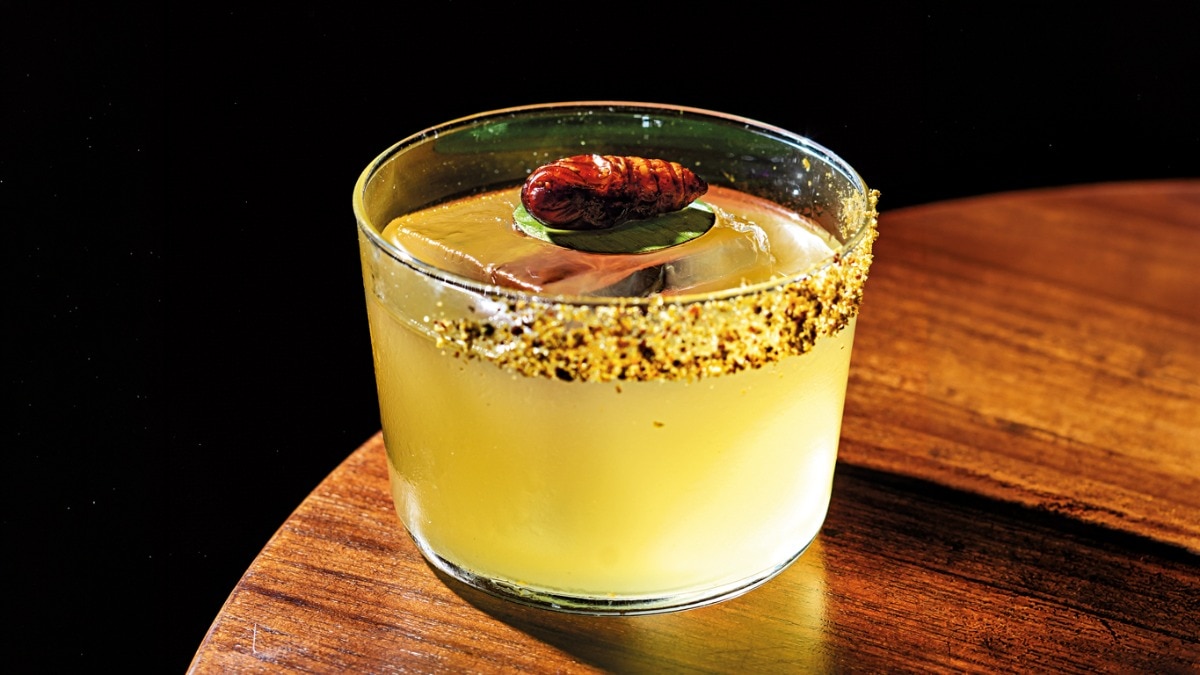
That philosophy is embodied in The Silk, one of the most talked-about drinks from the bar’s Bird’s Eye View: Meghalaya Edition menu. Built with silkworm, tungrymbai, or fermented soyabean paste, Don Julio Reposado and coconut milk, it also incorporates silkworm salt as part of the final serve.
He admits that the word “silkworm” inevitably sparks curiosity. “Of course, the moment guests see ‘silkworm’ on the menu, they have questions! We clearly explain that it is a non-vegetarian cocktail, and for some guests that means they won’t order it, which we completely respect.”
Yet, he says, curiosity usually gives way to appreciation. “People often order it expecting something challenging or shocking, and then realise it’s actually smooth, savoury, and very balanced.”
Elsewhere, bartenders are drawing inspiration from equally unexpected sources. At Heliconia, inside JW Marriott Goa, beverage manager Jitendra Bhandari created Kemuri by fat-washing gin with bacon before blending it with Campari and sweet vermouth. “The idea behind Kemuri was to create a cocktail that reflects Goa’s food culture in an unexpected way. Pork is an integral part of Goan cuisine, so rather than simply pairing a drink with it, we wanted to incorporate its essence into the cocktail itself,” he says.
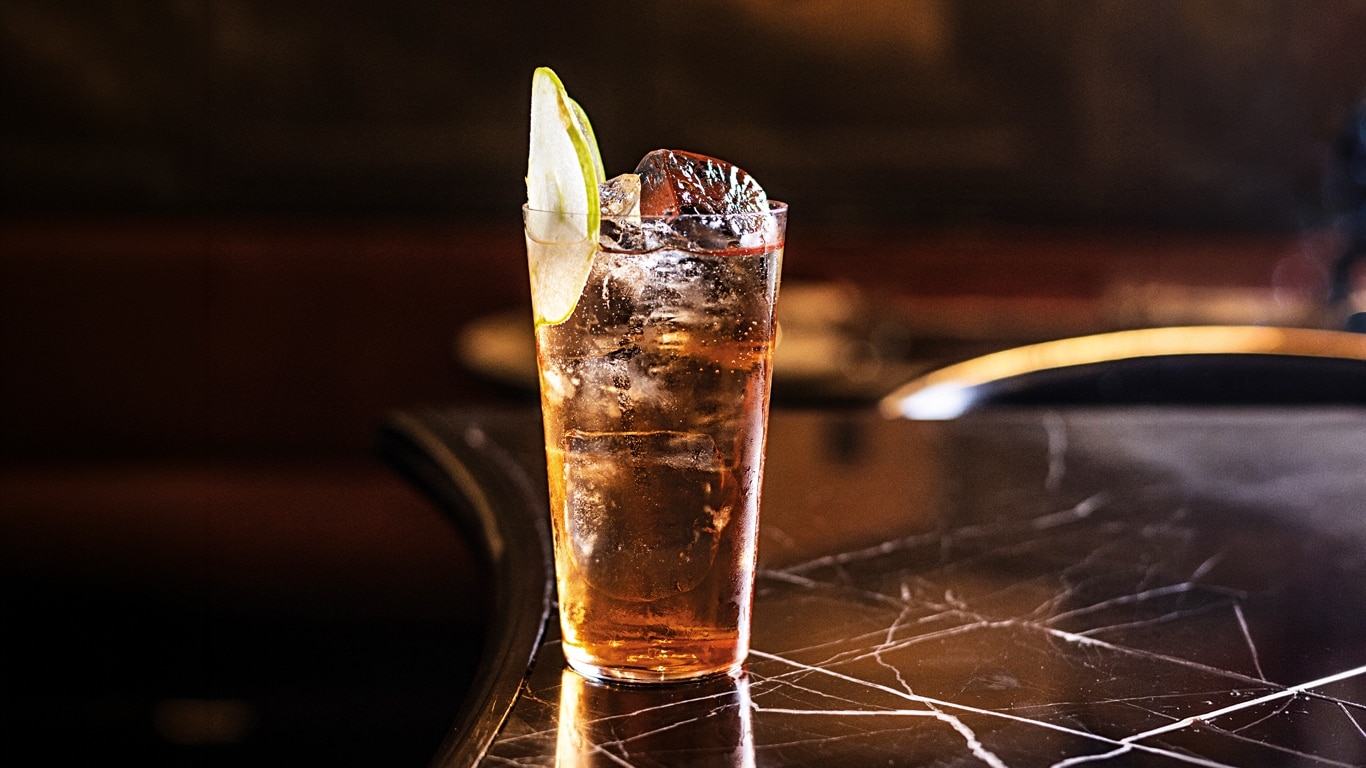
At PCO in New Delhi, general manager Vikas Kumar found inspiration in an ingredient rarely associated with fine drinking. “While researching ingredients for our Forbidden Menu, we discovered that chyawanprash has been banned in Canada for years. It immediately sparked an idea. I’d always felt chyawanprash had the complexity and depth to play a role similar to bitters in a classic cocktail like a Manhattan.” The resulting ‘Ignorance is Bliss’ combines bourbon, chyawanprash, coffee, sweet vermouth, and bitters, finished with edible gold leaf.
Its appeal has travelled well beyond India. “When I served it during our guest shift in Florence, it was the first cocktail to sell out,” recalls Sheet Suri, head of marketing at Pass Code Hospitality. “People were fascinated by the idea of trying chyawanprash.” What followed surprised her more. “People asked for toasted bread so they could spread chyawanprash on top. Watching people in a bar in Florence enjoying Manhattan-inspired chyawanprash cocktails while eating chyawanprash on toast was so unexpected. But proof that great flavours can cross cultures in the most surprising ways.”
Other bars continue to push the conversation forward. At Grammie, bar manager Ashwin Sanotra’s ‘Man vs Wild’ highball uses house-made Palo Santo soda to introduce woody, resinous notes. At Dos, Chef-Owner Jatin Mallick has created a goat cheese cocktail that reimagines the Bloody Mary through tangy dairy. Pendulo serves a Litti Picante featuring a sattu-ghee wash. At Rika, the Pan-Asian restaurant at Park Hyatt Hyderabad, the Pachadi Picante takes inspiration from Andhra kitchens, using dondakaya pachadi—a bold, spicy preparation made with ivy gourd (tindora), while Café Loco’s new Ayur Bar applies cocktail techniques to zero-proof drinks built around ingredients such as shilajit, ashwagandha, giloy, triphala and mulethi, etc. “Our idea was never to create a health menu,” says Joy Singh, founder, Café Loco. “We wanted to build a bar, just without alcohol, where every drink has the depth, complexity, and surprise of a cocktail.”
With bartenders willing to turn unfamiliar flavours into unforgettable experiences, you never know what you might find in your glass next!


