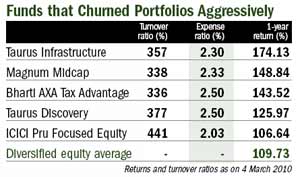
Rule: Frequent buying and selling of stocks is counterproductive because it pushes up the brokerage cost and eats into the returns.
Exception: If a fund is able to generate big returns, a high turnover ratio should not be of any consequence. For the investor, the returns are what matter and volatile markets throw up many opportunities.
701 per cent has been the turnover ratio of the Bharti Axa Equity Fund in the past one year. This is the highest among diversified equity funds. The fund grew 102 per cent during this period.
54 per cent has been the turnover ratio of the HSBC Dynamic Fund in the past one year. This is among the lowest for diversified funds. The fund earned 57.2 per cent during this period.
Mutual funds invest for the long term, holding stocks for extended periods to maximise the potential gains from equity investing. However, even a short-term perspective can be profitable. Some of the mutual funds that have churned their portfolios aggressively during the past one year have given decent returns.
The turnover ratio of a fund is the percentage of a fund's assets that changes in one year. Actively managed mutual funds have higher turnover ratios and, hence, have higher expenses. In comparison, the passively managed index funds and exchange traded funds tend to have lower turnover ratios and expense ratios.
The expense ratio that a fund house can charge investors in equity schemes is capped at 2.5 per cent. A higher expense ratio does not automatically make a fund a bad choice just as a low ratio does not make a fund a good buy. If the fund manager generates high returns, he can justify a higher expense ratio.