The change
The Direct Taxes Code (DTC) may end exemptions and tax long-term capital gains from equities.
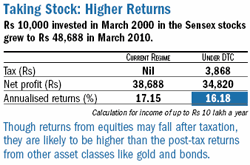
Any income from investments in stocks and equity-oriented funds will be added to the income of the investor and taxed at the marginal rate. Right now, if the holding period exceeds a year, profits from such investments are treated as long-term capital gains and are exempt from tax. Short-term gains, where the investment is for less than a year, are taxed at 15 per cent.
0.125 per cent of the transaction value is the securities transaction tax. The DTC has proposed do away with this tax.
62.5 per cent has been the rise in inflation in the past 10 years. Investors can adjust their costs and save tax by indexation.
The impact
The tax won't make stocks less attractive as they are likely to outperform other asset classes.
Bigger gains: While the exemption on long-term capital gains from equities may be removed, the rate of corporate tax will also come down from the present 34 per cent to 25 per cent. This could boost the valuation of companies and lead to higher gains. Besides, the DTC has proposed liberal changes in tax slabs. Right now, 70 per cent of taxpayers are in the 10 per cent tax slab. The change could bring 97 per cent of assessees in this slab.
Icing on the cake: Investors will be able to offset long-term losses from equity investments. Presently, only short-term losses can be set off against gains. Currently, the loss can be carried forward for only eight years, but under DTC, all capital losses can be set off and carried forward indefinitely. While the distinction between long- and short-term gains is likely to go, long-term investors can benefit from indexation.