
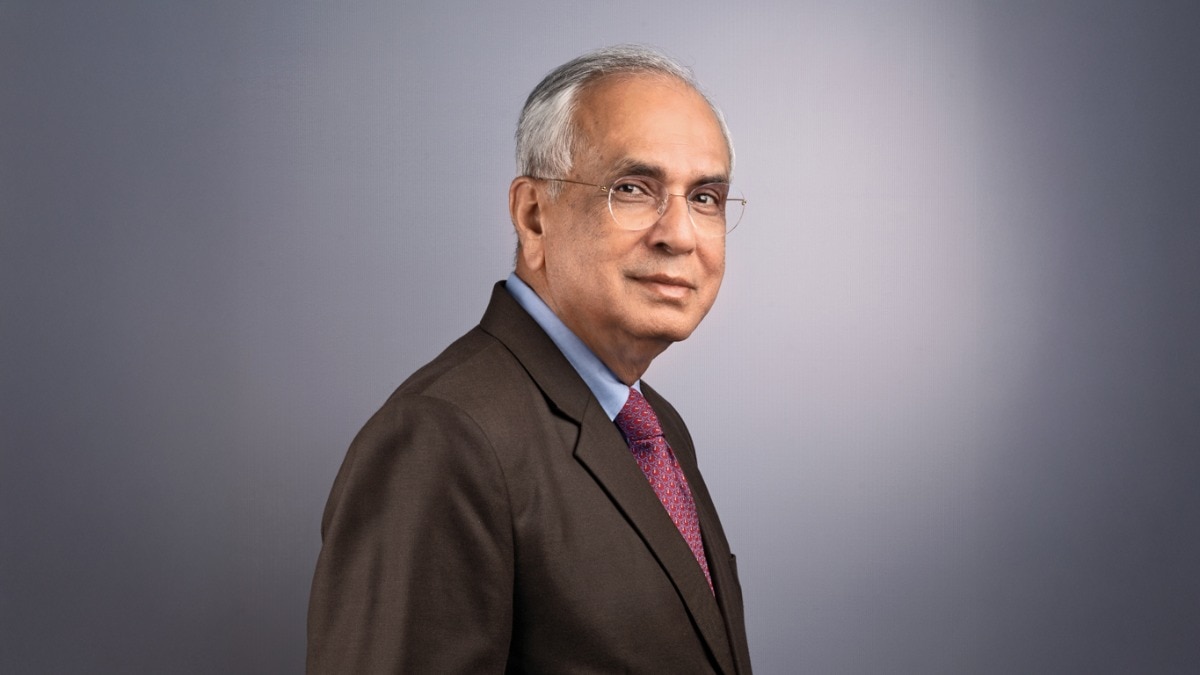
Welcoming the rate cuts in the goods and services tax (GST), Rajiv Kumar, former Vice Chairman of NITI Aayog and Chairman of not-for-profit policy think tank Pahlé India Foundation, says it can have a multiplier effect on growth and lead to higher private investment and higher growth of bank credit. However, it may only marginally offset the tariffs imposed by the US on Indian exports, he tells BT, underlining the need for structural reforms to make India more export oriented. Edited excerpts:
Do you think the GST rate cuts will boost domestic demand and consumption?
Yes, it will certainly boost consumption, especially by the middle class, in items like appliances where the rate has been reduced. This will lower the price and boost demand. Also, the reduction of GST to zero on insurance will help increase the penetration rate, including in rural households. More importantly, reducing GST to zero on many essential commodities will put more money in pockets of the poor and the lower middle class. They will have extra purchasing power to buy other goods and services.
Will the GST rate rationalisation help offset the impact of the US tariffs?
Its impact on countering the higher US tariff is not so clear. If it is at all, then it will be more indirect by reducing the cost of inputs for exporting industries, because GST has been reduced for some intermediate goods as well. But there is nothing here that will compensate for the 50% tariff hike entirely. However, any simplification of the regulatory regime helps exporters. Trade facilitation measures have been taken in GST now which will benefit them.
What kind of measures are needed to address the impact of US tariffs? Do you remain hopeful of a trade deal with the US?
There are clearly different scenarios going forward. The best-case scenario would be that given the kind of opposition the 50% tariffs on Indian exports have faced in the US from the Democrats and some Republicans, President Donald Trump may rescind it. It’s a long shot, but if the Ukraine war was to get resolved, and Russia wasn’t in as bad books as it is at the moment, then that can help. The worst-case scenario could be that the tariff stays in place, and maybe there are some more threats by the US administration. They have the leverage, but we don’t.
What we can do is to use this moment to work on improving the competitiveness of our export industries. For instance, industry in India pays much higher energy charges than domestic household consumers. Therefore, industry is cross-subsidising households. There are several steps that the government can take in terms of structural reforms, and not just a fiscal handout. Fiscal handouts are very visible and can be challenged in the World Trade Organization. President Trump will also notice them and can react negatively.
We should also look at governance reforms to address impediments in customs clearances and licensing requirements. We must use this time to make India much export oriented than it has been so far and increase the rate of growth of its exports.
Exporters are still hoping for some incentives from the government…
Giving a fiscal handout will not work because that doesn’t bring about the needed structural change. A clever policy, for example, would be to devalue the currency at this time or have a dual exchange rate. China and South Korea both did it in the past. It will give exporters an incentive that they can depend upon and not feel continuously uncertain as to when this will be withdrawn.
What is your expectation on growth given the economy grew by 7.8% in the first quarter of the fiscal? Do you think that the GST rate cuts and the possible consumption boost will also help growth?
My own take is that we will achieve 6.5% gross domestic product (GDP) growth rate for the whole year. However, we should not be talking about 8% growth on the basis of the first quarter data, though we need to target growth of around 8%.
The GST rate cut will have a multiplier effect. If demand does pick up, then that should lead to capacity expansion or, in other words, what is called a supply response. The supply response would be seen in the shape of higher private investment and higher growth of bank credit, which is now down to single digits. 
@surabhi_prasad











