
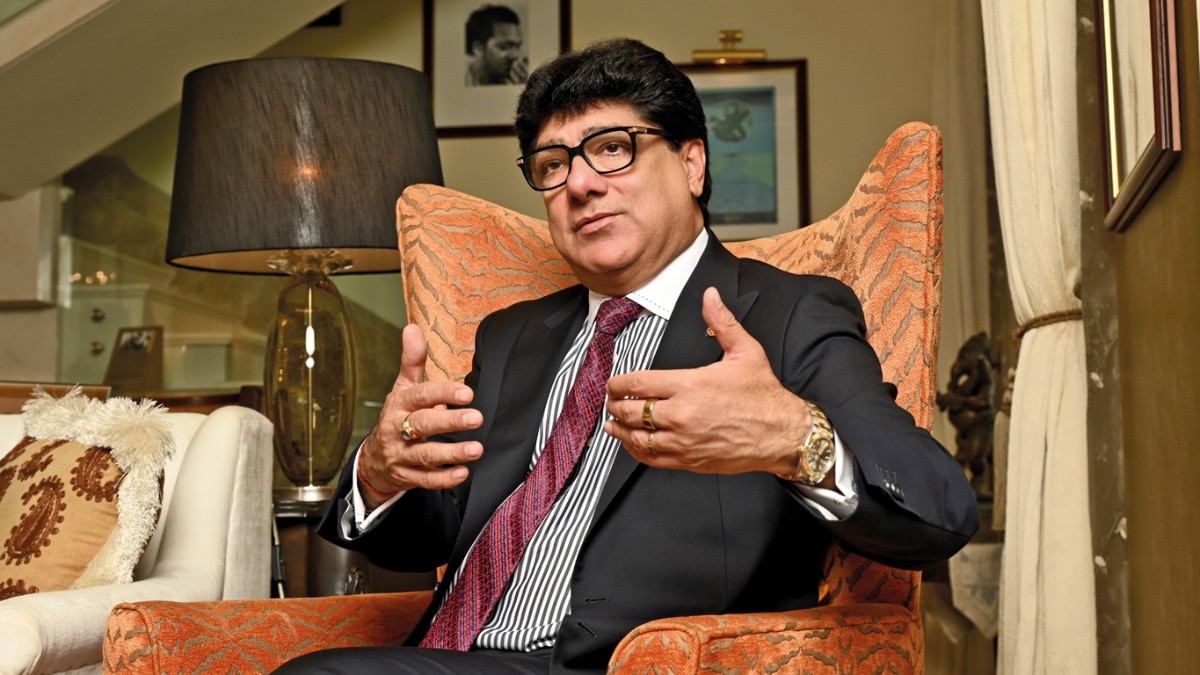
The Ravi Shankar suite at The Taj Mahal Palace in Mumbai is the epitome of luxury. Named after the sitar maestro, this is the room where, in the mid-1960s, he taught George Harrison of The Beatles how to play the sitar. Quite appropriately, it is the venue for a chat on luxury with Puneet Chhatwal, MD & CEO of The Indian Hotels Company. Edited excerpts:
How has the Taj journey been?
We are a 122-year-old brand. For the first 70 years, there was only one Taj, where we are currently seated. We then had a couple more like Rambagh Palace in Jaipur and Taj Lake Palace in Udaipur. One became three and three became five, and in 2017, we had 33 Taj hotels in operation. Today, that number has trebled, and we are getting close to 150.
All this is a reflection of the demand from and evolution of Indian society and how the country has developed. As the fourth-largest economy, the supply of luxury goods and services should be much higher. That has not happened because the gap between per capita income and the size of the economy is still very large. The moment that narrows, the growth in luxury will be very sharp. That makes me very optimistic about the sector in India.
Is the expansion of properties driven by a belief that supply creates its own demand?
India is a supplier’s market. Our projects in the Andamans (Taj Exotica Resort and Spa) and Lakshadweep are around creating supply. It has been our strategy for a long time. If you look at Goa, the first luxury hotel was ours, Taj Fort Aguada. These take a long time to build and it’s what the Taj and the Tata group have stood for. It’s not just about building another hotel but building a destination.
Each of these properties ultimately becomes a very good business case. It may not have that payoff in the first three, five or seven years, which includes the two to three years it takes for construction.
Taj is an emotion, where today’s generation remembers running around in the Holiday Village property or Fort Aguada. In any market we go into, the objective is to create the right product at the right time for the target segment, especially when it comes to luxury.
Does that mean luxury creates a cushion for the overall business, which is known to be cyclical?
We have grown our brands very well but the one that we have excelled in growing and making stronger is the Taj. The rest are in the making and will perhaps take another three to five years before they get there.
So does investment in a luxury property, if managed well, yield disproportionate returns?
Absolutely. When you are doing it in existing and new iconic locations, with iconic properties, people will pay more. When that happens, the incremental return will far outweigh the incremental costs that you put in. That’s why operating leverage becomes critical. One must not take a short-term view. Markets will go up and down but if you get all this right, returns can be exponential.
Taj Mansingh (in New Delhi) is a good example. It’s not opulent and has a great location. Post the renovation, there are great food and beverage offerings. Now, the hotel is always buzzing and has surprised everyone for the way it has come back with a bang after years of dispute. Look at the one that will come up at Bandstand in Mumbai (the erstwhile Sea Rock Hotel). It will take another 4-5 years, with significant capital deployment now and going forward. The aspiration is to make it the next icon.
Tell us a little bit about the experience of taking the brand global.
When you have brand recall, there is the confidence and courage to do things outside the national frontier. Besides, the Indian diaspora has become very strong. I have met many for whom getting their children married at the Taj is an aspiration.
The other aspect is that the Indian economy has been seeing high growth and our company is net debt free. That means we have sufficient cash to take small risks. For us, going outside India is only with luxury. Personally, I don’t believe that the non-luxury brands have the capability to travel across the national frontier.
@krishnagopalan













