













Twenty-five years ago, the idea of building a world-class business school in India was an ambitious proposition. Today, the Indian School of Business (ISB) has emerged as a leading management institution, with a global outlook and alumni who have made their mark across industries.
As ISB completes 25 years, the institution stands at an important inflexion point. India’s economic landscape is changing rapidly, businesses are navigating new challenges, and expectations from management education are evolving.
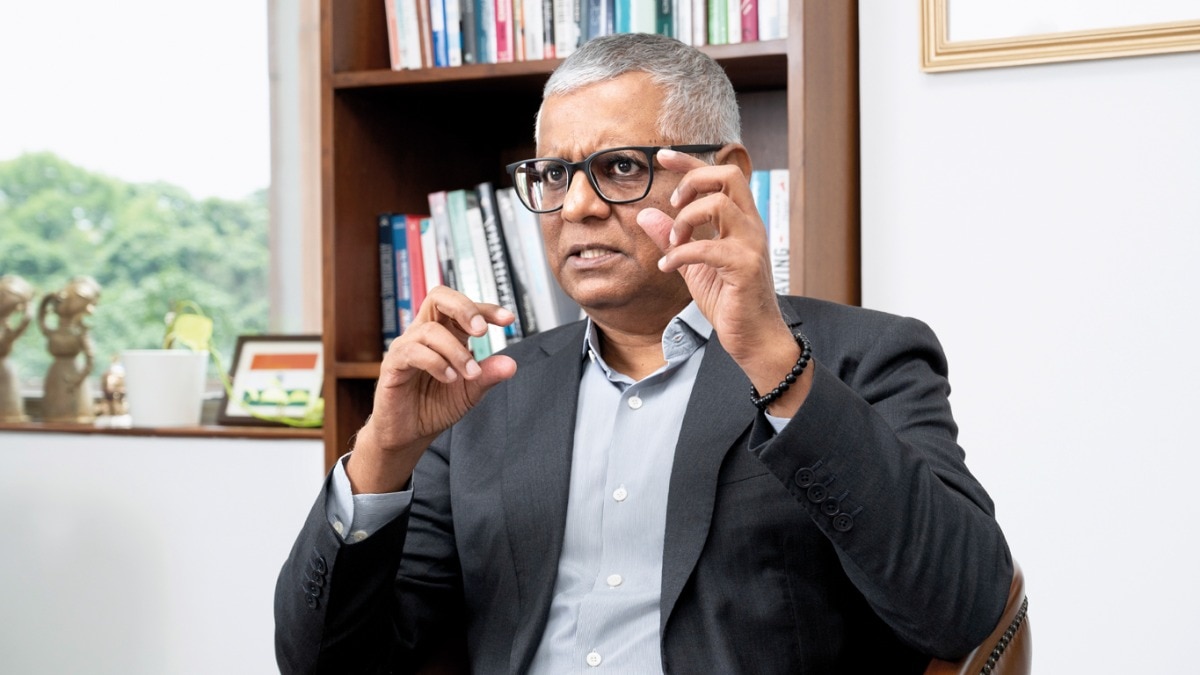
In an interview with Business Today, Madan Pillutla, Dean and Professor of Organisational Behaviour at ISB, discusses the institution’s next phase, the future of management education, the changing MBA model and the capabilities future leaders will need.
Pillutla has been Dean of ISB since July 2021. Before joining ISB, he spent 22 years at London Business School, where he held several leadership positions, including Deputy Dean of Faculty. His research focuses on decision-making, negotiations and behavioural factors that influence choices made by individuals and organisations.
Edited excerpts:
Q: As ISB completes 25 years, how do you reflect on the institution’s journey so far?
A: We are living through a period of extraordinary change. The pace of transformation is dramatic, and institutions of higher education are looking at how their models will evolve. The education system, particularly higher education, has remained largely unchanged for many decades, but we believe it will be disrupted in ways that are difficult to fully anticipate.
At the same time, the engine of growth has moved eastwards. India is uniquely positioned among major economies because growth is continuing and we have a young population that can be trained and retrained as new technologies emerge.
Q: Looking ahead, what will the next 25 years of ISB’s journey be about?
A: If we think about it as a cricket match, the first innings was about proving that you could build a world-class institution in India. ISB demonstrated that with a relentless focus on excellence, student experience, an outward-looking curriculum, and strong connections with industry and policymakers, it can do so.
The second innings asks: what will we do from India for the world?
The opportunity is not only to show that a world-class business school can exist in a developing economy. It is also to create knowledge from India that can help businesses operate in complex environments across the world.
India has experience in areas such as frugal innovation, public-private partnerships and digital platforms that offer lessons globally. The goal is to systematically study what is happening here and communicate those learnings to the world.
Q: As Indian businesses expand globally, what capabilities will future managers need to develop to compete and lead effectively?
A: Indian managers have historically done well globally. We see Indians leading some of the world’s largest companies and occupying important positions across organisations. The question is what qualities have enabled this success. Some of it is competition and talent, but there are deeper qualities that need to be understood.
Going forward, technical skills alone may not provide the same advantage. What will matter more are human capabilities—sound judgement, critical thinking, asking the right questions, making trade-offs and building relationships.
These capabilities will become increasingly important as technology takes over more tasks. The challenge for education is to bring these human strengths to the forefront.
Q: With the business environment changing rapidly, what do you believe will define the future model of management education?
A: There is significant debate about what the future will look like, and not everyone agrees with my view. But I believe postgraduate business education will move towards greater specialisation and personalisation. Today, students spend two years in a programme and receive a broad set of experiences. Some of that knowledge becomes relevant immediately, while some becomes useful much later in their careers.
In the future, people may want to acquire specific expertise at the time they need it. Leadership education may become more valuable when someone is leading complex teams and organisations.
The curriculum will become sharper. People will choose what they need rather than receive a fixed package of courses.
Q: Does the future of the MBA lie in a more continuous and flexible learning model rather than a one-time degree experience?
A: I think that is possible. The current model provides a complete package—a buffet of courses that students consume together. The future may look more like an à la carte model where people choose courses at different points in their careers.
Someone may take one course today, return after a few years for another, and continue building knowledge over time. It will require business schools to organise themselves differently because demand will become less predictable.
This is a hypothesis, not a certainty. But institutions need to prepare for this possibility.
Q: As careers become more dynamic, will lifelong learning and executive education become increasingly important alongside the traditional MBA?
A: I think so. It will keep business schools accountable because they will constantly have to ask whether what they are offering remains relevant.
The market will increasingly determine what works. Companies may come to institutions and say that certain courses are valuable while others are no longer needed. This will create greater innovation in classrooms, curriculum and teaching methods.
Q: If management education moves towards greater personalisation, what could be the implications for cost and affordability?
A: The customer may increasingly become the organisation rather than the individual student. Companies may decide what skills they need and invest in developing employees through customised programmes. Such education may become more expensive because personalisation removes uniformity. But companies will evaluate whether the investment generates returns.
At the same time, technology is improving faculty productivity. Tasks such as creating teaching material, designing exercises and developing curriculum can now be done much faster. This means faculty members can potentially do more without a corresponding increase in numbers.
Q: As artificial intelligence (AI) reshapes learning and work, how is it changing the way business schools approach education?
A: We are still learning how to deal with AI. One concern is that students may receive answers and summaries instantly without going through the process of struggling with problems themselves. That struggle is an important part of learning.
At the same time, people with deep expertise can become much more effective with AI. The challenge for educational institutions is to understand where AI should not be used, where it should be used alongside learning and where certain tasks no longer need to be taught in the same way.
It will take time to develop a mature understanding of how AI should be integrated. But I am optimistic that society will adapt.
Q: Looking ahead, what qualities will define a successful manager in a rapidly changing business environment?
A: A successful manager will be the person who is most curious and most open to learning. The pace of change means that what was correct yesterday may not be correct today. One of the most dangerous phrases in business is: “We do this because this is the way we have always done it.”
Future leaders will need curiosity, judgement, critical thinking and the ability to build relationships. Those qualities will remain central even as the business environment changes.
Q: As ISB seeks to attract more global students, what should applicants consider when comparing it with other leading management institutions?
A: One of the things that is changing is the attractiveness of India as an environment where people can learn and build their careers. Historically, students often went to global institutions because they wanted access to those economies and labour markets. That equation is changing as India becomes a larger growth opportunity.
The promise for international students is not only that they will receive a high-quality education, but that they will also be exposed to a business environment that is evolving rapidly. India provides examples of how companies operate in complex markets, how innovation happens under constraints and how businesses create solutions at scale.
Twenty-five or thirty years ago, people looked at leading American business schools to understand how successful companies were built. The ambition is that, in the future, people will look at India to understand how businesses can be built and scaled in complex environments.
Q: Beyond educating business leaders, what role can institutions like ISB play in shaping public policy and national development?
A: Business schools cannot focus only on private companies. They also have a role in contributing to public policy because businesses operate within larger economic and institutional environments.
At ISB, the creation of the Bharti Institute of Public Policy reflected the belief that research institutions should contribute data, analysis and frameworks that policymakers can use. The role of a business school is not to make policy decisions, but to provide rigorous research and evidence that can inform those decisions.
Business schools can also work with industry bodies and organisations by providing research that helps them understand challenges and engage more effectively with policymakers.
Q: As the demand for new skills grows, how do you see companies participating in the future of management education?
A: Companies will play an increasingly important role because they are ultimately looking for capabilities that help them succeed. If there are models that demonstrate value, companies will participate.
The relationship may become more customised. Instead of employees simply enrolling in a traditional programme, companies may identify specific capabilities they need and work with institutions to build those programmes.
Q: What challenges will business schools face as they move towards a more flexible and evolving education model?
A: The challenge is that organisations have historically been built around a particular model. Large cohorts come in; they follow a structured curriculum, and then they move on. A more flexible learning model requires different ways of planning and organising.
Institutions will need to understand demand differently. They will need to know what people want to learn, when they want to learn it, and how those needs change over time.
This transition will not happen overnight. There will be experimentation and debate. But institutions need to be prepared because the environment around them is changing.
Q: In an environment of constant change, how should managers prepare themselves to remain effective leaders?
A: The biggest advantage a manager can have is the ability to keep learning. The pace of change means that knowledge becomes outdated faster than before. A successful manager will not be someone who believes they have all the answers. It will be someone who is willing to ask questions, challenge assumptions and adapt.
Leaders who remain curious are more likely to understand changing markets, new technologies and evolving customer needs. The future will belong to people who combine knowledge with judgement.
Q: If you had to identify the biggest shift ahead, how do you see management education evolving over the coming years?
A: The biggest shift is that education will become less about a single point in time and more about a continuous journey. The idea that someone completes education and then applies it for the rest of their career is becoming less realistic.
People will need opportunities to return, learn new skills and adapt as their roles change. That will require a different mindset from institutions. They will need to remain connected to industry, understand emerging needs and continuously update what they teach.
Q: As India’s economic influence grows, what does this mean for the future of management education in the country?
A: The opportunity for India is not only economic growth. It is also the opportunity to develop ideas, frameworks and practices that emerge from the Indian experience. Many of the challenges that businesses face in India—operating at scale, serving diverse consumers, innovating under constraints—are challenges that many other economies will also face. The role of an institution like ISB is to study these experiences carefully and understand what lessons can be drawn from them. It is not enough to simply observe.
Q: For students entering management education today, what should they keep in mind as they prepare for uncertain careers?
A: Students should recognise that the value of education is not only in acquiring information. Information is increasingly available everywhere. The deeper value lies in learning how to think, analyse problems, and to work with people.
A successful career will require the ability to adapt repeatedly. The first job that someone takes after graduation may not define their entire career. They will have to learn new skills, move into new roles and understand new industries.
That is why curiosity becomes so important. People who remain open to learning will continue to create opportunities for themselves even as the environment changes.
@szarabi


