
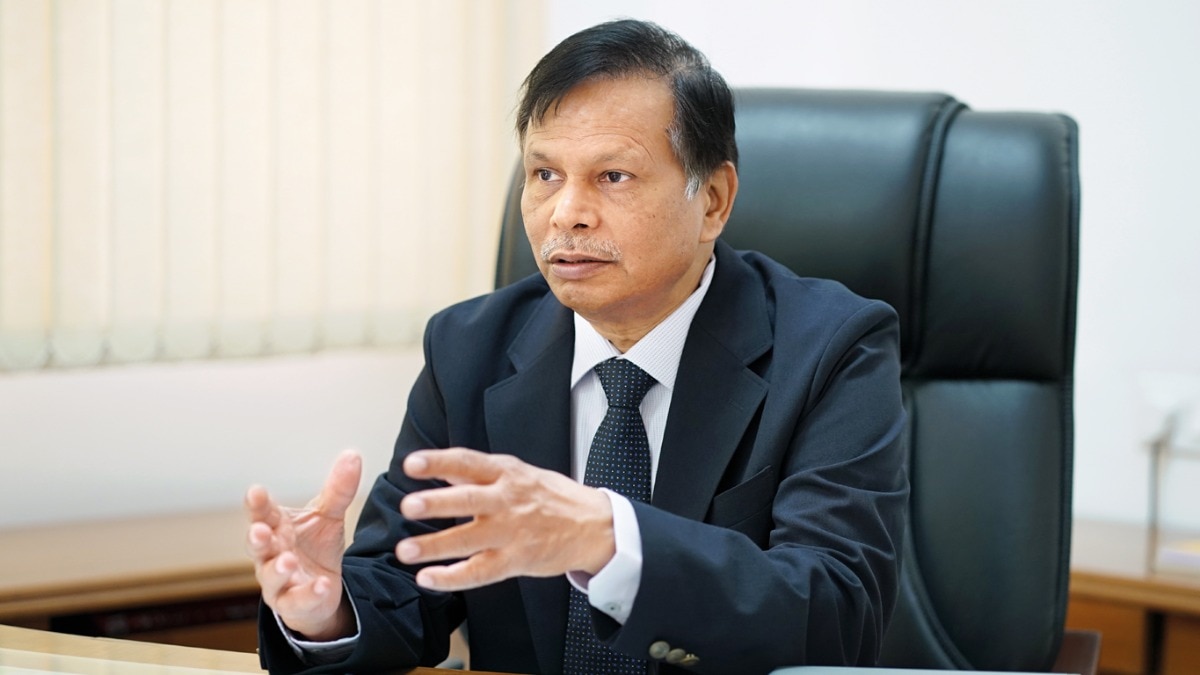
IIM Lucknow has reinforced its position among India’s leading business schools, ranking third in the Business Today rankings of India’s Best Business Schools for 2026-27. The recognition comes at a time when management education is being reshaped by changing business models, evolving industry expectations and the need for future-ready skills.
Professor M.P. Gupta, who assumed charge as Director of IIM Lucknow in April 2025, brings decades of experience in higher education, including 28 years at IIT Delhi, where he held several administrative positions, including Head of the Department of Management Studies, Dean (Planning) and the Modi Foundation Chair. In this conversation with Business Today, he shares his views on the changing relevance of the MBA, how B-schools must adapt to new corporate realities, the growing importance of technology and multidisciplinary learning, the future of placements, and his vision for expanding IIM Lucknow’s role in shaping India’s next generation of business leaders. Edited excerpts:
Q. What defines excellence in management education today?
A: If we look at the past 30-40 years, particularly the transition from the pre-internet era, the artefacts of corporations have changed significantly. Business fundamentals, however, have remained the same.
These fundamentals include understanding customer demand, creating products or services that meet those needs, delivering them at the expected quality and at competitive prices, and ensuring steady positive cash flow. In addition to ensuring long-term viability, sustainability and success, companies must also foster trust among their customers and employees, supported by sound systems and processes. These fundamentals have not changed.
The things that have changed are the business models, the speed of operations and the way decisions are made. Disruptive advances have emerged as the principal catalyst for this change. The internet has had a widespread influence, while technologies such as artificial intelligence (AI) are creating more targeted disruption.
As a result, management education needs to adapt at the same pace. Today, the key to excellence in management education is creating cutting-edge, relevant programmes with a strong technological component. This requires critical thinking, real-world case studies, outcome-based learning and a classroom environment in which students can model business problems and understand their implications.
Internships, mentorship, live projects and strong industry connections are equally crucial. Soft skills, particularly emotional intelligence, empathy, cross-cultural understanding and effective communication, must be prioritised in management education. We must also be mindful of corporate social responsibility, ethical governance and sustainability.
Also, looking at volatile campuses across the country, where students are experiencing heightened stress, anxiety and vulnerability, I strongly feel the curriculum needs to incorporate profound aspects of our heritage—classical music, dance, yoga, meditation, classical cinema and folk arts and crafts—into students’ learning, not as entertainment but as a means of inner transformation. The non-credit basket should be used liberally to offer such courses.
In this agenda, faculty members are the primary distinguishing feature of any institution, as they are instrumental in its implementation.
How do we do all this?
Adopting the best practices from global business schools is always helpful in many ways. Although we have outstanding institutions like the IIMs, the challenges posed by the global environment indicate that we still have considerable progress to make in enhancing our standing on the international stage.
Q. There are frequent questions about whether the MBA is losing relevance. Is it still the gold standard for developing business leaders?
A: The MBA remains a very important degree. At any stage of a career, whether someone is looking for a job, working in a team or trying to understand markets and businesses better, knowledge of management principles is useful. The foundation of management education will continue to be valuable, although the traditional MBA format is evolving, with shorter-duration programmes becoming increasingly popular.
Q. How has the ideal management student changed over the past five years? What will define the ideal candidate for a management programme?
A: The post-internet era has changed the character of business. Artificial intelligence (AI) is now embedded in every aspect of business—operations, products and services—while digital technology has become more foundational. If you look at modern manufacturing facilities, automation has transformed the way businesses operate. Machines are connected, processes are integrated and digital technology is embedded across operations. Modern factories are spread across miles, fully automated, with robots running along the factory roof. Industry 4.0 is a reality in many places in China. India also plans to develop such a manufacturing ecosystem through 12 new industrial smart city projects, approved on August 28, 2024, at a total cost of ₹28,602 crore across 10 states and six major industrial corridors.
Today, students need to develop the capabilities not only to understand such a complex work environment but also to visualise its architecture and artefacts. A general management MBA without an understanding of such a business ecosystem will have limited career scope in the future.
B-schools, therefore, must align their management programmes with new industry realities and requirements. Demand for traditional MBA programmes is already declining globally. Placement patterns as we have known them until recently may not remain the same in the coming years. At IIM Lucknow, we are consciously discussing future job scenarios and adapting our curriculum and offerings accordingly.
Historically, the IIMs focused primarily on high-quality MBA programmes for a long time. There was a reason for this. After Independence, a need was felt to produce high-quality management professionals for the country’s growing industrial and public-sector base. In 1959, the Planning Commission constituted a committee of experts, including UCLA professor George Robbins, to guide the establishment of management institutions in the country. This led to the creation of the first two elite institutes, one in Calcutta and the other in Ahmedabad. IIM Bangalore was established in 1973, and IIM Lucknow was set up in 1984. These four still maintain their primacy in producing high-quality management professionals.
Nevertheless, a plethora of technological disruptions in recent years has necessitated a shift in institutional thinking. That is why IIM Lucknow has decided to develop institutional capabilities, particularly in AI. It has therefore introduced a four-year BS programme in Artificial Intelligence and Business Analytics. AI is a highly specialised discipline and requires students with a strong mathematics background. For this reason, our admission process draws students from JEE Advanced. An obvious question for us is why we chose a programme that appears closer to technology. Our answer is that, unlike typical technology disciplines such as mechanical, civil or chemical engineering, AI mirrors the core of management thought and has now become a lever for how businesses function. It is about learning systems that generate scenarios or options and help make precise decisions, often in real time. Our objective is to develop capabilities across areas such as computer vision, cybersecurity, natural language processing and real-time business simulation.
Suitable changes are also being made to our MBA offerings, as the new programmes being launched clearly demonstrate. Our BS programme stands out for its novelty because it is paired with our flagship MBA, the Tech MBA.
The objective of the Tech MBA is to create business-technology leaders who understand technology-driven companies. For example, a general MBA graduate joining a company such as IBM, Microsoft or Google may require time to adapt, whereas a Tech MBA graduate would be better aligned with and prepared for the requirements of such organisations.
Looking at the changing nature of the economy and the future of jobs, we may see growth without a proportional increase in traditional employment opportunities. With Industry 4.0 and the increasing spread of automation, demand will increasingly be for innovators, thinkers and creators rather than only job seekers.
Through such innovative programmes, our approach is to create graduates who are exposed to the compelling world of innovation and the fascinating world of entrepreneurship.
Our programme has been designed with this vision. Students will be encouraged to identify business opportunities, create new ventures, and develop and incubate ideas with laboratory support and mentorship.
Q. You came to IIM Lucknow from IIT Delhi and bring a wider academic perspective. How has your background and experience influenced your thinking about the future of management education in India?
A: One of my strong beliefs is that the future of standalone B-schools is limited. Over the past two to three decades, many standalone B-schools emerged to meet the needs of a growing economy and expanding businesses. However, technology has deeply influenced businesses and changed leadership requirements. The leaders of the future will require a much broader understanding of, and the ability to visualise, the technology-led future of business.
I have spent my entire academic career in the IIT ecosystem, and I have seen how the older IITs, in particular, have evolved organically. Initially, they focused strongly on technology education and produced world-class engineering graduates. Today, their impact can be seen globally, including in Silicon Valley. Many of them are leading world-renowned corporations. Their ascent coincides with the advent of the post-internet digital-AI age. Over time, these institutions expanded into social sciences, liberal sciences, medical sciences and management education. The impact of these programmes is clearly visible.
The technology curriculum itself has changed significantly. Earlier, students had a structured course load, but now there is much greater flexibility, allowing students to take courses across disciplines. A student from mechanical engineering, civil engineering, biotechnology or chemical engineering can now explore computer science, management and other areas while retaining the core expertise.
Another important aspect is collaboration. At IIT Delhi, I worked not only with colleagues in management but also with experts in computer science, mathematics, industrial engineering and the humanities. When we encounter a business problem requiring a solution, it may pertain to finance, marketing or organisational strategy, but a large part of it often has technological components or context. It frequently does not belong to a single discipline. A collaborative environment increases the possibility of creating more relevant and sustainable solutions. This kind of ecosystem is difficult for standalone B-schools to create.
I see IIM Lucknow from a different angle. The first thing is that we should be clear about whether we are a ‘management school’ or a ‘business school’.
We enjoy the status of an ‘Institute of National Importance’ under the IIM Act, 2027. This provides us with a broader umbrella and scope to undertake activities that contribute to nation-building. It allows us to develop programmes and faculties that advance education, teaching and learning across disciplines, and to set up centres for management studies and allied areas.
With a strong foundation and a credible legacy, I believe IIM Lucknow has enormous potential to play a defining role in India’s growth story. To do so, it must align all its activities with the nation’s priority programmes on its journey towards becoming a developed nation by 2047. What is needed is the cultivation of a collaborative ecosystem here. We are doing this by expanding and diversifying our programme portfolio, both horizontally and vertically. The combination of a BS programme in AI and Business Analytics with a Tech MBA is cutting-edge and represents a new direction. It is novel and clearly in sync with the strategic needs of the corporations of the future.
Another interesting fact that attracted our attention is that a large proportion of corporations in our country are family-owned business houses. They contribute over 75% of national GDP and represent roughly 95% of all registered companies. They employ tens of millions of workers. A large number of MSMEs are also family owned. They face distinct challenges, including succession planning: transferring leadership across generations often creates friction and strategic disagreement. Moving from informal management to institutional structures remains a hurdle for mid-sized firms. For some, it becomes a matter of survival, while family conflicts escalate to the courts. Recognising the importance of this issue, the IIM Lucknow Board has approved the launch of a unique MBA programme for family businesses, which we plan to introduce from the next academic year, 2027-28.
Q. How was the placement season? What does the data tell us about the state of hiring? Also, is global hiring facing challenges because of geopolitical shifts, or are Indian management graduates still valued in the international job market?
A: We are going through a challenging period. Everyone acknowledges that. I believe these challenges will continue and compound over time. Many of these factors are beyond our control.
If we look at the broader economic environment, the corporate landscape and the role of business schools, India continues to have a significant advantage because it is a large consumer market. There will always be demand for all kinds of products and services. Businesses will continue to grow, global companies will continue to operate in India, and a culture of innovation will ensure that new businesses emerge. Therefore, demand for the right kind of talent will always be there.
At the same time, at IIM Lucknow, we recognise that we are an elite institution. We are not producing graduates on a mass scale. Therefore, we have to be conscious of the challenges ahead. Our programmes are premium, and to maintain their traction, they need to be refreshed regularly to remain contemporary.
When it comes to placements, the current record is satisfactory. However, I am concerned that this performance may face pressure in the coming years. The impact could become more visible as technology adoption, particularly artificial intelligence, changes the nature of hiring.
For example, if large consulting firms such as McKinsey, A.T. Kearney and BCG reduce hiring because AI adoption changes the demand for consultants, it will affect leading management institutions such as the IIMs more. If such firms reduce recruitment significantly, the impact will be felt across campuses, perhaps most at IIM Lucknow.
We are preparing ourselves for a possible reduction in placement opportunities. One approach would be to redesign programmes according to industry requirements rather than reduce batch sizes.
Students may not always need to spend two years on campus for every learning requirement. The time has come for more specialised programmes in compact formats.
At the same time, professionals already in the workplace are looking for high-quality programmes, which is why we are also exploring different delivery models, including blended and hybrid formats.
Curricula across all programmes need to be made more entrepreneurial. The objective is to ensure that management education remains relevant and aligned with the nation’s needs.













