
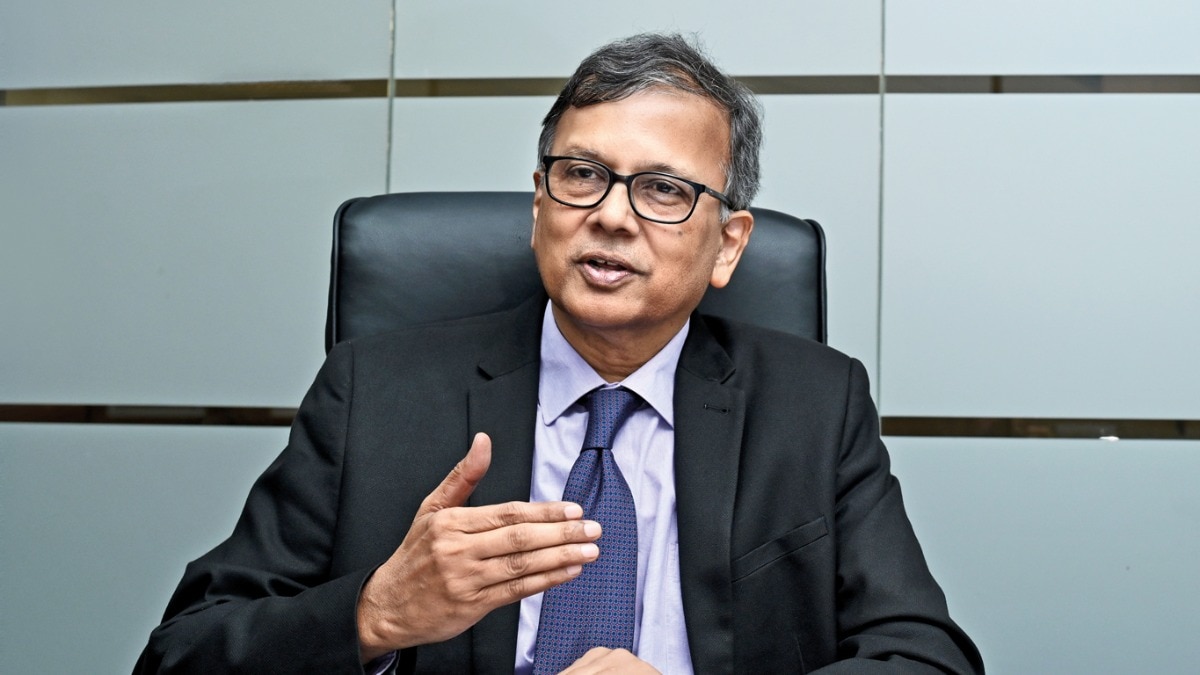
It is not easy to achieve sustainability at scale, especially when there are multiple business operations. In an interview with Business Today, Anup Sahay, Head, Corporate Strategy & Special Initiatives, L&T, elaborates on how the company has fared on sustainability so far. Edited excerpts:
What makes the L&T sustainability story a complex one?
When you speak of carbon footprint coming into the world, what comes to mind are hard-to-abate industries like power, transportation, metals, and chemicals. We are not in that set. Construction as an activity itself contributes less than 2% of global emissions.
But we still have another context, which is unique to us or companies like us. We operate on a scale that encompasses our construction and infrastructure projects across 800-plus sites. These are not permanent places where we conduct our business activities and normally remain there for 2-5 years. There is no finite or defined boundary of that construction site, with many of them at remote locations. The challenge is to create a sustainability movement that addresses the environment and the kind of energy we use, thereby reducing emissions and managing waste effectively.
At many of these sites, you must carry diesel because there is no power connection. But diesel, as we know, is highly polluting. The question is around how you address all of this.
When did this exercise begin?
It started around 5-6 years ago. We engaged with several things on sustainability before that, but they were mostly on the corporate social responsibility side. And while businesses were trying to conserve energy and reduce emissions, it was not a planned approach. At the end of the year, there was a lot of reporting activity to bring all this together, put it into a sustainability report, and release it.
Though there was no pressure on us from any external entity – investors or regulatory authorities – because, as I said, construction does not contribute a big amount to the environment in terms of negative carbon impact. We, however, decided to be proactive and took concerted steps.
Tell us about how goal setting took place.
We were seeing companies in other industries announcing their goals for carbon neutrality and water neutrality. It was clear we had to take a leadership position. We put together a team of specialists in the areas of energy and had environmentalists too.
Given we were executing projects across the whole spectrum of energy—renewable, non-renewable, and fossil—we knew. With the business growing, there would be more requirements for energy, and if the wrong kind of energy was being consumed, more emissions would take place. The team worked towards a timeline for being carbon neutral. Questions like at what pace can we implement renewable energy and how can we switch from diesel had to be answered.
Finally, we said we will achieve water neutrality by 2035 and carbon neutrality by 2040.
How has L&T been foundationally strong to get it right on sustainability? What did you specifically do?
In the beginning, we took the target and broke it down into five-year chunks in line with our five-year long-term strategy planning cycle for our businesses. This was in terms of where they would be, which segments to pursue and exit, which new business areas, or what the new capabilities would be. We decided to synchronise both.
We integrated the sustainability planning framework and made it a five-year cycle. Each of the five years had year-on-year targets and was judged for efficiency reduction, which could be for emissions, renewable energy, or any such target. It was then left to the businesses to come out with initiatives to reach those targets, but it is where we got into a problem. For the first two years, we could not achieve targets at all, because every business was thinking on its own. They were going for what was easy to achieve but not substantial enough to make an impact.
We realised that to make it real for the businesses, we had to do some thinking on their behalf. It meant taking hard, quantifiable initiatives. If they pursued them, which we can centrally track also, their value can be measured, and we will make progress.
Speaking of what has been achieved, standalone revenue grew by 16% (Rs 1.26 lakh crore) Y-o-Y in FY24 and 13% (Rs 1.42 lakh crore) Y-o-Y in FY25, with diesel consumption reducing by 8%. Standalone revenue in FY23 was Rs 1.08 lakh crore.
During FY25, diesel consumption reduced by a further 9%. In June this year, we launched India’s first ESG (environmental, social, and governance) bond issue.
@krishnagopalan













