








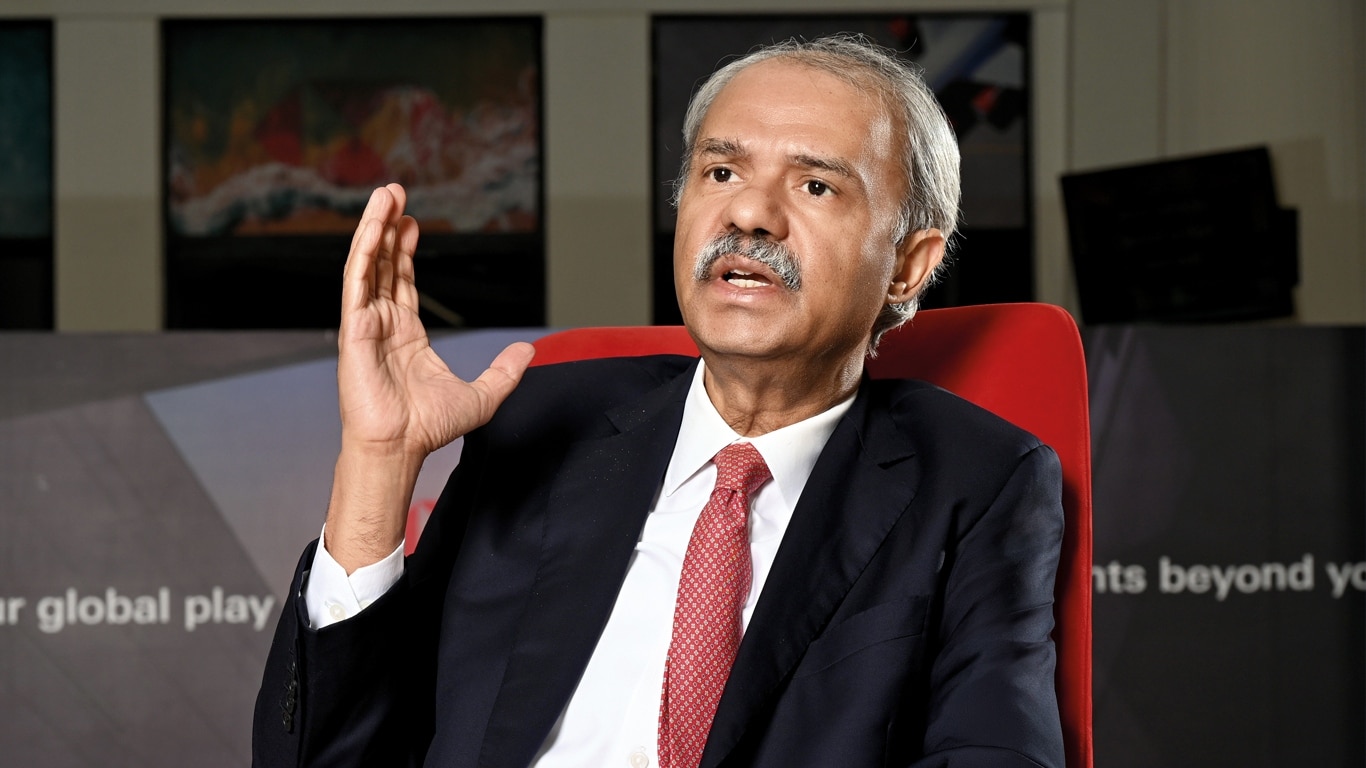

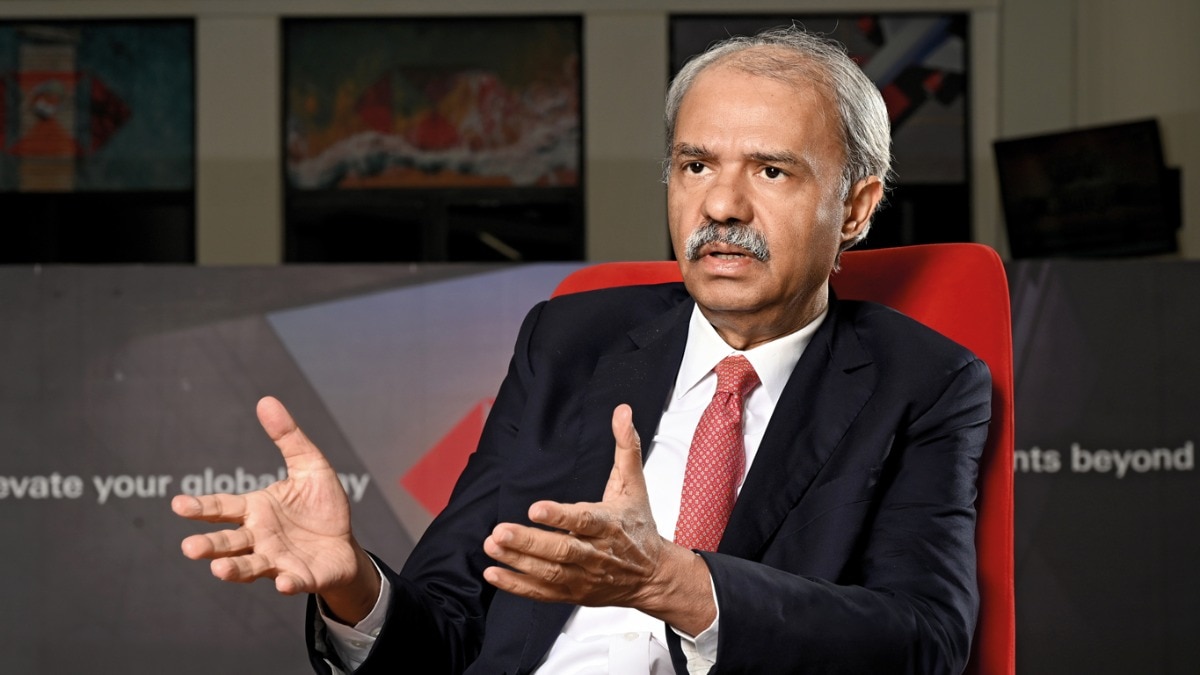
India’s banking sector has completed a full cycle over the past decade—from high non-performing assets (NPAs) and a long phase of balance sheet repair to high profitability and robust capital levels. The result: Vigorous credit growth after the pandemic. However, in FY25, loan growth showed signs of moderation, raising questions about demand and the high base effect. With credit growth central to India's goal of becoming a $5 trillion economy, the government and the Reserve Bank of India (RBI) are addressing these issues with utmost urgency. BT talks with HSBC India CEO Hitendra Dave to understand the sector’s challenges and opportunities. Edited excerpts:
Q: On credit growth challenges in the banking industry.
A: It is fair to say that, at least in the last couple of decades, the banking industry has never seen this level of balance sheet health in terms of capital adequacy ratios, net interest margins (NIMs), and NPAs. This is important because, as and when the industry or the consumer needs funding, the banks can do so without too many constraints.
But there are also structural changes. In the last decade, our capital markets have become a competent substitute for banks, particularly for large companies. So, if you take large PSUs or any other large company, if they need term funding, capital markets are not only available, but they are also available at a better price.
Many large companies are using banks for working capital and not for term projects. Therefore, now you must see credit growth in its fullness, as it is the savers’ money that is going into capital market instruments, which in turn get invested into various bonds, etc. It is just that we are still stuck on bank credit growth numbers. That’s the right way to look at it.
If banks wish to compete for term assets, they will have to work hard on their cost of funds because they cannot provide the current (interest) rates at which capital markets are providing term financing.
Q: On the households’ savings moving to capital markets.
A: Retail liquidity, or household liquidity, which is available to banks, is shrinking. And this is something the industry and the regulator need to think through, because it is the backbone. You take money from retail, and you lend either to wholesale or to retail. Now, increasingly, retail liquidity—at least in urban areas—is moving straight into capital markets.
How the situation plays out over the next 10 years is critical. Today, top 10 cities contribute to deposits. Over the next 10 years, top 50 cities may account for 60, 70, or even 80% of banks’ deposit base. Tomorrow, if that becomes a trend, where will banks get deposits from? People do not realise that capital markets can switch off. Banks, with their relationship-led approach, if liquidity tightens or if the RBI signals something adverse, will pull back. So, what will happen then? The biggest source of money will stop, and banks will be left without that cushion.
Just as the mutual fund industry ran a very successful campaign—Mutual Fund Sahi Hai—it is time for banks to reflect on how they can generate excitement, confidence, and enthusiasm towards bank deposits once again.
q: On the sustainability of margin expansion and profitability.
A: Great banks have NIMs above 4%, and most banks have NIMs in the 3% range. One of the reasons NIMs have become relatively high is the low level of credit impairment. As management, we should not project this level of health and this scenario into the future. In India, we have not experienced any sustained period of joblessness. If you are a risk manager, you should provide for that. Therefore, I think this looks as good as it gets.
Good managements are increasingly using this period to fortify their balance sheets. Take, for example, the provision coverage ratio for many banks, which is now 80–90%. Many banks have started keeping provisions against standard assets. There is no immediate need to provide; they are doing this only to build buffers today.
I think the banking industry has never been in a healthier shape. All the parameters are as good as they have ever been, which is great for the economy. Should the economy suddenly need a burst of capital, lending, or financing, there is no constraint whatsoever.
Q: On banks’ increasing focus on retail loan assets over corporate lending.
A: I think there are structural factors at play. Most retail borrowers tend to be young, largely in their 30s. These youngsters tend to spend or consume rather than save for buying assets like housing. The first structural factor is that the market for personal loans is expanding because of this behavioural change.
Second is the bureau data that we now have. Over the last 10 years, our credit bureaus have built richer datasets. Alongside that, analytical capabilities have improved significantly, and so has computing power. It is not just credit bureau data; it is also computing power and technology. Banks can track how many times a borrower has gone to which bureau and what that behaviour looks like.
Finally, NIMs are under pressure because corporate loans in India have been mispriced for a long time, because of which the retail sector becomes more attractive. The market is expanding, and the data available to make informed decisions is expanding.
I would expect the composition of bank assets, at the margin, to shift towards personal loans—whether mortgages, credit cards, or other products—depending on individual banks.
Q: On the policy shift with foreign entities buying stakes in private banks, and the likely second round of PSB consolidation and M&A financing.
A: Viksit Bharat is not going to happen without a financial system that can back that ambition. Within the financial system, you need someone who will put in capital and take risks. Public sector banks and private banks are already doing it. If you need a fresh round of capital, where is it going to come from? You either open the banking sector to the domestic industry, but on that, there is a big debate happening. Who is going to provide that capital? It must be the foreigner.
I think, again, looking at the next 25 years, is it okay that India will have only four or five large private banks? It doesn’t sound right. The seeds must be planted today. It takes 15 years for banks to grow. India is too large an economy to have only four or five private banks. I think this is a sign of a realisation—an acknowledgement—that you do need foreign capital if you want your financial system to be of a shape and size that is aligned with the Viksit Bharat ambition.
Q: On relaxing the promoter cap in private banks for domestic capital instead.
A: At a broader level, there are reasons why the regulator has placed caps on promoter stakes. I think, increasingly, the regulator must rely on a high-quality board—independent directors and an independent chairman. At HSBC, there is no such thing as a promoter. Our board looks after the interests of every shareholder. Everybody is a minority shareholder. The solution perhaps lies as much in board governance.
Q: On banks being allowed in mergers and acquisition (M&A) financing.
A: This will fire up ambitions, particularly of small and medium-sized companies. When a large conglomerate wants to undertake an M&A transaction, financing is relatively easy, because these companies are known to all banks. I think this is a great development for small and medium companies—and particularly the medium-sized ones.
Q: On RBI’s relaxation in lending to large corporates.
A: This will be beneficial because when capital markets are not open for companies to raise funds, banks can step in as a reliable source of financing. Historically, exposure beyond 20% of a bank’s Tier-I capital (25% at a group level) was seen as risky. However, the landscape has changed over the past decade. Companies that require such large borrowings today typically access multiple funding channels.
A substantial portion of their financing comes from capital markets and offshore sources such as external commercial borrowings, dollar bonds, and other instruments.
As a result, the concentration risk for banks has reduced. Given this diversification, there is now greater comfort in allowing some relaxation by removing broader system level constraint. This move appears to be part of a broader, coordinated effort to align the financial system so that it is better positioned to support growth and contribute meaningfully to the vision of a Viksit Bharat.


