
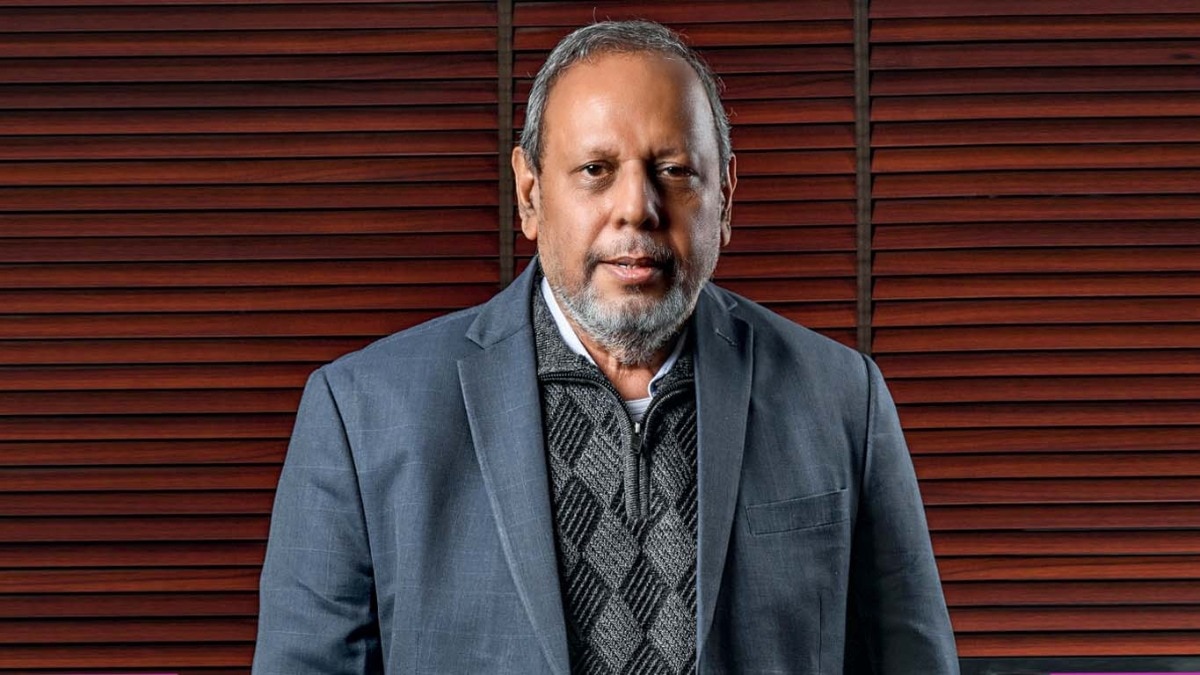
The government’s tax reforms will increase the disposable income of consumers while measures such as the Labour Codes will improve efficiency, providing a further fillip to growth, says S. Mahendra Dev, Chairman of the Economic Advisory Council to the Prime Minister. In an interaction with BT, he talks about the economy and says the recent weakening of the rupee is better understood as a reflection of cyclical capital flow dynamics, rather than a structural concern in the Indian economy.
He also reposes faith in India’s trade policies and says even if global trade does not rise much, India can increase its share by diversifying to other countries. Edited excerpts:
Will the Labour Codes improve the investment environment and ease of doing business in India?
The Labour Codes are a long-pending reform and address a key concern of regulatory uncertainty. They create a more unified, predictable, and transparent labour framework across states, reducing compliance costs and improving ease of doing business. This reform complements broader growth initiatives such as Production Linked Incentives (PLI) scheme, Make in India, PM Gati Shakti, the National Logistics Policy, and expanding trade agreements, together forming a coherent policy mix that supports labour-intensive manufacturing, export diversification, and long-term investment planning.
The Codes also strengthen worker welfare and productivity. Simplified procedures encourage firms to scale up and formalise, helping address the ‘missing middle’ in manufacturing. Provisions for women’s employment on night shifts with safeguards, social security coverage for gig and platform workers, and portability of benefits for inter-state migrants align labour regulation with a more mobile and digital economy. By easing regulatory burdens while expanding social security and protections, the Codes strike a pro-growth, pro-labour balance that supports investment and employment generation.
One of the criticisms of the Codes is that they cover only formal sector workers and about 93% of India’s workforce that is in the informal sector is not covered…
That criticism overlooks both India’s historical experience and the intent of the reforms. India’s legacy of restrictive labour laws created strong incentives for firms to remain small and informal, resulting in a labour market where nearly 93% of workers operate outside formal protections. The four Codes are designed precisely to reverse this equilibrium by reducing regulatory disincentives to growth, simplifying compliance, and encouraging enterprises to scale up and formalise. Rather than attempting to directly regulate informality—which previous laws failed to do—the Codes adopt a more effective strategy: expand the formal sector itself so that more workers are brought under legal protection over time.
What are the next reforms that India needs to undertake?
The finance minister has already outlined a clear reform agenda on Customs. In parallel, high-level committees on non-financial regulatory reforms are examining ways to rationalise approvals, reduce overlapping compliances, and improve regulatory governance across sectors. Crucially, the success of these reforms will depend on effective implementation at the state level—through faster clearances, harmonised rules, and better enforcement—so that businesses experience a genuinely predictable and low-cost regulatory environment on the ground.
Given the government’s recent focus on reforms such as GST rationalisation and now Labour Codes, do you think these will help boost growth?
The reforms such as income tax reduction and GST rationalisation are expected to lead to higher disposable income with consumers. The real GDP growth of 8.2% in the second quarter of FY26 points to the fact that the reforms are resulting in high growth. In addition, policy measures such as Labour Codes will lead to improved efficiency, providing a further fillip to growth.
What is your expectation on GDP growth for this fiscal? Are you concerned about the expected shortfall in tax collections?
Growth momentum this fiscal remains strong, with the Reserve Bank of India (RBI) raising its FY26 growth forecast to 7.3% and the economy recording a robust 8.2% growth in Q2. This reflects underlying resilience in domestic demand, investment, and services activity. On the fiscal side, higher growth itself has a multiplier effect, supporting revenue buoyancy through increased economic activity and formalisation. This is already evident in GST collections, which have continued to rise despite rate cuts—0.7% growth in November and 4.6% growth in October, indicating improved compliance and a broadening tax base. In this context, concerns around a major shortfall in tax collections are limited, as sustained growth is likely to offset rate rationalisation and support fiscal consolidation.
Do you expect consumption demand to continue growing?
Real private final consumption expenditure, a key indicator of household demand, grew by 7.9% in the Q2 of FY26, a marked improvement over the 6.4% growth recorded in the corresponding quarter of the previous financial year. Measures like income tax cuts, which have boosted disposable incomes, and ongoing GST rationalisation, which has reduced the tax burden and improved price efficiency, are providing a further fillip to household spending.
Will there be a sustained recovery in private investment going forward?
Public capex is helping crowd in private investment. As per reports, corporate investment announcements between April and September have surged to a decade high of Rs 15.1 lakh crore, driven primarily by strong commitments from manufacturing firms. This signals renewed business confidence, supported by improving demand conditions, policy stability, and a push towards capacity expansion.
Is the fall in the Indian currency a cause for concern?
The recent weakening of the rupee is better understood as a reflection of cyclical capital flow dynamics rather than a structural concern. External sector fundamentals remain broadly stable: India’s current account deficit (CAD) narrowed to $15 billion or 0.8% of GDP in the first half of FY26 from 1.3% of GDP in the first half of FY25. While the CAD may have widened in Q2 of FY26, it remains well within manageable limits and does not point to an imbalance. A measured depreciation of the rupee also acts as a macroeconomic shock absorber, improving export competitiveness and contributing over time to narrowing of the CAD. At the same time, in November, merchandise exports increased 19.37% and merchandise trade deficit narrowed to $24.53 billion while the overall deficit narrowed to $6.64 billion.
On capital flows, foreign portfolio investment (FPI) is inherently volatile and closely linked to global risk sentiment and monetary conditions in advanced economies. Temporary outflows, therefore, should not be overinterpreted. Given India’s strong growth outlook, improving inflation dynamics, and record of fiscal responsibility, FPI inflows can be expected to return as global conditions stabilise.
This assessment is reinforced by the government’s commitment to fiscal consolidation and the move towards adopting central government debt as the fiscal anchor with a clear glide path, which enhances policy credibility.
What steps can be taken to boost FDI?
The recent Labour Codes, ongoing non-financial regulatory reforms, trade agreements, and capital outlays together strengthen India’s ease of doing business. This must be complemented by faster clearances at the state level, deeper integration with global value chains through trade agreements and efficient logistics under PM Gati Shakti and the National Logistics Policy. Coupled with sustained macroeconomic stability, strong growth prospects, and a large, formalising workforce, these measures can reinforce investor confidence and position India as a preferred destination for long-term, productivity-enhancing FDI.
The global trade order has changed. How much will these tariffs impact India?
Economists generally like rule-based trade like under the WTO, which has benefitted most economies. India too has benefitted from globalisation over the last 30 years. But now most countries are turning protectionist. India is following flexible multilateralism—we are friendly with Russia, the US, China and others keeping our national interest in mind. The focus on Aatmanirbhar and Swadeshi domestic manufacturing, especially of components like semiconductors, chips and critical minerals, stems from this.
India’s share in world trade in goods is 2%. Even if global trade does not increase much, India can increase its share by diversifying to other countries. The November trade data shows that despite tariffs our exports have risen. Our approach on tariffs is to try and help the affected industries, diversify to other markets, hasten FTA negotiations and continue dialogue with the US.
@surabhi_prasad









