
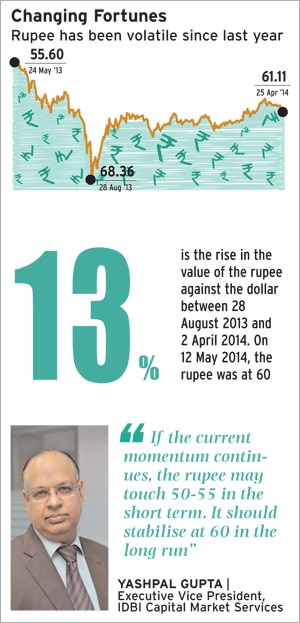
The rupee has been giving nightmares to investors by its unpredictable movements. The currency, which slumped and touched a record low of 68.36 to a dollar on 28 August 2013, has risen 12.75% since; it was at 59.64 on April 2.
The currency has of late gained from a host of factors. Improved sentiment due to steps taken by the Reserve Bank of India, or RBI, to stem the slide and hope of a stable government at the Centre have helped it conquer the 60 level and even push towards 59.50.
But will it touch its highs of the two last years? Experts are not too sure but say it may touch 50-55 in the short term if India gets a stable government. This is because in such a case foreign investors are expected to pump in huge money into Indian equity and debt markets. This will increase demand for the rupee.
Let us understand factors that are giving direction to the rupee and how you can structure investments to gain from its movements.
WHY RUPEE MOVED?
Since September, the RBI has taken a number of steps to lower banks' non-performing assets, deepen financial markets and ensure clear monetary policy guidance. It has also shown resolve in preventing currency volatility by buying and selling US dollars.
Anindya Banerjee, currency analyst with Kotak Securities, says, "There is possibility of a stable government at the Centre. That has given rise to hope of pro-active policy-making which can address a number of impediments to sustainable long-term growth."
WHERE WILL IT GO?
Most market experts are confident that the rupee will not weaken from here. Yashpal Gupta, executive vice president, IDBI Capital Market Services, says, "If the current momentum continues, the rupee may touch 50-55 in the short term. However, given the negative impact that a strong rupee has on exports and the likelihood of the government lifting the ban on gold imports, the rupee should stabilise at 60 per dollar in the long run."
However, Banerjee of Kotak Securities says, "The elections remain a risk. A stable government can lead to a period of sustainable but slow appreciation of the rupee. In that case it can rise towards Rs 57-58. However, a weak government at the Centre can trigger a reversal of the 'hope trade' which has the potential to deflate rupee to 64-65 levels." On April 25, the rupee was trading at Rs 61.12.
HOW ASSETS BEHAVE
Equities:
Anil Rego, chief executive officer and founder at Right Horizons, says, "Equity is the most lucrative investment in today's scenario. Sectors such as fast moving consumer goods, pharma and IT will be under pressure from a rising rupee due to dependence on exports, while core sectors such as banking, infrastructure and engineering & capital goods are expected to perform better than the index in the medium to long term." A stronger rupee makes exports expensive and less competitive. Typically, engineering goods and gems & jewellery makers also gain when the rupee rises as they import a lot of raw materials.
Commodities:
India is a huge importer of various commodities, including crude oil, copper, urea and gold. Rupee appreciation brings down the landed cost of imports. This reduces inflation. Lower rupee volatility helps users of these commodities price their finished products in an orderly manner.
Debt:
"High interest rates and rupee rise will give a boost to returns that foreign investors can earn from fixed income instruments. However, lower inflation will translate into lower interest rates, reducing the attractiveness of fixed income investments. Fiscal deficit and government borrowings will decide the trend in 10-year G-secs, which shall determine the level of interest rates in India, says Shashank Khade, director and chief equity advisor, Entrust Family Office Investment Advisors. Rupee appreciation will tame inflation and, thus, support the cause for reducing interest rates.
Real estate:
The sector has been under pressure due to high interest rates over the last few years. Any easing of inflation and interest rates will revive demand.













