After a spectacular run in the past 4-5 months, the market is showing signs of a slack. The Sensex came close to the all-time high level of January 2008 and then receded as investors started booking profits in the second week of October.
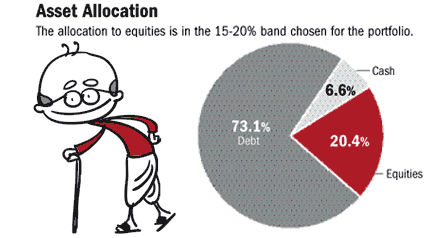
It is interesting that while the MONEY TODAY-Value Research Lifestage Portfolios have performed fairly well since they were launched six months ago, their asset allocation has stayed within the mandated limit.
It's clear that a prudent mix of good mutual funds in the portfolios has ensured automatic rebalancing in synch with their risk appetite and mandate.
FUTURE TRIGGERS
- The corporate sector is expected to do well in the second quarter results.
- The rising rupee will hit software firms but benefit oil companies and capital goods importers.
- A rise in interest rates could hit banks and other rate sensitive sectors.
- The Rs 15,000 crore Coal India IPO could suck out liquidity.
|
A good fund manager tweaks the asset allocation whenever there is an increase in risk and it is obvious that these funds are booking profits and reducing their exposure to equities by rebalancing their portfolios. This is something all investors should do to control risk in their portfolios (see story on page 64).
Also, a good fund does not take on too much risk. Mid-cap and small-cap stocks have the potential for higher growth than the largecap scrips, but they are also riskier. A big chunk of equity investments in all four portfolios is allocated to giant and large-caps, with a moderate exposure to mid-caps. This ensures stable growth without giving one sleepless nights.
The ultra-safe Income Generator, which has been analysed in detail this month, has suffered in the past due to the hike in policy rates by the Reserve Bank of India. With almost 80% of its assets parked in debt and cash, the continuous increase in the reverse repo rate had proved to be a drag on the bond portfolio. However, the 20% equity allocation has come to its rescue and helped the portfolio perform relatively well this time.
With top holdings in outperforming sectors, such FMGC, financial services and information technology, it has earned an absolute return of 4.1% since its inception. The conservative Stable Growth, with a higher equity allocation of 30%, has continued with its steady rise with a 4.2% return. Last month, the equity holdings had come down marginally from their original mandate of 30-40%. With the market at its peak, it has regained the balance this month.
Expectedly, Wealth Maximiser and Money Builder, which have a sizeable portion allocated to equities, have been the best performers. They have earned absolute returns of 12.5% and 10.4%, respectively. However, the probability of a correction persists, which could be triggered by the second quarter results in October. Though the corporate sector is expected to do well, there can be some surprises. Infosys came out with better-than-expected results, showing a 16.73% rise in net profit on a quarter-on-quarter basis.
But the rise in the rupee against the dollar has hit the operating margins of the software giant, which gets a lot of business from the US. Adding to the fears of a correction is the forthcoming IPO of the world's largest coal miner, Coal India. The Rs 15,000 crore IPO, which opens on 18 October, could suck out some liquidity from the overheated market. For SIP investors, any correction is an opportunity to buy at lower prices. So, far from fearing a correction, they should pray for one this Diwali.