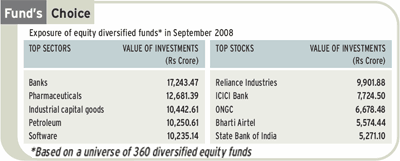
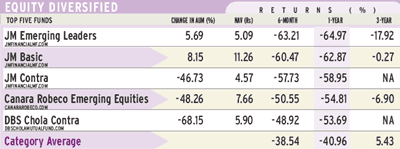
Though the past performance of a fund does not guarantee future returns, it is best to avoid funds which have been consistent non-performers. The worst performing equity-diversified funds lost more than half their values in the past year, while the top fund, Birla Sunlife Dividend Yield, contained its losses to 24%. As a category, these funds performed better than tax plans over three years.
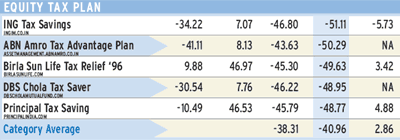
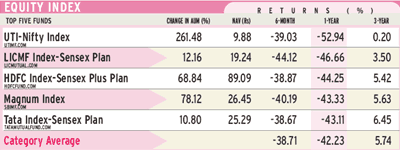
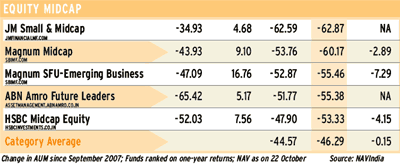
Contrary to the market sentiment, Index funds have seen a steep rise in their assets. This proves that investors expect the benchmark indices to recover sooner or later. In six months, mid-cap funds have lost all the gains that they had made over the past three years. This has made them less dependable for investing over the long term.
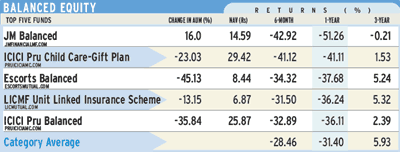
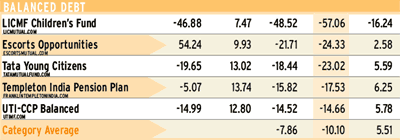
Equity-oriented balanced funds as an investment theme have nothing much to offer the investors. They haven’t given any significant returns over the long term. Also, their losses are almost equal to those of pure equity funds. Investors would be better off exiting from these worst performers at the earliest. Debt-oriented balanced funds have been better able to contain their losses.
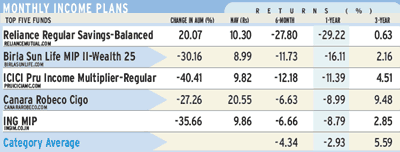
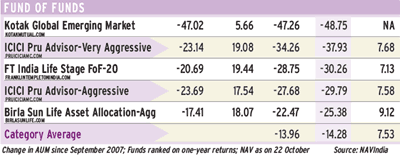
Even though the monthly income plans and fund of funds have lost the least, they generated muted returns when the market conditions were better. However, there is a huge variation in the losses of the worst performers and the category average. Reliance Regular Savings Fund-Balanced has lost 10 times more than what the category has lost as a whole.
The takeaways
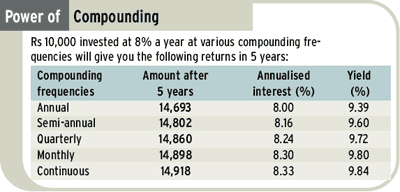
• A change in compounding frequencies makes a big difference to the returns.
• Compounding over higher frequencies increases the effective yield.
• Reinvest the earnings as you receive them; your investment grows exponentially.
The takeaways
• Mutual funds bought SBI’s stock as they expect the bank to benefit most from the benign monetary policy adopted by the regulators.
• MFs increased exposure to oil & gas sector as Indian firms continue to secure more petroleum assets. With $5 billion worth of reserves on its books, ONGC is planning to acquire the UK-based Imperial Energy.