

Happiness is man’s greatest aim in life, says Amitabh Shrivastava quoting Greek philosopher Epicurus. “For this people around you should also be happy,” he adds his bit. Shrivastava’s life and work centre on this philosophy. Or why else would he quit a job as assistant vice-president with US-based Kanbay International, an information technology services company, to return to India to be with family and friends? But Shrivastava’s moves are not all irrational.
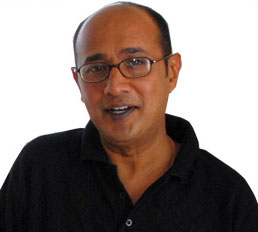 In fact, this Libran is extremely adept at balancing all aspects of life, especially finance. As an entrepreneur he has adopted the angel investment route (where investment in a start-up is both in the form of cash and skills) to create business. Today, he holds stakes in seven companies in diverse sectors, two of which he set up as partnership companies while for others he doubles up as a mentor. Shrivastava’s business strategy is simple: create a company, help it grow and exit once it stabilises.
A finger in a number of pies is a very calculated move that Shrivastava took as early as 2000. On his return from the US in 1996, he joined outsourcing and technology firm Xansa to establish and head its centres in Mumbai and Chennai. “I even headed the sales for several global centres,” adds Shrivastava, who had all along wanted to be an entrepreneur.
The experience at Xansa brought him closer to his dream of starting a venture. “I realised if you have a vision you can create something substantial out of nothing,” he says. By 2000, Shrivastava was comfortable both with his personal finance and the business idea to quit Xansa.
“I had decided to cap my initial investments to Rs 50,000,” says Shrivastava, who had the support of his family. On the personal finance part he was on a safe wicket investing judiciously across asset classes: provident fund, shares in various companies and with enough liquid cash in hand. If his venture into entrepreneurial territory bombed, he had enough money to last him for a few months.
Moreover, there was the initial investment in education—an engineering graduate—which he knew would help find a job, if everything else failed. And it was not just one start-up that he launched his business with. In a span of a few months in 2000, he initiated three companies doing different things.
It was a mix of cash and sweat equity that helped him create Motech, a financial services and telecom products firm; Indiagames, a gaming site, and Brainvisa, an elearning company. “I was involved 24X7 with these companies even though I had highly trained professionals to run them,” he says.
In 2002, Shrivastava sold his stake in all of them. While he exited successfully out of one, the returns from the other two were not exactly stellar. “And it had nothing to do with dotcom meltdown as they were all product-based companies. But I evened out,” he is quick to add.
Shrivastava decided to once again turn employee to ensure a steady income and joined Infosys as head of its Europe business the same year. It was also during this time that he decided to turn angel investor for small-time IT companies. “The investment was not much. In fact I started with an amount as low as Rs 25,000,” he informs.
Bangalore-based Shrivastava’s job was to ensure that the investments kept pouring in and the business did not lose direction. “I am invested in them even today,” he adds.
Shrivastava’s approach of buffering the business risk with a steady job helped him consolidate his position as an entrepreneur. “I was never in a hurry to succeed as an entrepreneur,” says Shrivastava, who even partnered his wife, Vidya, to set up a human resource outsourcing company, Portent, the same year. “We started from home with just a computer and a phone,” he says. Portent now has 11 employees and a yearly turnover of Rs 1.5 crore.
In 2004, Shrivastava was back at Xansa as head of financial services. His next move was in 2006 to HCL as senior vice-president to head its capital markets division. By now Shrivastava was getting more involved with the companies he had invested in and had also ventured into real estate. In November 2006, he was once again ready to turn full time entrepreneur.
“What I had in mind was a concept of managing different asset classes to maximise returns,” says Shrivastava, who has spread his investments across IT, real estate, food and HR.
His current focus is on Terracon, a real estate company, he set up in partnership with Sanjay Wazandar, director of a mid-sized construction company. “Our aim is to professionalise the construction business and this is where my business management skills come handy,” adds Shrivastava, who holds a 50% stake in the company that has forayed into residential projects and real estate development. The shift from being an employee to an employer did not involve much re-skilling as he had picked up the nuances of setting up a venture on the job.
“My first hands-on experience was in 1991 when I helped set up my brother’s food business—a franchisee unit of Copper Chimney in Mumbai,” says Shrivastava, whose first job was with Tata Unisys as programmer in 1986. In 1992, he left for the US with a marketing job at Kanbay. “Most of my marketing skills were honed at Kanbay where I did some hardcore selling,” says Shrivastava.
Currently Shrivastava is using his financial and project management skills along with some hardcore networking to get the projects on track. “We aim to complete three residential projects of 30-60 flats each in the next 18 months,” he says. For larger projects, the company will don the role of project managers as putting in very large sums of money is not part of its business strategy. “When developing townships our role would be to get investors, large builders together and get the project going.
We would take equity in the output,” he adds. Shrivastava is quite gung-ho over realty and IT sectors. How does he see the future panning out? “Once I have made these start-ups reach a sustainable stage, I will pass the baton and move on,” says Shrivastava. With a bunch of smart and trustworthy managers in place, he tries to network from home on most days. “I now have time to catch up on my reading, spend time with friends and watch good plays,” he says.









