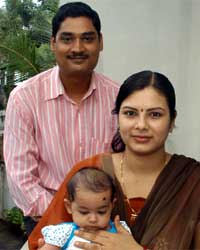
He should know about balance. An executive chef in a five-star hotel, it is Pranay Kumar Singh’s business to pursue that delicate blend of flavours which lends perfection to every dish. But while this 32-year-old’s gastronomic senses seem to be evolved, the same cannot be said about his financial acumen. That perfect balance is sorely missing from his portfolio.
As evidence, all you need to do is look at his mutual fund collection. Singh has accumulated no less than 19 funds with a total investment of Rs 4 lakh. He has committed bigger indiscretions.
Last year, Singh realised he was going overboard with funds. So he bought a product that was not linked to equity. He was told that while the returns would be lower than the other funds, they would be rewarding enough. Plus, the product provided an insurance cover of Rs 8.4 lakh. The numbers certainly seem to back these claims: at the end of every year, 20% of the premium is added to the sum assured. As a bonanza, the investor gets 30-75% of the total maturity value as bonus.
Singh was impressed and did no further calculations before signing on the dotted line. But the deal turns out to be quite different.
The annual premium for the 10-year policy is Rs 1 lakh. So Singh will pay a premium that is Rs 1.6 lakh more than the cover. This alone should make one suspicious. If the various bonuses are added to the maturity amount, the final figure ranges between Rs 13 lakh and Rs 18 lakh—an annualised return of barely 3% to 6%.
Singh’s list of bloopers doesn’t end here. He not only has a penchant for expensive products (his insurance kitty is proof of this), but also specialises in not utilising investment opportunities. Why else would he allow about Rs 28,000 to erode in value in his savings bank accounts? Singh’s monthly takehome salary is Rs 80,000. Of this, he spends a reasonable Rs 25,000— 31% of the income. About Rs 12,000 is sucked up by SIPs in six funds and the average insurance premium skims off another Rs 15,238. No loans ensure that he has a lot more manoeuverability in cash flow, but Singh hasn’t used it to his advantage as explained by his monthly surplus of Rs 27,762.
Our priority is to bring his monthly investments as close to Rs 87,822 as possible. For this, the first task is streamlining his insurance basket. Singh has bought four endowment plans, which collectively cover him for Rs 8.56 lakh. The total annual premium is very high—Rs 82,866— yet he is underinsured. Iris suggests that Singh surrender all these plans after they complete three years. The recommendation for the product mentioned earlier is harsh—Iris thinks that Singh must forget the Rs 1 lakh he paid last year and exit the policy immediately.
If this is too bitter a pill to swallow, Singh can continue with the plan for the next two years, after which it will attain a surrender value. But he must be prepared to receive less than his investment. Instead of such expensive policies, Singh must buy a term plan of at least Rs 50 lakh to meet his insurance needs. The annual premium will be about Rs 11,000.
This shuffling will add as much as Rs 14,322 to Singh’s monthly surplus, taking it up to Rs 42,084. After salting away three months’ expenses as an emergency fund, he should divert this money to equity mutual funds. Of these, Singh has too many, so Iris has consolidated the collection to just seven funds.
Following the usual investment philosophy, Iris recommends using equity diversified funds, namely HDFC Equity, ICICI Pru Dynamic and Kotak Opportunities, to form his core investments. For accelerating growth, we shall stick to two midcap funds, Reliance Growth and Reliance Regular Savings Equity. As for saving tax, we suggest that he retain only Reliance Tax Saver and HDFC Taxsaver.
The debt component of Singh’s portfolio, comprising his provident fund, fixed deposits and National Savings Certificates, is cushy enough. Apart from continuing his contribution to the provident fund, Singh should concentrate on beefing up his equity portfolio.
On the face of it, this apportioning of investments seems inadequate to meet Singh’s goals. However, if he postpones his plan to start a business, the others can be achieved quite easily.