

Question
I have been investing in mutual funds in lump sum. But I am told that systematic investment plans (SIPs) are a better option. How do I benefit from investing in mutual funds through SIPs?
—Avhishek Paul Chowdhury
Answer
 Equity markets are inherently volatile. They move up and down due to a combination of several factors (government policies, corporate profits, global markets, interest rates). Investors who put in a lumpsum are often caught on the wrong foot if markets dip. SIPs help investors tide over the volatility by averaging out the cost as shown in the example.
There’s another advantage. Many people are not able to invest because their agent fails to turn up, or they don’t have time to visit the broker. Some forget to carry a cheque, others run out of cheques. All these issues are taken care of by SIPs because the investor gives post-dated cheques or instructs his bank to debit the SIP amount from his account. This way, even if you forget to invest, your bank won’t.
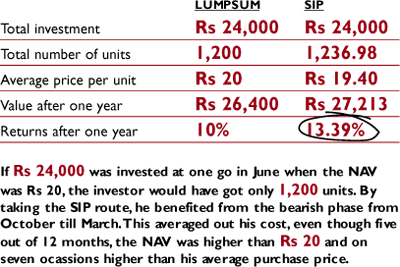 SIPs yield the best results only if the person continues to invest during downturns. Often investors get so disturbed by a bearish market that they stop investing. This is a mistake because market dips are often the best time to buy cheap and average your purchase price.
One caveat: In an SIP, your money gets invested on a specified date of the month, irrespective of market conditions. But that should not worry long-term investors.
This is a new interactive section for investors. Do you have a query regarding your investments? Write to us at letters.moneytoday@intoday.com and we will give a detailed answer.











