
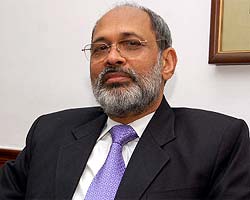
M. Ramachandran, Secretary, Urban Development Ministry, tells why the government has a vital role in making investment in property hassle-free.
When can we expect a real estate regulator to be in place?
I can’t give a timeline, but to give you a sense of ‘when’, I would say the Real Estate Regulator bill is part of the 100-day agenda of the Urban Development Ministry. The bill is yet to be sent to the Cabinet, after which it has to go to Parliament for approval.
What are the features of the draft bill that will benefit individual buyers?
The bill is still in the draft state and can be modified, so it is not possible to get into its specifics. However, I can certainly say that the broad idea is to benefit the average buyer. A forum for addressing individual grievances is available in the form of the Consumer Protection Act. However, the real estate regulator is a more focused effort to handle grievances arising from the problems concerning the booking process, the delivery of a housing project or its non-completion as per the timeline.
Some industry bodies are already complaining about the bill being anti-industry.
How can they talk about the bill without reading the draft? But if there are valid concerns, we are open to suggestions and will definitely keep their views in mind when the bill is finalised.
As real estate is a state subject, do you think the scope of a regulator will be limited?
The bill is being worked out only for Delhi as of now. Subsequently, it will be up to the states to take this as a format and enact their own laws and include issues specific to them.
The draft bill keeps the government agencies engaged in housing out of the ambit of the regulator. Why is that?
This is the norm followed across all ministries. The government has a separate and elaborate system of handling issues related to its own agencies, including those that handle housing. The need is to address issues arising more from the private sector than the government.
Coming to the Jawaharlal Nehru National Urban Renewal Mission (JNNURM), your ministry has asked the state governments to speed up the property title certification system to grant conclusive title guarantees. Can you elaborate?
A beginning has been made on the urban property titling front. The idea is to create a system whereby anyone who buys land in urban areas gets a guaranteed title for the property. The objective of reforms is to enable cities to move towards guaranteed title systems. It seeks to create a public record of titles, which truly describes the property as well as the title and has a system to reflect any transaction in real time.
Since Central funds under the JNNURM are linked to reforms by the respective state governments and local bodies, which are the issues concerning individuals that have seen progress?
Reforms at the level of local municipal bodies have a direct connect with an individual. For instance, in addition to creating a system of credit ratings for local bodies (which will help them raise funds), the concept of service level benchmarking has been introduced for water supply, solid waste management, sewerage and drainage sectors in cities. Urban transport and e-governance will be added to this list very soon. Cities are being motivated to think in terms of 24x7 water supply and an efficient bus rapid transit system. Approximately 11% of the JNNURM sanctions have been towards improving the public transport system in the mission cities. In addition, as part of the economic stimulus package, the ministry has provided funds for the purchase of buses for the urban transport system.
Meanwhile, e-governance is expected to bring transparency and accountability in urban local bodies. The programme is being implemented in 35 mission cities across 15 states with a population of more than a million. It is being undertaken on a pilot basis as the National Mission Mode Project under the national e-governance plan of the Central government. The services covered for e-governance reforms at the state or local body level include registration and issue of birth and death certificates, payment of property tax and utility bills, citizens’ grievance registration and redressal, building plan approvals, e-procurements and monitoring of projects, health, licences, solid waste management, accounting system and personal information systems. All these issues have a direct connect with an individual.
Regarding the specified 100-day agenda of the Urban Development Ministry, what are the objectives that have been achieved?
The draft guidelines for the urban development of satellite towns as counter-magnets for cities with a million plus population have been prepared. We have taken up the north-east development project with the help of ADB. We are in the process of establishing 13 centres of excellence in the field of urban development. We are also in the final stages of introducing a public helpline for urban transport. We are talking to the telecom department so that we come up with a number which anyone can call free of cost. This is being worked out and should be a reality soon. The JNNURM programme has been expanded. These are just some of the projects that come to mind, but there are many more.













