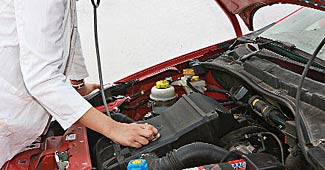
As most car lovers will attest, maintaining an automobile is akin to caring for a child. What you put into it, it returns manifold. You can't, of course, expect a hug from your car, but proper maintenance does ensure a smooth, safe drive, while averting major blowouts or engine failure.
More importantly, in these inflationary times, a little, timely care can help reduce frequent, expensive visits to the workshop. This not only increases the life of the vehicle but also its resale value.
The best bit? You don't have to be an expert to make sure you car runs smoothly; maintaining it is easier than you think. Be proactive in servicing it regularly, topping up various lubricants and fluids, pampering it with bodycare products, watching out for unfamiliar sounds and driving it sensibly, with due care.
Here are 10 simple tips to help keep your vehicle in top shape and good running condition. Some of these pointers are rudimentary, others might be a revelation, but all of these will keep your car fit-and you, happy.

Problem: Damage to the paint or body reduces car's value.
Remedy: Apply wax polish and use transparent tape on bumpers and grilles

Problem: Poor adjustment of brakes.
Remedy: Applying parking brakes keeps them adjusted and they last longer.
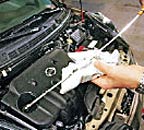
CHECK THE ENGINE OIL
Insufficient lubrication can reduce the mileage and increase the strain on the engine, even damage it. Check the oil level regularly and change it every 5,000-8,000 km. Remember to park the car on a level surface to get an accurate reading.
Problem: Inadequate engine oil can damage the engine.
Remedy: Check every two months.
CHANGE DRIVE BELT/TIMING BELT
To ensure a smooth run, check the drive and timing belts regularly; replace them if they are worn out. If the belts snap or fray before the recommended period of use, have the manufacturer replace it.
Problem: Worn drive and timing belts can damage the engine.
Remedy: Check regularly and change belts at recommended intervals.
KEEP TABS ON TYRE PRESSURE
Incorrect pressure increases the possibility of damage to tyres and blowouts. It also lowers fuel efficiency, cuts grip and reduces the tyre's water displacing ability. However, you can raise the pressure by 3 psi from the suggested level without causing any damage.
Problem: Wrong pressure increases the chances of a blowout.
Remedy: Keep the tyres inflated to suggested levels.
Problem: Neglect can lead to a damaged compressor.
Remedy: Get the air conditioner checked every three years.
AVOID SHORT TRIPS
Short trips, especially during winter, are a no-no as the fuel consumption and exhaust emission are the highest just after start than if the engine is working at normal temperatures. In fact, it uses twice as much fuel on a short trip with a cold start as during a longer trip.
Problem: High fuel consumption.
Remedy: Avoid short trips with a cold start.
Problem: Cold engine can lead to more wear and tear.
Remedy: Drive slow initially and let the engine warm up.
CHANGE GEARS SMOOTHLY
Change gears as smoothly as possible as an abrupt change can wear out the car's clutch and gears. Also, avoid resting your foot on the clutch pedal after shifting gears as this can damage the clutch plate over time.
Problem: Worn out clutch and gear.
Remedy: Change gears smoothly and take your foot off the clutch pedal after shifting.
SAY 'NO' TO TRAFFIC LIGHT DRAGS
Always avoid traffic light drags. The heavy acceleration, followed by hard braking, imposes extra strain on the engine, gearbox and brakes. Pace yourself and drive smoothly. This can even lead to increased fuel efficiency.
Problem: High wear and tear of the drive train.
Remedy: Try spotting lights early, pace the car and drive smoothly. avoid braking hard.
Courtesy: Auto Bild India













