Is it the fine print? Not really. The value and validity period of the recharge or bonus cards required for the prepaid connection are available on company Websites. If the rates increase after a particular duration, the plan detail has the information. Then additional costs must be the culprit. Wrong. These plans don't charge more for any value-added service.
That leaves only one option: some features must have been surreptitiously shaved off. Wrong again. The rumours about the absence of GPRS facility with persecond tariffs in postpaid connections were just that, rumours.
Have the telecom operators really cut a clean deal this time? Well, it depends on where you are looking. Yes, they have, if you scrutinise the one-paisa-per-second plans. If you compare these with other tariff plans in their repertoire, telecom operators may have bent the truth in their marketing blitzkrieg. This is because the persecond pulse is definitely not the cheapest option available. This, despite the fact that Vodafone's chief marketing officer calls these low rates 'unsustainable' or that the chairman of Bharti Airtel, Sunil Bharti Mittal, rues the 'price war' his company has been forced to join.
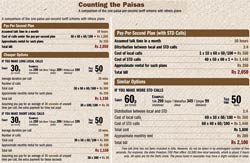
Eighteen-year-old Maryam Salman, a student of mass communication in Delhi University, doesn't agree. One of the innumerable converts to the pay-per-second option, she has several reasons to justify the switch. "Earlier, I had a Vodafone plan that offered 222 free calls, including local and STD ones. I was billed at Rs 1 per minute for a local call and Rs 1.30 for a oneminute STD call. The problem was that I didn't exhaust all the free calls. So I ended up paying for freebies I couldn't use," she says.Isn't this exactly what the hullaballoo is about, that customers will no longer pay for the unused air time? The point Salman has overlooked is that even her current payper-second plan offers 12,000 seconds of free talk time. For someone who makes 30 calls a month averaging three minutes each, she will still have about 1.8 hours of unused time. Also, the per-second plan has a monthly rental like the previous one.
Had Salman talked more, that is, more than the free talk time, the switch would definitely mean lower bills. However, this is only because the previous scheme had high charges for both STD and local calls. Had she picked up, say, the Talk 299 Talk More Plan from Vodafone, she would have been billed at 30 paise for a minute, instead of 60 paise a minute.
This is the deal: the other plans in the kitties of telecom operators work out to be much cheaper than the paisa-per-second tariff. Don't believe us? Go through the calculations and you will. Local callers pay less by signing up for other plans, whereas STD callers pay the same. This is the catch then: people don’t do their math well enough.