
Bombay Stock Exchange Limited is the oldest stock exchange in the country with a rich heritage. Popularly known as BSE, it was established as ‘The Native Share & Stock Brokers Association’ in 1875. It is the first Stock Exchange in the country to receive permanent recognition in 1956 from the Government of India under the Securities Contracts (Regulation) Act 1956. The Exchange’s pivotal and pre-eminent role in the development of the Indian capital market is widely recognised, and its index, Sensex, is tracked worldwide. Earlier an Association of Persons (AOP), the Exchange is now a demutualised and corporatised entity incorporated under the provisions of the Companies Act 1956, pursuant to the BSE (Corporation and Demutualisation) Scheme 2005, notified by the Securities and Exchange Board of India (Sebi).
The Exchange not only provides an efficient market but also upholds the interests of the investors and ensures redressal of their grievances, whether against the companies or its trading members. It strives to educate and enlighten the investors by making available to them the necessary information.
DEPARTMENT OF INVESTOR SERVICES

To ensure speedy and effective resolution of claims, differences and disputes between the trading and non-trading members, the Exchange has laid down a set of procedures for arbitration. These procedures are duly embodied in the rules, bye-laws and regulations of the Exchange and have been duly approved by the Government of India/Securities and Exchange Board of India.
SAFEGUARDS FOR INVESTORS
These are some of the safeguards that need to be adhered to by the investors before trading in the securities market.
1. While selecting broker/sub-broker
Deal only with Sebi-registered broker/sub-broker after due diligence. The brokers’ list can be procured from the Members List published by the Exchange, and from the Website, www.bseindia.com.
2. While entering into an agreement
Fill in a client registration form with the broker/sub-broker.
• Every prospective client should read and understand the Risk Disclosure document specified by the Exchange before trading in the equities (cash) or derivatives segments. The trading member should obtain a signed copy of the same from all the clients.
• Enter into the broker/sub-broker-client agreement. This agreement is mandatory for all investors for registering as clients of a BSE trading member. The client should ensure the following before entering into an agreement:
— Carefully read and understand the terms and conditions of the agreement before executing the same on a valid stamp paper of the requisite value.
— The agreement has to be signed on all pages by the client and the member or his representative, who has the authority to sign the agreement. The agreement should also be signed by the witnesses along with their names and addresses.
3. While transacting
• Specify to the broker/sub-broker the Exchange through which your trade is to be executed and maintain a separate account per Exchange.
• Obtain a valid contract note issued by the trading member of the Exchange within 24 hours of the execution of the trade.
Contract note is a confirmation of trade(s) conducted on a particular day for and on behalf of a client in a format prescribed by the Exchange. It establishes a legally enforceable relationship between the trading member and client with respect to the settlement of trades executed on the Exchange as stated in the contract note.
Contract notes are made in duplicate, and both the trading member and the client keep a copy. The client(s) are expected to sign the duplicate copy of the contract note for having received the original
a) Contract note-cum-bill-Form A & AA: Contract note issued where trading member is acting for constituents as broker and agent.
b) Contract note-Form B: Contract note issued by trading member dealing with constituents as principals.
Ensure the following in a contract note:
• It should contain the Sebi registration number of the trading member.
• It should have details like order no., trade no., trade time, quantity, price, brokerage, settlement number and details of other levies.
• The trade price should be shown separately from the brokerage charged. The maximum brokerage that can be charged is Rs. 0.25 per share/debenture or 2.5% of the contract price per share/debenture, whichever is higher. Any additional charges that the trading member can levy include the securities transaction tax, service tax on brokerage, etc, as may be applicable from time to time.
• The brokerage and service tax are required to be indicated separately in the contract note.
• It should carry the signature of the authorised representative.
• The arbitration clause stating that the trade is subject to the jurisdiction of Mumbai must be present on the face of the contract note.
Sub-brokers
Sub-broker is not a trading member of the Stock Exchange and acts on behalf of a stock broker as an agent or otherwise for assisting the investors in buying, selling or dealing in securities through stock brokers. No sub-broker can buy, sell, deal in securities unless he holds a certificate granted by Sebi. Sebi states that the trading members are responsible for the acts and deeds of the sub-brokers affiliated to the Exchange.
4. Ensuring settlement
• Ensure delivery of securities/payment of money to the trading member immediately upon getting the contract note for sale/purchase, but in any case, before the prescribed pay-in-day.
• The trading member should pay the money or securities to the investors within 24 hours of the pay-out.
• Open a demat account.
• Preferably opt to buy and sell demat shares.
• For delivery of shares from demat account, give the depository participant (DP) ‘delivery out’ instructions to transfer the same from the beneficiary account to the pool account of trading member through whom shares/securities have been sold.
• The following details are to be given to the DP: details of the pool account of trading member to whom the shares are to be transferred, details of scrip, quantity etc. As per the requirements of depositories, the delivery out instruction should be given at least 48 hours prior to the cutoff time for the prescribed securities pay-in.
• For receiving shares in your demat account, give the DP ‘delivery in’ instructions to accept shares in the beneficiary account from the pool account of trading member through whom shares have been purchased.
• If physical derivatives are received, check the deliveries received as per good/bad delivery guidelines issued by Sebi.
• Bad delivery cases should be sorted out through the Exchange machinery immediately.
• The investor should tally the account with the trading member at least once in six months.
• The investors may verify their trades done on BSE through Trade Confirmation System at www.bseindia.com if they have a contract note for the concerned trade.
• All registration of shares for ownership of physical shares should be executed by a valid, duly completed and stamped transfer deed.
RIGHTS OF INVESTORS
1. To receive all benefits/materials information declared for the investors of the company.
2. Prompt services from the company such as transfers, sub-division and consolidation of holdings in the company.
3. Equity holders have a right to subscribe to a further issue of capital by the company.
4. Receipt of the contract note from the broker in the specified format showing transaction price and brokerage separately.
5. Investors can expect delivery of shares purchased/value of share sold within one working day (excluding Saturday, Sunday and bank holidays) after the pay-out of the settlement, unless a client has requested otherwise.
6. Approach BSE for complaints against the companies that are listed on BSE or against the trading members.
DOS AND DON’TS FOR INVESTORS
Dos
1. Always deal with the intermediaries who are registered with Sebi.
2. Always keep copies of all investment documentation like application forms, acknowledgement slips, contract notes.
3. Always keep copies of documents that you send to companies etc.
4. Send important documents by a reliable mode/registered post to ensure delivery.
5. Ensure that you receive the contract note at the end of the day or account statements for every transaction.
6. Ensure that you have money before you buy.
7. Ensure that you are holding securities before you sell.
8. Follow up diligently and promptly. If you do not receive the required documentation within a reasonable time, contact the concerned person like the trading member, company etc.
9. Give clear and unambiguous instructions to your broker/agent/depository participant.
10. Mention clearly whether you want to transact in physical mode or demat.
11. Investors should take informed investment decisions without being influenced by misleading recommendations in the media, such as newspapers, electronic media, Websites etc. Verify all the claims made in such advertisements.
Don’ts
1. Don’t deal with unregistered trading members/sub-brokers, intermediaries.
2. Don’t forego taking the documents of transaction in good faith even from people you know.
3. Don’t fall prey to promises of unrealistic high returns.
4. Don’t be misled by companies showing approvals/registrations from government agencies as the approvals could be for certain other purposes and not for the securities you are buying.
5. Don’t transact based on rumours, generally called ‘tips’.
6. Don’t forget to take note of risks involved in the investment.
7. Don’t be mislead by guarantees of repayment of your investments through post-dated cheques.
8. Don’t hesitate to approach concerned persons and the appropriate authorities.
PROCESS OF SOLVING INVESTOR GRIEVANCES
The BSE has a full-fledged Department of Investor Services (DIS) to redress investor grievances. Since its establishment in 1986, it has played a pivotal role in enhancing and maintaining investors’ faith and confidence by resolving their grievances either against listed companies or against trading members of the Exchange. The services offered by the DIS are as under:
| GRIEVANCE | CAN BE TAKEN UP WITH |
1. In case of any public issue, non-reciept of: *Refund order | Sebi |
| *Interest on delayed fund | Dept of Company Affairs |
| Allotment advice | Dept of Company Affairs |
| Share certificates | Stock Exchange |
| Duplicate for all the above | Registrar to the issue |
| Re-validations | Registrar to the issue |
2. In case of a listed security, non-receipt of the certificates after: Transfer | Sebi |
| Transmission | Sebi |
| Conversion | Sebi |
| Endorsement | Dept of Company Affairs |
| Consolidation | Stock Exchange |
| Splitting | Stock Exchange |
| *Duplicates of securities | Stock Exchange |
3. Regarding listed debentures, non-receipt of: Interest due | Sebi |
| Redemption proceeds | Dept of Company Affairs |
| Interest on delayed payments | Debenture trustees |
| Stock Exchange | |
| 4. Regarding bad delivery of shares | Bad delivery cell of the Stock Exchange |
| 5. Regarding shares or debentures in unlisted companies | Dept of Company Affairs |
| 6. Deposits in collective investment schemes like plantations | Sebi |
| 7. Units of mutual funds | Sebi |
| 8. Fixed deposits in banks and finance companies | Reserve Bank of India |
| 9. Fixed deposits in manufacturing companies | Dept of Company Affairs |
INVESTOR GRIEVANCES AGAINST LISTED COMPANIES
DIS forwards complaints to the respective companies and directs them to resolve investor grievances within 15 days. If the company fails to resolve the complaints for 45 days and if the total number of pending complaints against the company exceeds 25, steps are initiated to suspend trading in the securities of the company till grievances of the investors are resolved after issue of showcause notice. BSE may also transfer such scrips to ‘Z’ category for non-resolution of investors’ complaints.
DIS takes many pro-active measures to resolve the investor grievances such as:
a) Calling the company representatives to the Exchange to interact with investors/trading members to resolve the complaints.
b) Calling major registrar & transfer agents to the Exchange to interact and resolve the grievances of the investors and trading members.
c) Pursuing companies to depute their representative to the Exchange to take the pending list of complaints and resolve the same immediately.
ARBITRATION PROCEDURE AGAINST LISTED COMPANIES
It is proposed that the transferee (investor) may make a claim, state the difference or dispute against a company in transfer of securities and delay in furnishing of the objection memo beyond the specified time of one month from the receipt of the securities by the company. This shall be referred to and decided by arbitration under the rules, bye-laws & regulations of the Exchange. The company shall be liable to compensate the aggrieved party for the opportunity losses, if any, caused during the delay period.
GRIEVANCE REDRESSAL
There will be occasions when you have a grievance against the company in which you are a stakeholder. You may not have received either the share certificated on allotment or on transfer, the dividend/interest warrant or the annual accounts. In such a case, first approach the company. If you are not satisfied with the response, who should you contact to have your grievance redressed?
INVESTOR GRIEVANCES—RIGHTS AND REMEDIES
MISLEADING ADVERTISEMENTS
Grievance: Investors have complaints against ads, brochures or circulars with exaggerated claims on the company’s performance. The information being circulated is marked, ‘This is only an announcement and not a prospectus’ or ‘private circulation only’. This can be misleading for the public as it may contain information not in the prospectus.
Rights and remedies:
Companies Act: The investor may refer to Section 68 of the Companies Act and write to the Department of Company Affairs (DCA). The investor can also seek remedy under Section 621.
Consumer Protection Act (COPRA): The investor can file complaints before the district forum, state commission or national commission.
Sebi: The investor can also write to Sebi.
DISCLOSURE IN PROSPECTUS
The prospectus circulated by a company coming out with a public issue, inviting applications from the public for subscription to shares/debentures and containing adequate disclosures about the issue, the issuing company and risk factors.
Grievance: The prospectus does not contain full particulars regarding the progress of work and activities, risk involved, group companies, associates or auditor’s statements regarding servicing of debentures already issued.
Rights and remedies:
Companies Act: Investor can claim compensation for loss suffered on account of mis-statements in prospectus. In such cases, the investor may refer to Section 62 & 63 of the Companies Act and write to the DCA. The investor can also seek remedy under Section 621.
Sebi: Investors can write to Sebi to seek redressal with regards to mis-statements in the prospectus.
DELAY IN LISTING OF SECURITIES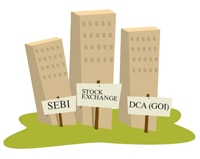
There is no guarantee that permission will be granted by each Stock Exchange whose name has been stated in the prospectus for listing.
Grievance: The interest of the investor is adversely affected if the permission for dealing in securities is not granted, as the allotment of shares/debentures, if made by the company, becomes void.
Rights and remedies:
Companies Act: The investor may refer to Section 73, 73(1A) & 73(2) of the Companies Act and write to the DCA. The investor can also seek remedy under Section 621.
Sebi: Investors can write to Sebi and seek redressal with regard to delay in listing of securities.
DELAY IN DESPATCH OF ALLOTMENT LETTERS/REFUND ORDERS
Companies have to mandatorily ensure timely despatch of allotment letters/certificates and refund orders to the applicants.
Grievance: Investors face difficulty if they don’t get the refund for the shares not allotted or in case of a delay in receipt of certificate/allotment letter.
Rights and remedies:
Companies Act: The investor may refer to Section 73(2A), 73(2B) of the Companies Act and write to the DCA. The investor may also seek remedy under Section 621.
Sebi: Investors can also write to Sebi for redressal.
DELAY IN DESPATCH OF SECURITIES
A share certificate under the seal of the company is prima facie documentary evidence to the title of the shareholder to the shares specified therein.
Grievance: In certain cases, the investors complain about delay in receipt of shares/debenture certificates allotted to them.
Rights and remedies:
Companies Act: The investor may refer to Section 113 of the Companies Act and write to the DCA. The investor may also seek remedy under Section 621.
Sebi: Investors can write to Sebi and obtain redressal with regard to delay in despatch of securities.
DELAY IN TRANSFER OF SECURITIES
Grievance: The transferee may lose certain benefits due to him (bonus, rights, dividends) in the intervening period.
Rights and remedies:
Companies Act: The investor may refer to Section 111, 113 of the Companies Act and write to the Company Law Board (CLB) and DCA, respectively. The investor may also seek remedy under Section 621.
Sebi: Investors can write to Sebi to seek redressal.
DELAY IN PAYMENT OF INTEREST ON DEBENTURES
Investors should verify whether the company is healthy or sick and check the credit rating of the company before investing in debentures.
Grievance: Non-receipt or delay in the receipt of debenture certificates or interest thereon, nonappointment of debenture trustee or non-creation of the stipulated security.
Rights and remedies:
Companies Act: In case of delay in payment of interest on debentures, the investor may refer to Section 118 & 119 of the Companies Act and write to CLB. The investor can also seek remedy under Sections 433 & 434 through the court.
Sebi: Investors can write to Sebi to seek redressal.
NON-PAYMENT OF DIVIDENDS
Dividends are declared by the company with the approval of the shareholders in its general meeting.
Grievance: In certain cases, the shareholders complain about the non-receipt of dividend declared by the company.
Rights and Remedies:
Companies Act: The investor may refer to Section 205A & 207 of the Companies Act and write to the DCA. The investor can also seek remedy under Section 621.
Sebi: Investors can write to Sebi to seek redressal.
CONSUMER PROTECTION ACT
The investor can file complaints before the district forum, state commission or national commission depending on the jurisdiction of the claim.
Insider trading: An insider is a person who accesses the unpublished price-sensitive information of the company before it is available to the general public. Insiders may include corporate officers, directors or owners of firms who may have a substantial interest in the equity of the company.
Insider trading is an act of buying and selling of securities by a person having unpublished price -sensitive information with the intention of making abnormal profits and avoiding losses. This pricesensitive information includes dividend declaration, issue or buy-back of securities, mergers or takeovers, major expansion plans or change of policies.
Sebi is making efforts to prevent insider trading and build investor confidence. It has set up various committees in this regard and various regulations have been implemented to curb insider trading.
Besides, three avenues are available to investors to seek redressal of their complaints.
• The investor can bring to the notice of the Exchange, where the securities of complaints are listed.
• Register complaints with the consumer disputes redressal forums.
• File suits in the court of law.
INVESTOR GRIEVANCES AGAINST TRADING MEMBERS
The nature of complaints received by the Exchange against its trading members can be broadly classified into the following categories:
• Non-receipt of delivery of shares/ non-removal of objection/ non-receipt of rights, bonus shares.
• Disputes regarding rate difference.
• Disputes relating to non-settlement of accounts.
• Miscellaneous items.
Valid complaints supported by necessary documents are forwarded to the concerned trading member to reply to and settle within seven days from the receipt of the letter. If no reply is received or it is unsatisfactory, the matter is forwarded to the Investors’ Grievance Redressal Committee (IGRC) headed by a retired high court judge. The parties are heard and efforts made to resolve the issue amicably. If not, it is referred for arbitration under the rules, bye-laws & regulations of the Exchange.
INVESTOR PROTECTION FUND
BSE is the first Exchange to have set up the Investor Protection Fund in the interest of the clients of the defaulter trading members. This fund was set up on 10 July 1986 and has been registered with the Charity Commissioner, Government of Maharashtra, as a charitable fund. At present, the trading members contribute 1 paisa per lakh of gross turnover. The Stock Exchange contributes 2.5% of the listing fees collected.
Trade guarantee fund
In order to introduce a system of guaranteeing settlement of trades and ensure that market equilibrium is maintained in case of payment default by trading members, the trade guarantee fund was constituted and it came into force with effect from 12 May 1997. Its main objectives are as follows:
• To guarantee settlement of bona fide transactions of trading members, which form part of the Exchange settlement system, to ensure timely completion of the settlement of contract and thereby protect the interest of investors and trading members.
• To inculcate confidence in the minds of secondary market participants and global investors.
• To protect the interest of investors and to promote the development and regulation of secondary market.
INVESTOR AWARENESS & EDUCATION
Investor awareness programme
Such programmes are being held regularly by BSE to educate the investors and create awareness on the working of the capital market, and in particular, the working of the Stock Exchange.
For enquiries, contact: BSE Training Institute, 19th Floor, P. J. Towers, Mumbai-400001; Tel: +91 22 22721233/34; E-mail: training@bseindia.com
BSE’s official Website, www.bseindia.com, is the focal point for information dissemination.
Publication: BSE regularly comes out with publications for investor education.
Arbitration schedule: The schedule of arbitration hearing to be held in the next 30 days is displayed on www.bseindia.com.
Trade confirmation system: Investors can verify their trade on BSE through www.bseindia.com if they have a contract no. BSE has Investor Service Centres in six metros, namely Ahmedabad, Chennai, Cochin, Kolkata, New Delhi and Rajkot.
— In public interest by BSE’s Investor Protection Fund













