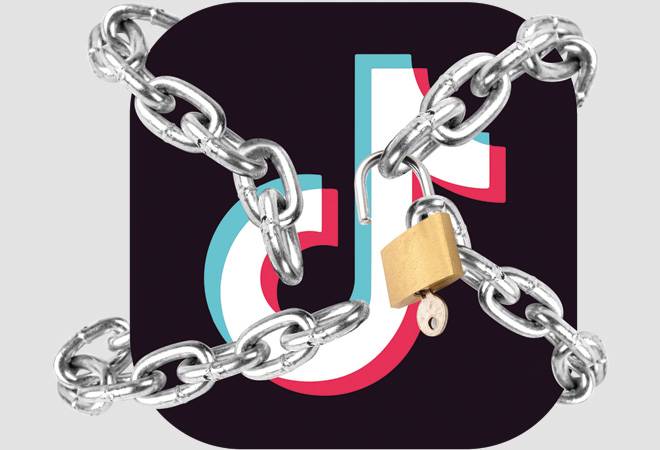
There had been rejoicing on Twitter and other social media platforms when the Madras High Court lifted the ban on popular video-sharing app TikTok, owned by the Chinese Internet company Bytedance.
The court had imposed an interim ban based on allegations that the platform hosts pornographic content and may expose children to sexual predators. Now that the app is back in business, on the condition that it will scan and weed out 'controversial' videos, other concerns - equally disturbing - are surfacing. These have more to do with the freedom of the Internet and whether banning the likes of TikTok can address the concerns raised at the court. Incidentally, TikTok is not the only app to be banned in India. Popular online gaming app PUBG was also banned in Rajkot, Gujarat, as the police felt it provoked violence.
"We cannot have a system where something which is statutorily permissible becomes judicially impermissible. Banning is not the solution," argued Arvind Datar while presenting the case. Datar was appointed Amicus Curiae by the Madras High Court to examine the implications of the TikTok app.
According to Apar Gupta, Executive Director at Delhi-based Internet Freedom Foundation, this is an extremely unscientific, undemocratic approach. "In the US, there is clear legislation for the care and protection of young adults, and it recently led to TikTok being fined in the country," he says. "In India, you do not have similar legislation. And it is not the platforms which are failing. It is the failure of governance itself."
Ashish Aggarwal, Head of Public Policy at the industry lobby NASSCOM, says that the challenge is to create a law that will handle such issues in a fair manner, allowing freedom of speech and also ensuring that the rights of various stakeholders and people's privacy are protected.
There is a need to introduce new legislation, but experts also say that intermediaries should be more accountable when it comes to dealing with such threats. A recent government order compelled social media companies to appoint grievance officers in India, and after the ban on TikTok, they have become more alert and proactive. ShareChat removed several fake accounts, and TikTok announced an investment of $1 billion in India, part of which would be used to hire 1,000 more people and 25 per cent of them would only moderate the content.
"No platform has entirely found the solution to content moderation or content issues. What is important is that we are investing in local content moderation," Helena Lersch, TikTok's Global Public Policy Director told Business Today.
If nothing else, such operational bans have certainly made these apps more wary and watchful.
Skype and Share via App
Now, you can share your screen on iOS and Android versions of Skype. The functionality has been there for its desktop version, but the company has now added the feature to its apps. "Want to show your coworkers a PowerPoint presentation? Or share your swipes on dating apps? Or maybe do some online shopping with your bestie? Starting today, Skype has you covered," the company said in a recent blog post.













