Too much of a choice can be a terrible thing, as Guwahati-based Ribjit Kalita is discovering these days. Should he usher in the New Year in amazing Australia or soak it up in Seychelles? The trouble is his family just can’t make up their minds and the clock is ticking away. There are a host of details to attend to from getting the visas to airline tickets to hotel reservations to hiring a car. The only thing Kalita doesn’t have to worry about is the money to fund all of the above.
What Kalita is planning to do, like many others in the country, is to travel now and pay later. Indeed, travel loans are gradually becominga part of the desi lexicon with several public sector banks going all out to woo those with wanderlust. So what exactly is a travel loan?
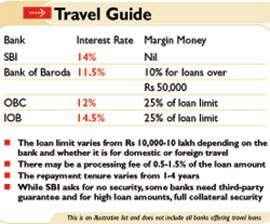
It’s an exclusive branded loan, offered only by the PSU banks, that covers all aspects of your holiday, except shopping. So if the State Bank of India is offering an “Easy Travel” loan, the Oriental Bank of Commerce is brandishing its “Bon Voyage” loan. Whatever the name of the product, the characteristics are the same. The bank will either transfer the loan amount directly to the customer’s bank account after collecting postdated cheques, or directly pay the airlines and hotels the required amount. The biggest factor at play here is the customer’s convenience.
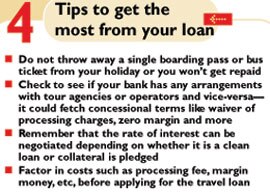
The key advantage of a travel loan over the personal loan is that the rate of interest charged is much lower in the former. Furthermore, it varies depending on factors such as whether it is a clean loan or one which demands collateral security.
So although holidays are no longer an unattainable dream for the middle-class, look out for the fine print like processing fee and other charges. Then there is the issue of margin money. Some banks impose a margin of 10-25% on the loan which means that of a Rs 1-lakh loan, anything from Rs 10,000-25,000 will have to come from your pocket.
Also, remember that the travel loan sanctioned to you is subject to actual expenditure—that is banks require proof of actual travel from you. Hence, if you have been granted a loan of Rs 10 lakh for that trip to Bangkok but you actually spend only Rs 8 lakh, don’t start dreaming about that home theatre system you could do with. Instead just apply for a separate consumer durables loan.
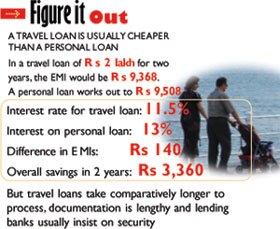
However, despite its inherent advantages, this kind of loan is yet to gain mass acceptance the way the home loan has. The reason, says a senior Bank of Baroda official, is “a lack of awareness and the issues in the implementation process”. A customer still has to wade through a lot more formalities to get a loan from a PSU as compared to a private bank, all of which offer a personal loan. Besides, it’s always demand that dictates a bank’s product menu and as things stand, there is not sufficient demand for a travel loan in India.
Which is why now some banks are opting to tie-up with travel agencies to lure in takers. Bank of India for one has joined forces with Club 7 Holidays for financing their clients at certain major cities. So, while planning your next sojourn, instead of reaching for your credit card, consider holidaying on EMI.