












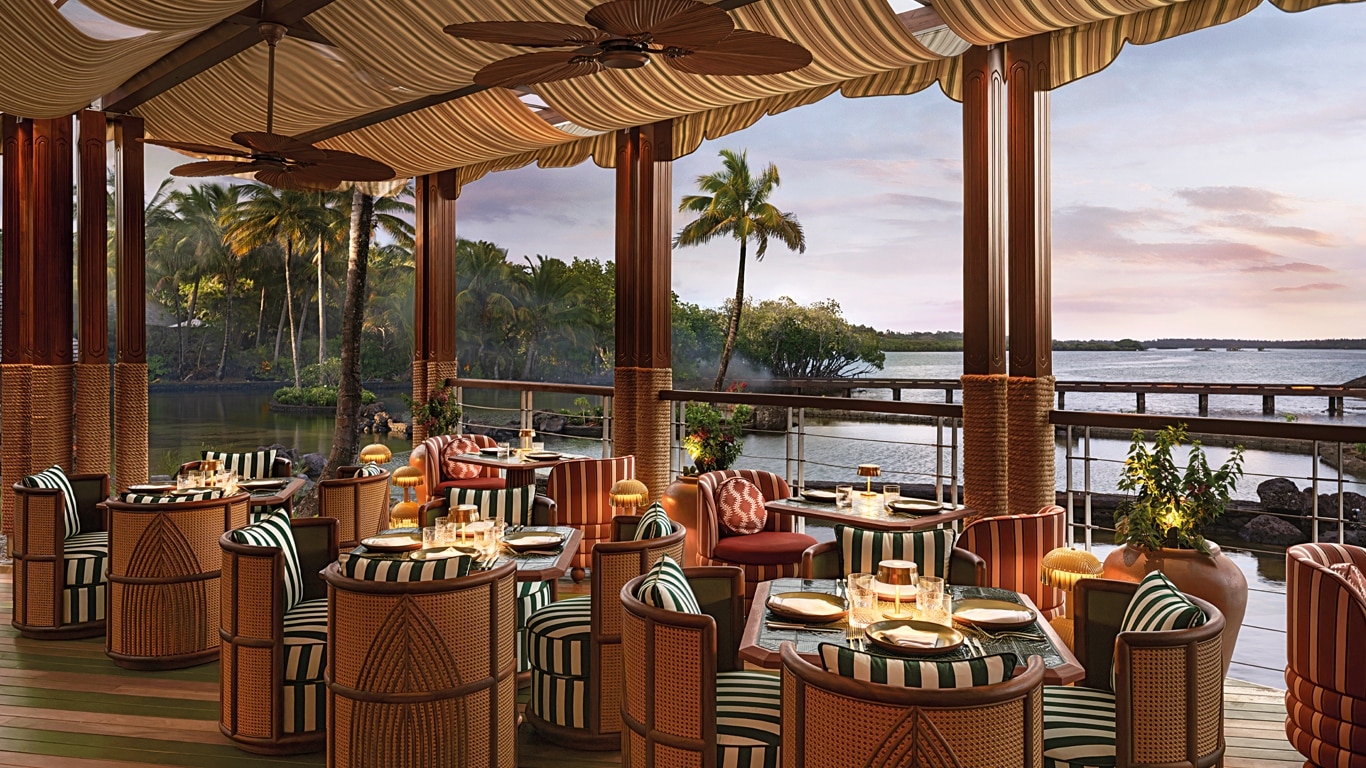

The first thing that strikes me about Mauritius is how much it feels like home. From the large billboards of State Bank of India advertising everything from home loans to credit cards at the Sir Seewoosagur Ramgoolam International Airport near Port Louis to Babulal, my chauffeur from the Four Seasons Resort Mauritius at Anahita who greets me in perfect, though accented, Hindi, “Mauritius mein aapka swagat hai (Welcome to Mauritius),” as he opens the door of the car. But unlike other countries such as the Gulf, the UK or Canada, where you meet a lot of Indian immigrants, Babulal, along with half the population of the island nation, is a Mauritian of Indian origin, his ancestors brought to the country from Bihar by the British to work in sugarcane fields in the 19th century.
As we drive from the airport to the resort, I cross large tracts of sugarcane fields. The last time I saw these was when I visited my mother’s village in Bihar. Another connection to home.
Before Mauritius became known as a tourist hotspot for its azure water and golden beaches, sugar was the primary economic driver. The first sugarcane plant was brought to the island by the Dutch who, incidentally, were also the first settlers. They also brought domestic animals and deer, probably leading to the extinction of the dodo that was native to Mauritius. Of course, these big, flightless birds were also culled for their meat. “The Dutch just ate them all,” says Babulal. The dodo continues to be the island nation’s biggest mascot. You see it on everything from t-shirts to emblems to even the immigration stamp!
Post the Dutch, it was under the French rule, which lasted over a century, that the history of Mauritius was shaped by sugar. The French established several sugar factories and brought African slaves to work in the sugarcane fields.
Then came the British, who further increased sugar production and even started exporting it. When slavery was abolished in 1835, they brought indentured or contract labourers from India to work in the plantations, leading to one of the largest migrations in the world. It is believed that around two million workers from across the country were shipped to the Empire’s plantations.
All this laid the foundations of the diverse Mauritian society comprising descendants of Indian labourers, Chinese traders, African slaves and Dutch, French, and British colonists. And it is this multi-cultural and multi-lingual society that makes Mauritius feel so much like home, yet so different.
At the Four Seasons Resort Mauritius at Anahita, a conversation with executive chef Olivier Barré reinforces this feeling. “There is a strong Indian influence on Mauritian cuisine, but there are several other influences as well, and this amalgamation makes the cuisine unique, just like the country,” he says as I dig into a spicy fish curry with farathas (just like our parathas).
While I am fascinated with how sugar has shaped Mauritian society, what excites me more is the role of sugar in another world-class Mauritian product—rum!
“Mauritius is one of the few places where you have agricultural rhum—a simpler, more flavourful product made from sugarcane juice. It has a vibrant, fruity character. It’s also smoother as it is often double distilled,” says David Iyapah, head mixologist at the Four Seasons as he pours me a drink. It’s sweet and smooth and I can taste hints of cinnamon and vanilla.
For those interested in finding out more about rum, a visit to a distillery is a must. One of the most popular is the Rhumerie de Chamarel that is set in a charming chalet. Perfect for a boozily delicious rum tasting session.
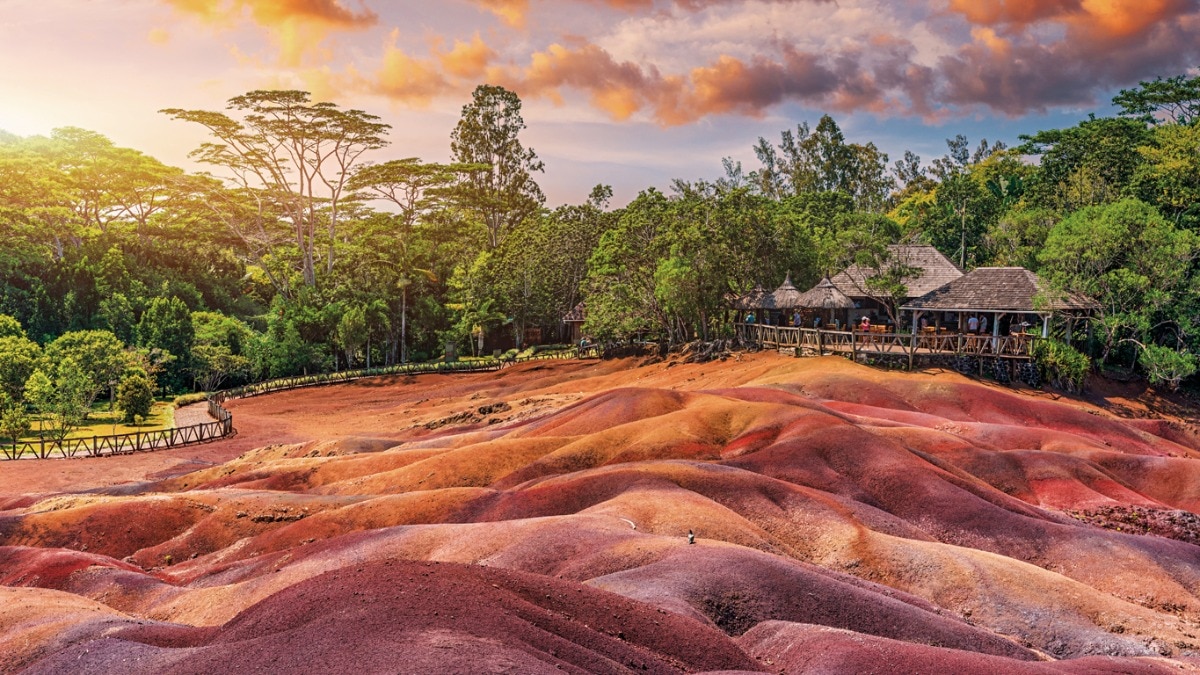
Close to it is the Chamarel 7-Coloured Earth Geopark—one of the most popular attractions. A small area of strikingly bare landscape, the geological wonder showcases small dunes in seven colours: red, brown, violet, green, blue, purple, and yellow.
Of course, Mauritius’s greatest attraction is its beaches, but there is a lot more to explore in this multi-cultural nation.
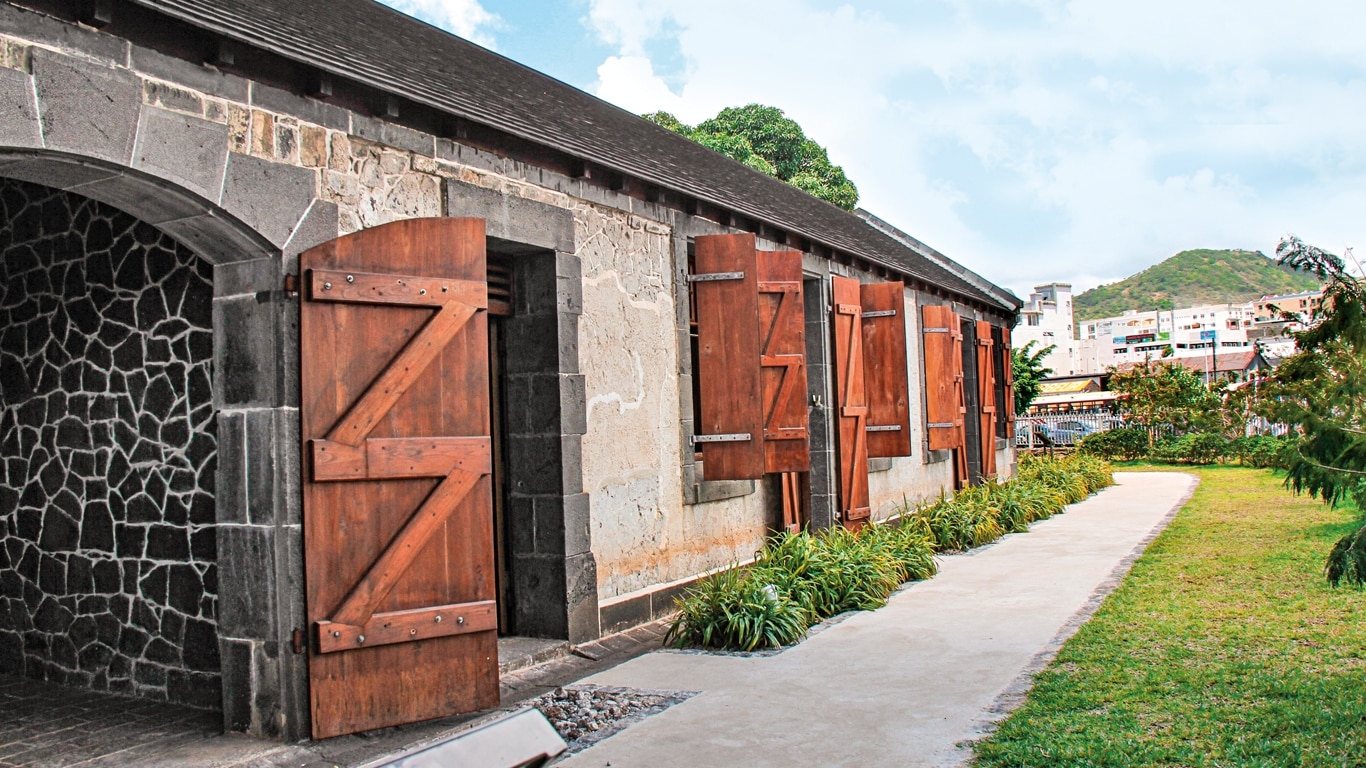
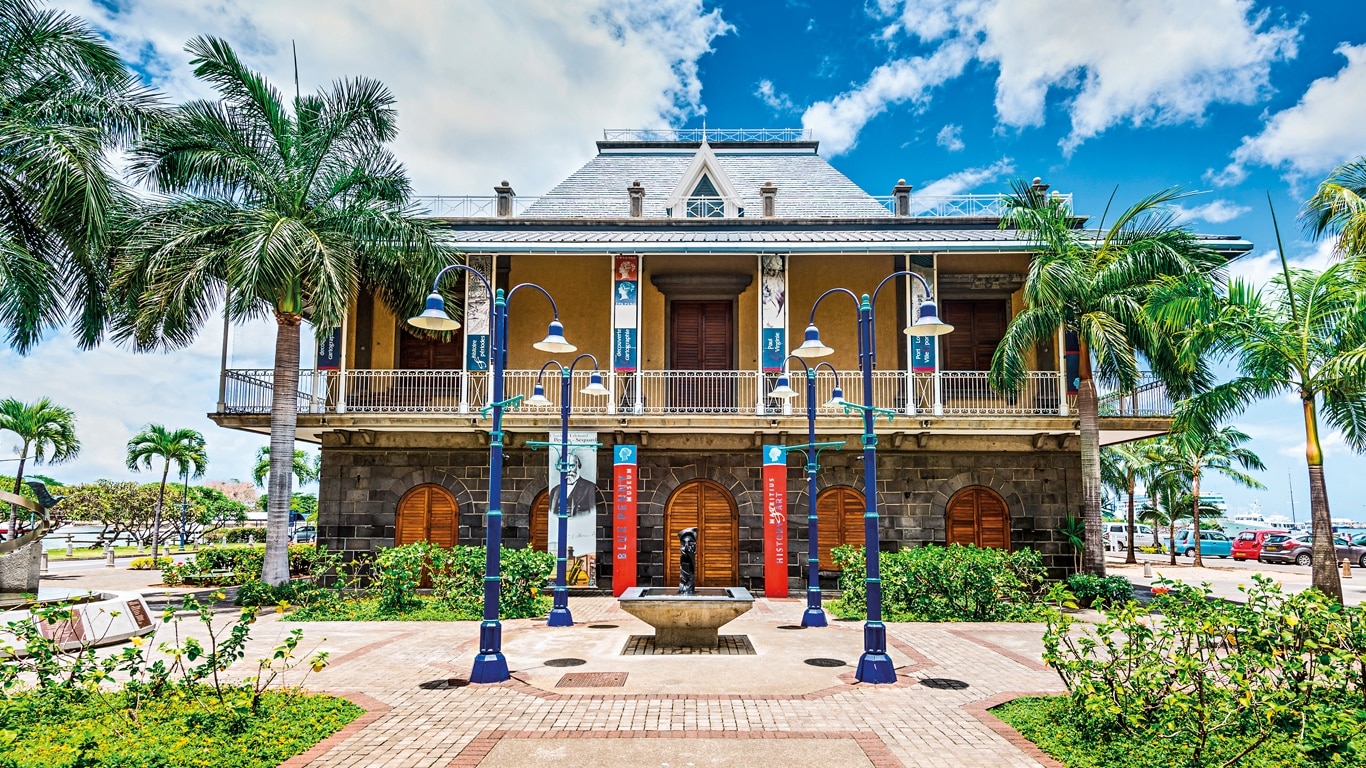
The Blue Penny Museum in Port Louis houses not one but two of the rarest stamps issued in 1847 which are worth millions of dollars today. Its vast collection of paintings, antique maps, sculpture and photos tells the history of Mauritius’ colonial past.
However, one of the most poignant reminders of the island’s history is the UNESCO-protected Aapravasi Ghat, which once functioned as the immigration depot for Indian labourers. It has profound significance for over 52% of the island’s population that is of Indian origin.
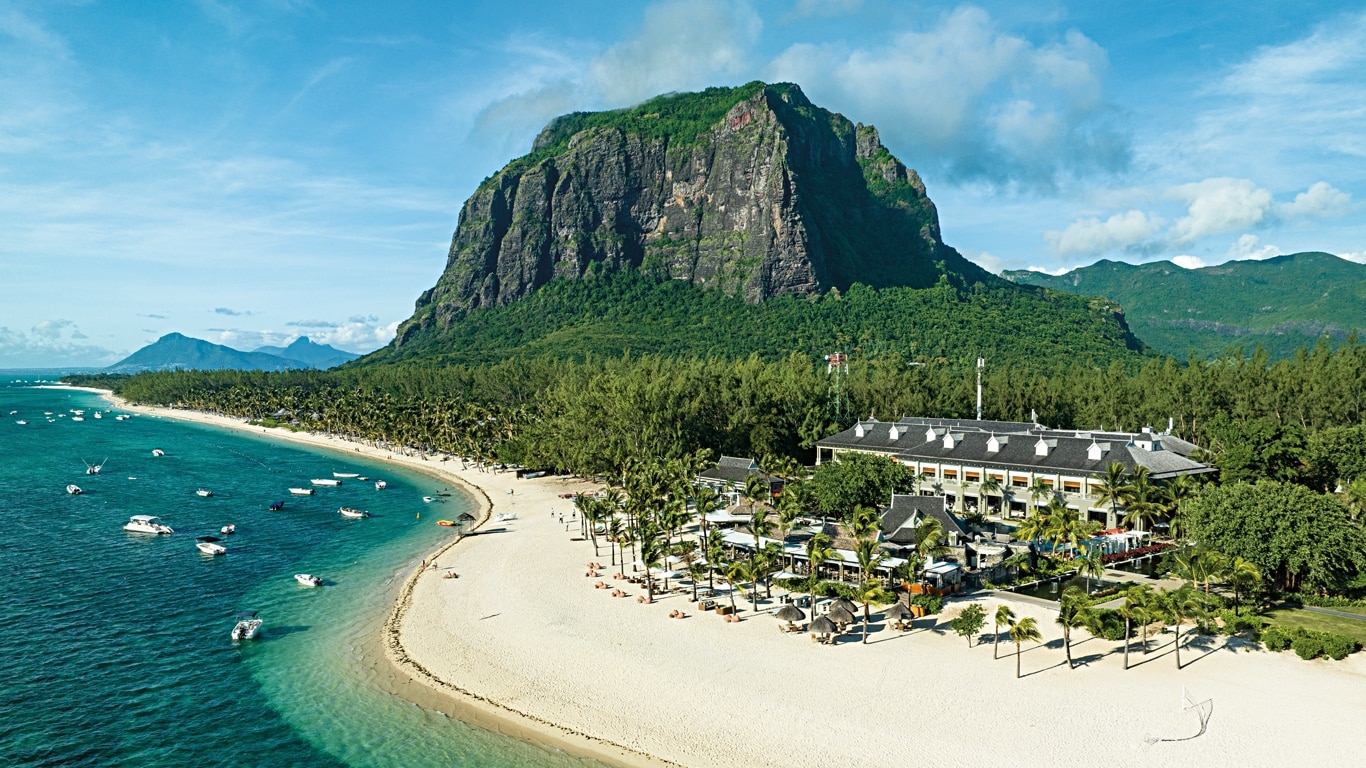
But what got me teary eyed is another UNESCO World Heritage Site, Le Morne Brabant. A small but difficult-to-access mountain, it was once a refuge for runaway slaves, known as ‘maroons’. One tragic day in 1835, soldiers climbed the hill to tell the maroons that slavery had been abolished, but the slaves saw them coming and thought they would be recaptured.
Many maroons jumped off the cliffs and plummeted to their death for the fear of being enslaved again. Today you can trek up the mountain and see its various caves.
Thanks to its significant Hindu population, Mauritius also has many temples and huge idols of Indian gods and goddesses.
As I craned my neck to look up to them, I thought of labourers who came from India 200 years ago, and while they suffered a lot, their future generations are flourishing in this beautiful land that they have made their own.


