










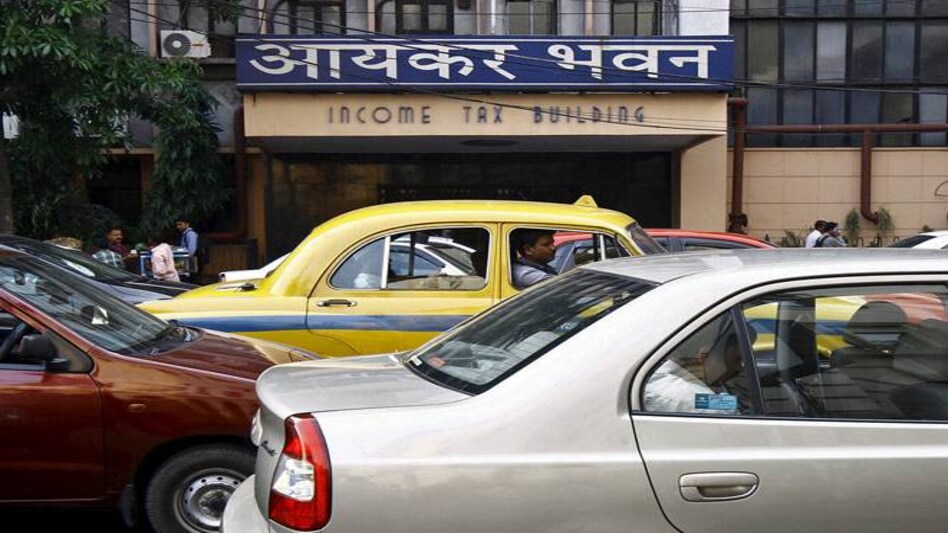
The tax authorities have said that they need to do a detailed investigation into the Indian names that have come out in the leaks of papers of Panama-based law firm Mossack Fonseca , according to an official from the Central Board of Direct Taxation.
"We have received similar information earlier also, there were earlier exposes by ICIJ also. These require a lot of investigation because what they (the leaks) have is the names and the companies. Now, we have to find out if they are shareholders, owners of the companies or just directors. We have to see if they have put in money in the companies, if there are bank accounts somewhere and then only we can say anything," says the CBDT official.
He though says that we need to see if they have declared these foreign assets in their tax return. Tax laws now require individuals and firms to disclose any foreign assets held by them in annual tax returns.
The newly enacted Black Money law has strict provisions of 60 per cent tax on foreign assets, and jail terms of 10 years of imprisonment in case of wilful evasion. Under the Black Money Act, the government had given a limited disclosure window that ended on 30 September last year for people with unaccounted foreign assets to come clean. However, the disclosure scheme got lukewarm response and assets only worth Rs 4,200 crore were disclosed under the window.
The leaked papers have revealed the names of individuals who have paid the law firm money to set up offshore firms to apparently evade tax. The names revealed in the leaks include that of DLF promoter K.P. Singh and family members, IndiaBulls owner Sameer Gehlaut, Onkar Kanwar, Chairman of Apollo Group, Gautam Adani's elder brother Vinod Adani, and Bollywood actors Amitabh Bachchan and his daughter-in-law Aishwarya Rai Bachchan. Most of them have formed offshore companies in British Virgin Island or Panama.
The leaked papers have been studied by the International Consortium of Investigative Journalists (ICIJ) for around a year.
Tax experts, however, say that it is not always illegal for companies and individuals to create offshore companies. A tax expert from Deloitte said that if (corporate) structures are formed based on the treaty provisions, there is no problem with such offshore entities, though law now requires individuals and companies to disclose such entities.
However, she says that if the offshore companies are based out of a non-treaty country, then it is to be seen if the company has been structured in a way to evade tax.
India does not have a tax treaty with either British Virgin Islands (BVI) or Panama. However, India has a tax information exchange agreement with BVI.
Reacting on the recent leaks, Finance Minister Arun Jaitley told reporters here that those who did not disclose their assets under the Black Money window last year would prove costly for them.
Jaitley said in a conference in New Delhi that with G20 initiatives, FATCA and bilateral information exchange treaties that would come into force from 2017, the world is going to be a far more transparent place and therefore, this kind of adventurism will prove to be extremely costly for those who have indulged in it.
Meanwhile, an official of the Enforcement Directorate (ED), the government agency that investigates FEMA and money laundering cases, said that the finance ministry has asked it to prepare a report on the leak.
The finance ministry in a statement said that based on ICIJ expose in 2013 in which the links of 700 Indian persons were shown to have business connection with off-shore entities, the government has been able to identify 434 persons out of them as Indian residents.
Out of these 184 persons out of these have also admitted their relationship with such off-shore entities/transactions, and 52 prosecution complaints under the provision of Income-Tax Act have been filed against offenders so far.
The government authorities have also detected credit in the undisclosed foreign accounts of such Indian persons in excess of Rs 2,000 crores.
Similarly, in response to information received in 2011 from Government of France, relating to the bank accounts of 628 Indian persons in HSBC, Switzerland, 569 persons have been traced. Out of these details of HSBC amount were shown against 339 persons only, while 214 were found not actionable on account of no balance or being non-residents or being non-traceable.
Out of the remaining cases, assessments have been completed in 390 cases in which undisclosed income of Rs 5,018 crore and tax demand of Rs 4,584 crore has been raised. Also the concealment penalty of Rs 1,213 crore has been levied in 157 cases.
Prosecution complaints against 154 have been filed in HSBC cases. Based on the prosecution complaints of predicate offences, ED has also initiated investigation in 23 cases of HSBC and 20 cases of ICIJ expose of 2013.
 'Chase every drop of oil, gas because...': ONGC chief's warning as Hormuz closure continues
 Shapoorji Pallonji urges Tata Sons listing; fresh backing emerges within Trusts
 US-Iran peace talks: Negotiations to take place in Islamabad; details on key obstacles, top attendees
 Sam Altman shares family photo after Molotov attack, warns against rising AI hostility
 TCS dividend payment date 2026: What company said for payout in Q4 results
 BJP’s Bengal Manifesto Puts UCC Front And Centre As Amit Shah Sharpens Attack On Mamata
 Taigun Facelift Push: Volkswagen Targets Market Outperformance
 No Fuel Crisis: Govt Assures LPG, Petrol & Gas Supply Stability
 #Podcast | #Episode10 | Exclusive: William Bissell, MD, Fabindia On Journey, AI-Transfomation & More
 Market Rally Continues! Nifty Near 24,000, Bank Nifty’s Best Week Since 2021
 TCS dividend payment date 2026: What company said for payout in Q4 results
 Q4 results: HDFC Bank, Yes Bank, Wipro, ICICI Bank, others to post earnings next week; check dates
 ITC, HUL shares offer up to 31% upside: Why brokerage sees a 'Buy' opportunity
 'Buy' Suzlon Energy, Paytm & GE Vernova shares: PL's analyst; check price targets
 70% dividend stock: Rs 7/share - Check record date, returns | Do you own?