After nearly three decades at the frontlines of human spaceflight, Sunita Williams has retired from NASA, closing a 27-year career defined by endurance, leadership, and record-setting missions in orbit. The announcement comes as Williams, 60, is visiting India, where she addressed an interactive session at the American Centre on Tuesday, reflecting on a journey that took her from Earth’s surface to some of the longest and most demanding missions aboard the International Space Station.
At the event, titled “Eyes on the Stars, Feet on the Ground,” Williams spoke about one of the toughest phases of her career, an eight-day mission that unexpectedly stretched into more than nine months in space after technical problems on Boeing’s Starliner spacecraft. What was meant to be routine became a defining test of resilience as she and her crewmates adapted to an extended stay in orbit.
A legacy of 27 years
NASA formally confirmed her retirement in a statement issued on January 20. “After 27 years of service, NASA astronaut Suni Williams retired from the agency, effective Dec. 27, 2025. Williams completed three missions aboard the International Space Station, setting numerous human spaceflight records throughout her career,” the agency said.
The Indian-origin astronaut
Born on September 19, 1965, in Euclid, Ohio, to a Gujarati father, Deepak Pandya, from Jhulasan in Gujarat’s Mehsana district, and a Slovenian mother, Ursuline Bonnie Pandya, Williams has long been a source of pride across continents. Over the course of her career, she logged 608 cumulative days in space, second among NASA astronauts, and completed nine spacewalks totalling 62 hours and six minutes, the most by any woman and the fourth-highest overall.
“Suni Williams has been a trailblazer in human spaceflight, shaping the future of exploration through her leadership aboard the space station and paving the way for commercial missions to low Earth orbit,” NASA Administrator Jared Isaacman said. “Her work advancing science and technology has laid the foundation for Artemis missions to the Moon and advancing toward Mars, and her extraordinary achievements will continue to inspire generations to dream big and push the boundaries of what’s possible.”
Space, second home
Williams herself described space as home. “Anyone who knows me knows that space is my absolute favourite place to be,” she said. “It's been an incredible honour to have served in the Astronaut Office and have had the opportunity to fly in space three times. I had an amazing 27-year career at NASA, and that is mainly because of all the wonderful love and support I’ve received from my colleagues.”
Her career milestones span multiple eras of spaceflight—from launching aboard space shuttle Discovery in 2006, to commanding the space station, to flying on both Boeing and SpaceX spacecraft. A retired US Navy captain, Williams is also an accomplished pilot with more than 4,000 flight hours across 40 aircraft.
Reflecting on what lies ahead, she said the space station and the science conducted there have made future exploration possible. “I hope the foundation we set has made these bold steps a little easier. I am super excited for NASA and its partner agencies as we take these next steps, and I can’t wait to watch the agency make history.”
(With inputs from PTI)



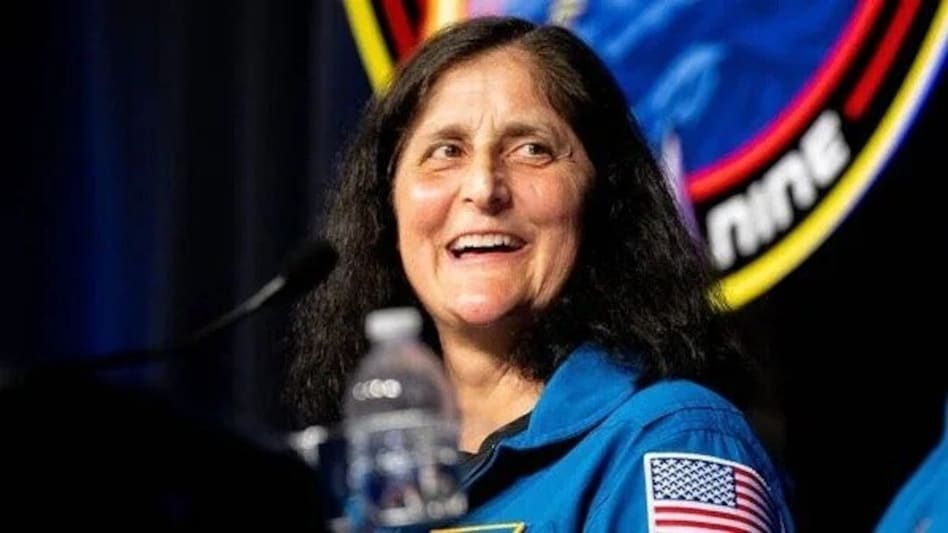 Sunita Williams retires from NASA after record-setting 27-year career
 ‘An Indian consumes 1/10th of an average American’: Amb Kwatra says energy security comes first
 Tata stock to buy: Nuvama bets on unique tech-telecom play, sees 28% upside
  NSE IPO, Hero Motors IPO, SS Retail IPO, Jindal Supreme IPO: GMP of four ongoing issues rises up to 32%
 UPI MDR: BharatPe distances itself from Ashneer Grover's remarks, says UPI to remain free for consumers
 IndiGo shares in focus as baggage, infant fee, priority boarding charges likely raised
 Corporate Health Insurance Vs Retail Policy: Why You Need Personal Health Cover Too
 How India Changed In 12 Years: PM Modi’s Journey From Economic Reforms To Viksit Bharat
 Modi @76: From Twitter To Instagram, How His Digital Outreach Has Evolved
 Stock Picks To Watch: Shibani Kurian Reveals Kotak AMC’s Market Bets
 Gold ETF vs Physical Gold: Know the Tax Rules, Charges and Key Differences
 Block deal effect: Bombay Burmah shares zoom 9%, Mcap crosses Rs 10,000 crore
  Yatharth Hospital shares jump 20% in two days; what's behind the surge?
 Veegaland Developers IPO shares make decent debut; stock lists at 10% premium on NSE
 Tata Chemicals, Tata Investment shares drop up to 8%: Why Tata stocks are falling today
 iPhone 18 Pro, Pro Max now on Zepto, Blinkit and Instamart: Skip the Apple Store queue
 iPhone prices may rise again in 2027; Samsung’s latest memory deal could be the reason












