“India Semiconductor Mission (ISM) 1.0 expanded India’s semiconductor sector capabilities. Building on this, we will launch ISM 2.0 to produce equipment and materials, design full-stack Indian IP, and fortify supply chains. We will also focus on industry-led research and training centres to develop technology and skilled workforce,” Sitharaman said in her Budget speech.
Industry leaders see ISM 2.0 as a structural pivot, moving beyond attracting fabrication plants to building domestic capabilities across equipment, materials, design and upstream inputs.
Also read: Budget 2026: Industry hails data centre tax holiday as move to make India 'digital backbone for the world'
“The globe is watching India’s progress on Electronics and semiconductor mission and Budget’s increase outlay will signal India’s focus to strengthen these sectors. The budget will enable India to become a hub for electronic components manufacturing and will also help in building Full stack and ecosystem for Semiconductor manufacturing in terms of Equipment, Chemicals, Assembly and Packaging facilities,” said Sathish S, Partner and National Sector Leader, Industrial Manufacturing, KPMG in India.
Ashok Chandak, President of IESA, said the new phase marks a clear evolution in India’s approach.
“It marks a clear evolution from a fab-centric approach to a full value-chain strategy, covering equipment, materials, Indian IP, and supply-chain resilience. This is critical if India is to move from being a participant to a structural player in the global semiconductor ecosystem. For India, this means the ambition is no longer limited to manufacturing chips, but to own capabilities across design, tools, materials, and upstream inputs—areas that define long-term competitiveness and strategic autonomy.”
Why semiconductor manufacturing equipment matters
Under ISM 1.0, India committed Rs 76,000 crore towards 10 projects in the first half of the decade. These include one high-volume chip fabrication plant by Tata Electronics and several semiconductor testing and packaging facilities from players such as Micron, CG Power, HCL-Foxconn, Kaynes Semicon and Tata Electronics.
ISM 2.0 is now expected to underpin the next phase of growth in the second half of the decade.
Commenting on the inclusion of semiconductor equipment manufacturing, Danish Faruqui, CEO of Fab Economics, called the proactive focus on Semiconductor Wafer Fab Equipment (WFE) a masterstroke shaped by global geopolitics and geoeconomics.
“WFE is the most important success factor for building a fab/OSAT and is also the largest component of CAPEX. With the entire world reeling under the constrained supply of WFE having delivery lead time of multiple years in some cases. It is indeed existential for including Semiconductor WFE Manufacturing as part of decadal semiconductor roadmap of India.”
Faruqui said India’s strategy diverges sharply from China’s past approach.
“China built its semiconductor chips manufacturing and packaging ecosystem as a strategic priority with continuous pouring of multi-billion dollars every year for the past two decade while it missed sizeable investments in domestic Semiconductor Wafer Fab Equipment (WFE) Manufacturing as it mostly relied on US, EU and Korea on semiconductor manufacturing equipment to fuel its semiconductor chips manufacturing and packaging ecosystem.”
Also read: Electronics component scheme gets Rs 40,000 crore boost to deepen India's manufacturing value chain
As US–Beijing tensions escalated, targeted sanctions began choking China’s access to advanced fabrication services and WFE supplies.
“China never planned for sanctions on WFE supply and now that has emerged as a major choke point for its domestic semi ecosystem growth. India on the other hand is attempting to include domestic WFE manufacturing from get-go a marked difference from China’s semiconductor strategy,” Faruqui added.
Materials: the silent backbone of chipmaking
Beyond tools, semiconductor manufacturing depends heavily on ultra-high-purity materials such as specialty gases, chemicals and substrates. Even microscopic impurities can impact yields, making material quality as critical as fabrication technology.
“Materials are India’s most underleveraged strategic asset in semiconductors. Unlike tools, materials scale through chemistry, process discipline, and logistics areas where India already has industrial depth. They directly determine yield stability, operating risk, and cost curves, fabs can import tools, but inconsistent materials break scale economics,” said Manish Rawat, associate analyst at TechInsights.
Rawat said India’s most immediate opportunity lies in localising high-volume, consumable and geopolitically sensitive inputs such as specialty chemicals and process gases, given their high import dependence and repeat consumption. Advanced packaging materials should follow, aligned with India’s near-term strength in OSAT and assembly. Over the medium term, silicon wafers, starting with 200mm and reclaim, are capital intensive but critical for supply security, while selective bets on SiC and GaN-on-silicon align with EV, renewable and power electronics demand.
Material localisation, he added, lowers fab risk, creates recurring industries and strengthens supply-chain resilience during disruptions.
Policy clarity awaited
While the launch of ISM 2.0 after a wait of over a year and a half has lifted industry sentiment, executives say clarity on implementation will be key.
Chandak said the government must provide detailed policy guidance and funding continuity for equipment, materials and IP-led design, alongside support for industry-driven R&D, skilling and global partnerships, especially in deep-tech domains. Speed of execution and coordination across ministries and states will also be critical.
Arun Mampazhy, an independent semiconductor analyst, pointed out that the Budget speech placed less emphasis on attracting additional fabs.
“As of now, there is still one fab in Dholera for high volume silicon and there should be some effort to get one more,” he said.
Initially, global semiconductor industry growth was pegged at $1 trillion by 2030. Fab Economics now estimates it at $1.8 trillion, driven by the rise of generative AI following ChatGPT. The next five years, analysts say, represent an unprecedented opportunity for India to capture a meaningful share of this expansion through ISM 2.0.



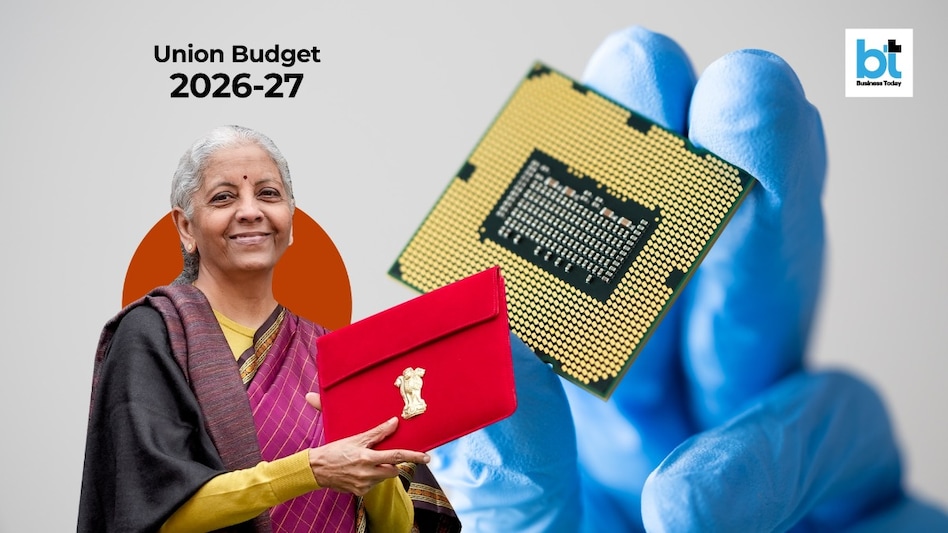 ISM 2.0 is now expected to underpin the next phase of growth in the second half of the decade.
 'RBI letter does not mention listing': Noel Tata seeks full briefing on Tata Sons-RBI talks
 Tata Trusts asks Tata Sons to explore options other than listing, says ‘Tata Model has to be saved’
 Tata Trusts proposes ₹25,000 crore plan for SP Group, says Tata Sons listing is not an option
 Chandrasekaran had assured all necessary steps were being taken to remain private: Noel Tata
 'We cannot put the cart before...': Noel Tata's argument against N Chandrasekaran's reappointment
 How India Changed In 12 Years: PM Modi’s Journey From Economic Reforms To Viksit Bharat
 Modi @76: From Twitter To Instagram, How His Digital Outreach Has Evolved
 Stock Picks To Watch: Shibani Kurian Reveals Kotak AMC’s Market Bets
 Gold ETF vs Physical Gold: Know the Tax Rules, Charges and Key Differences
  PPF vs NPS: Tax Benefits, Returns and Lock-in Period Explained for Retirement Planning
 Hero Motors IPO subscribed 3.37 times on Day 2; retail portion subscribed over 5 times
 NSE IPO: India's largest exchange gets 43% subscription on Day 1; NIIs, retail see strong demand
 Rentomojo shares settle maiden trade nearly 32% above IPO price; what should investors do now?
 Sensex slips, Nifty settles higher; Tata stocks gain after N Chandrasekaran reappointment
 Cochin Shipyard, KRBL, RITES, Ramky Infrastructure among stocks to turn ex-dividend on September 18
 Maharashtra FDA action: Nair Hospital canteen, Olympia Coffee House licences suspended
 TVS Motor to increase monthly EV capacity to over 50,000 units as sales boom
 'Foreign investors want only returns': Noel Tata explains why he opposes listing Tata Sons












