


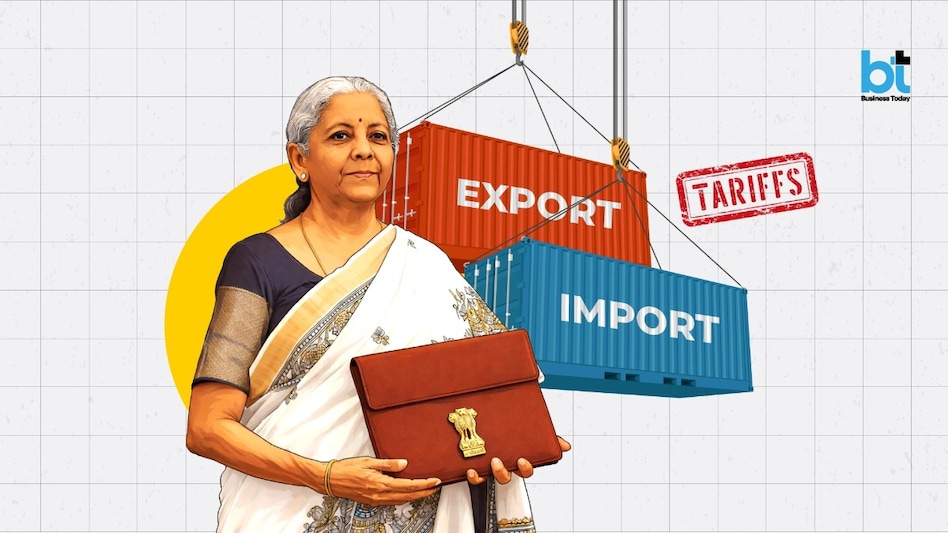
 Ahead of Budget 2026, industry demands GST-style simplification of custom duties as the current eight slabs (0%, 5%, 10%, 15%, 20%, 25%, 30%, 40%+) create complexity with specific rates
Budget 2026 | Union Finance Minister Nirmala Sitharaman’s presented her ninth consecutive Budget in the Parliament on February 1 2026. The Finance Minister emphasised that the government has consistently chosen reform over rhetoric and addressed global uncertainty.
Recent pre-budget talks highlight customs duty reforms as a game-changer because India's current complex structure, with over eight slabs (0-40%+), thousands of exemptions, and inverted duties, locks up ₹24,000 crore in disputes, delays clearances by weeks, and erodes SME competitiveness in exports amid global tariffs, while simplification could unlock working capital, cut litigation by 70%, speed AI-driven approvals to hours, and boost manufacturing value addition under PLI schemes

 HDFC Bank leadership shake-up: CEO Sashidhar Jagdishan to retire on Oct 26, will not seek reappointment
 GST Council set to meet on September 12; ITC norms, state revenues likely on agenda
 Multiple options exist post the deferment of Tata Sons' AGM, say legal experts
 Essel Group debt: Now, LIC Housing Finance, Union Bank to challenge NCLT's repayment plan
 Why Adani and Tata Power are turning to foreign nuclear reactors over local models
 ITR Filing Deadline August 31: Key Rules For Freelancers, Content Creators & F&O Traders
 “Bengaluru Needs Metro, Not A ₹40,000-Crore Tunnel Road,” Says Tejasvi Surya
 Why Astra Microwave Could Benefit From Rising Defence Orders | Defence Sector In Focus
 Alienware 16 Area-51 Review: RTX 5080 Beast Or ₹3 Lakh Overkill?
 Hitachi Stock Doubles In 6 Months: Why It Became The Top Portfolio Performer Of 2026
 Jio Platforms IPO gets SEBI nod: Rs 27,500 crore debt repayment plan, $100 billion valuation in focus
 Closing Auction Session: Why the system expected to reduce volatility is still seeing occasional wild swings
 RIL-backed penny stock hits 52-week low; firm clarifies on high trading volume
 Happiest Minds shares slip despite IT stocks surge; here's what is weighing on the stock
 BEL, Solar Industries shares remain Nuvama's top defence picks; here's what it said on BDL, Data Patterns, HALITR Filing Deadline August 31: Key Rules For Freelancers, Content Creators & F&O Traders
 'Do you feel you are a lord...': Bombay HC warns Tukaram Mundhe's FDA with contempt charges
 From Apple to the Boardroom: Tim Cook’s leadership roles beyond Apple
 The AI jobs shock: Why reskilling could become unavoidable by 2030, says reportHDFC Bank leadership shake-up: CEO Sashidhar Jagdishan to retire on Oct 26, will not seek reappointment












