


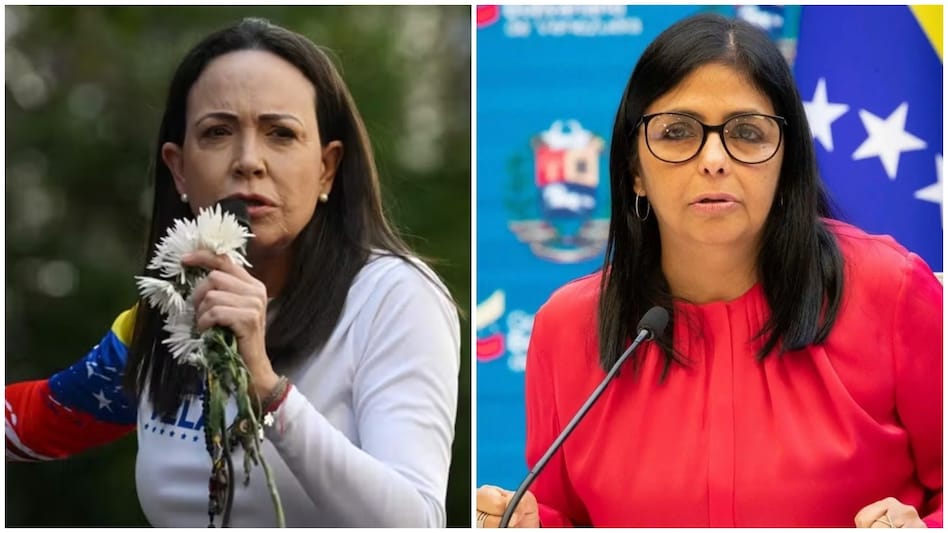
 US President Donald Trump rejected Nobel Peace Prize-winning opposition leader María Corina Machado (left) and indicated the US would instead engage with Venezuelan Vice President Delcy Rodríguez.
US President Donald Trump rejected Nobel Peace Prize-winning opposition leader María Corina Machado as a viable leader for Venezuela, instead signaling Washington’s willingness to work with figures from the existing power structure as the United States moves to manage the country following the capture of President Nicolás Maduro.
Speaking at a news conference hours after confirming that US special forces had seized Maduro and his wife in Caracas, Trump dismissed Machado’s leadership credentials, saying she lacked domestic backing despite international acclaim.

 Tata Motors, Ather, M&M, Ashok Leyland: Emkay Global sees up to 58% upside in select auto stocks
 NSE IPO subscribed 3.8x on Day 3 amid strong QIB demand; key details
 Biocon’s breast cancer biosimilar gets a positive EMA opinion; closer to launching therapy in EU
 ‘It was inappropriate…’: IIT-B apologises for earlier statement, says Director has not resigned
 Apple layoffs: iPhone maker begins fresh job cuts, second round in two months
 Takeda, Dr. Reddy’spartner To Bring QDENGA Dengue Vaccine To India; Launch Expected In H1 2027
 Would You Really Upgrade Your iPhone Just For THIS? | The iPhone 18 Pro Debate
 IPO Rush Drains Secondary Market Liquidity; Ajay Bagga On Primary Market & NSE IPO
 Dr. Reddy's Sees Dengue Vaccine Opportunity As QDENGA Launch Nears
 From Noida To Lucknow: Food Safety Raids Uncover Rodents, Rotten Food And Hygiene Violations
 Protean eGov shares zoom 20% to hit upper circuit; here's what's happeningNSE IPO subscribed 3.8x on Day 3 amid strong QIB demand; key details
 AMFI rejig: IRFC, Vedanta shares may move to midcap list, SBI Funds' largecap entry likely
 Wipro shares fall 55% from record high, deliver negative returns for up to five years; looking to exit?
 Multibagger stock to buy: This recent debutant is up 140% in two months; analyst sees more upside
 Apple’s $250 million Siri settlement: Check if your iPhone qualifies and how to claim
 Professors were doing their job: Ex-Rajya Sabha MP questions caste discrimination angle in IIT Bombay rowTakeda, Dr. Reddy’spartner To Bring QDENGA Dengue Vaccine To India; Launch Expected In H1 2027
 Citroën owner Stellantis take full control of Tamil Nadu plantWould You Really Upgrade Your iPhone Just For THIS? | The iPhone 18 Pro Debate












