


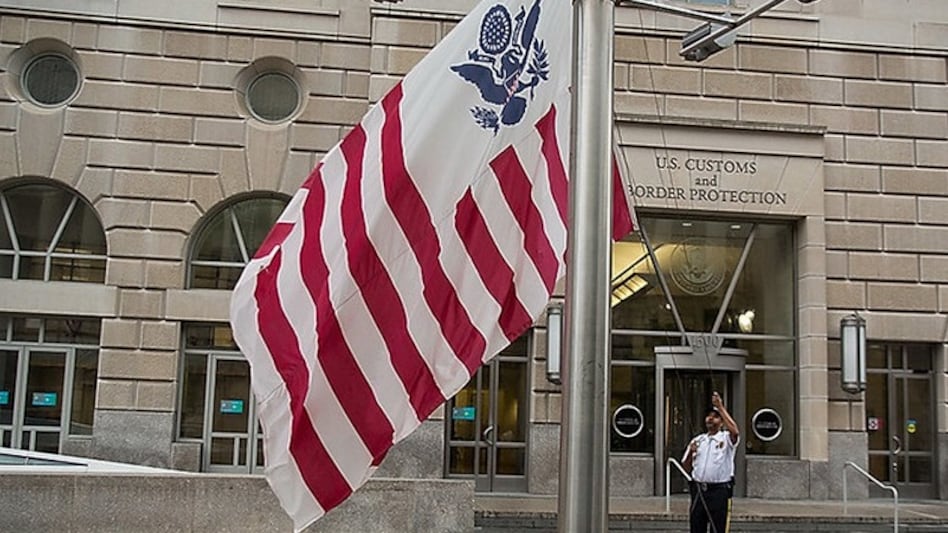
 According to government estimates, the Trump administration collected roughly $130 billion through tariffs imposed on most imported goods using the emergency powers law.
 US Customs and Border Protection (CBP) has told the United States Court of International Trade that it is currently unable to comply with an order directing the agency to begin refunding tariffs imposed last year by Donald Trump, after the levies were ruled illegal by the Supreme Court of the United States.
In a court filing on March 6, CBP said the total amount of tariffs collected under the International Emergency Economic Powers Act (IEEPA), along with related estimated duty deposits, is “approximately $166 billion” as of Tuesday.

 'Majority among two is two': Tata Trusts says Chandrasekaran reappointment failed AoA condition, has no legal effect
 ICAI plans further reforms to scale up homegrown accounting firms
 'Modi admin has done a phenomenal job': Blackstone's Jon Gray on what changed in India
 West Asia tensions: Iran hands 7 terms to US via Qatar, warns of all-out war if Trump rejects deal
 Tata Trusts hires Abhishek Manu Singhvi as advocate. His first reaction: 'Having worked with Ratan Tata...'
 Gold Price Target 2026: Expert Sees MCX Gold At ₹1.8 Lakh By Year-End Amid Strong Demand
 Health Insurance: Why Pre-Existing Diseases And Waiting Periods Matter For Buyers
 Crude Oil Above $100: How High Energy Prices And Rupee Weakness Impact Gold Prices In India
 CEA On India’s Manufacturing Rise, Atmanirbhar Bharat And Modi’s Economic Policy
 Health Insurance Buying Guide: 7 Things First-Time Buyers Must Check Before Choosing A Policy
 SpaceX weight in Nasdaq 100 to jump to 2.82% following quarterly index rebalance: Report
 Tata Motors or Ashok Leyland? Analyst reveals his preferred auto stock for near-term gains
 Maharashtra Scooters, Dixon Tech, Bharat Dynamics, Jai Corp among stocks to turn ex-dividend on Monday
 Jindal Supreme, SS Retail, Hero Motors IPOs subscribed up to 181 times on final day; details here
 Sensex, Nifty post sixth weekly loss; TCS, Titan among top laggards, slip up to 4%
 EAM S Jaishankar, former Army chief get SIR notices in Delhi
 New CBFC rules mandate anti-drug warning in films depicting drug use'Majority among two is two': Tata Trusts says Chandrasekaran reappointment failed AoA condition, has no legal effectICAI plans further reforms to scale up homegrown accounting firms
 3-day bank strike from September 28: SBI asks customers to complete key transactions early












