“On Friday, the Department of Justice served the Federal Reserve with grand jury subpoenas, threatening a criminal indictment related to my testimony before the Senate Banking Committee last June,” Powell said in a statement released Monday, referring to questions surrounding a multi-year renovation of the Fed’s Washington headquarters.
Powell’s statement came after the US attorney’s office in Washington launched a probe into whether he misled Congress about a multi-year renovation of the Federal Reserve’s headquarters, according to officials briefed on the matter. The inquiry, approved in November by Jeanine Pirro, a Trump ally appointed last year to run the office, includes a review of Powell’s public testimony and an examination of spending records linked to the project.
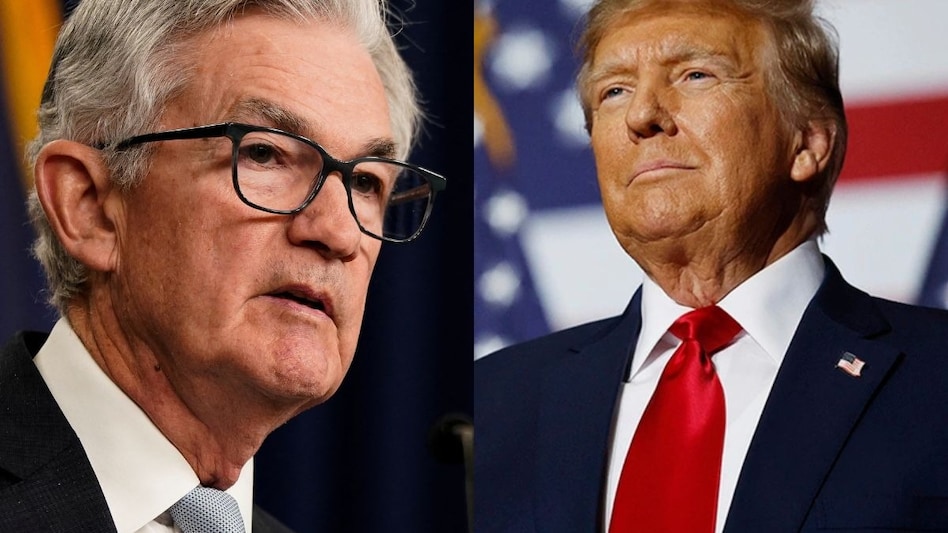
The investigation opens a major new legal front against Powell, whom Trump has repeatedly attacked for resisting demands to sharply cut interest rates. The president has publicly threatened to fire the Fed chair, despite nominating him in 2017, and has raised the prospect of legal action over the renovation, which he has described as “incompetence.”
While stressing respect for accountability, Powell warned that the action must be viewed in its broader political context. “No one—certainly not the chair of the Federal Reserve—is above the law,” he said. “But this unprecedented action should be seen in the broader context of the administration's threats and ongoing pressure.”
Powell rejected claims that the issue centred on misleading Congress or evading oversight. “This new threat is not about my testimony last June or about the renovation of the Federal Reserve buildings. It is not about Congress's oversight role,” he said, adding that the Fed had made “every effort to keep Congress informed about the renovation project.”
Instead, Powell directly linked the threat to monetary policy decisions. “Those are pretexts. The threat of criminal charges is a consequence of the Federal Reserve setting interest rates based on our best assessment of what will serve the public, rather than following the preferences of the President,” he said.
“This is about whether the Fed will be able to continue to set interest rates based on evidence and economic conditions—or whether instead monetary policy will be directed by political pressure or intimidation.”
Powell said he would continue in his role without yielding to pressure. “Public service sometimes requires standing firm in the face of threats. I will continue to do the job the Senate confirmed me to do, with integrity and a commitment to serving the American people.”
Renovation project under scrutiny
The renovation at the centre of the investigation began in 2022 and is scheduled for completion in 2027. Costs are now estimated to be roughly $700 million over budget. The project involves modernising the Marriner S. Eccles Building, constructed in 1935, and another building on Constitution Avenue built in 1932.
The Federal Reserve has said neither building had been comprehensively renovated in nearly a century, citing asbestos and lead removal, accessibility upgrades, higher material and labour costs, and soil contamination as key drivers of overruns.
During a Senate hearing in June, Powell denied that luxury features cited in earlier proposals remained part of the project. “There’s no V.I.P. dining room; there’s no new marble,” he told lawmakers. “We took down the old marble, we’re putting it back up. We’ll have to use new marble where some of the old marble broke. But there’s no special elevators. There’s just old elevators that have been there.”
Powell added that the project’s plans had “continued to evolve” and that several initially proposed features were scrapped. After his testimony, the Fed published a detailed FAQ, released photographs, annotations and a virtual tour to address criticism.
Trump–Fed standoff deepens
The investigation underscores Trump’s broader confrontation with the Federal Reserve. Congress granted the central bank independence to set interest rates free from presidential influence, directing it instead to pursue price stability and maximum employment.
In an interview with The New York Times last week, Trump said he had already decided who he wants to replace Powell with and is expected to announce his choice soon. Kevin A. Hassett, the president’s top economic adviser, is viewed as a front-runner. Powell’s term as chair ends in May, though his term as a Fed governor runs through January 2028. Powell has not said whether he intends to remain at the central bank beyond this year.
It remains unclear whether prosecutors have convened a grand jury or issued additional subpoenas. Officials familiar with the matter said Powell’s staff has been contacted multiple times for documents, but securing—and sustaining—an indictment would require a high evidentiary threshold.
Powell’s warning frames the episode not merely as a dispute over construction costs, but as a test of whether the Federal Reserve can continue to set monetary policy without political coercion at a moment when interest rates remain a central fault line in Washington.



 Powell pushes back as DOJ investigation deepens Trump–Fed confrontation
 India could raise ₹2 lakh crore through IPOs; 55% of FY27 proceeds already fresh capital: SEBI Chairman
 'I'll be here for 2.5 years': Trump warns Iran against waiting for midterms for a deal
 No prescription, no pills: Govt cracks whip on misuse of painkillers, antibiotics
 SEBI settles proceedings linked to Hindenburg report against 5 Adani firms for ₹1.51 crore
 'No positive response on 5-day banking': Bank unions to go ahead with 3-day strike
 IT Stocks Under Pressure: What Next For Indian Markets? | Chakri Lokapriya
 Karnataka’s Welfare Schemes Under Pressure As Finance Department Flags New Challenges
 Family Disputes Can Hold Businesses Back: Nirmala Sitharaman’s Message To Family Firms
 TRAI New Rules: Voice-SMS Only Plans Mandatory | What It Means For 20 Crore Non-Data Users
 Oil & Gas Capex Boom: Anshul Saigal Names Energy Stock He Owns | Saigal Capital Advisors
 Corporate bonds hit ₹61 lakh crore: SEBI pushes for deeper and more liquid debt markets
 Peshwa Wheat to raise ₹53.52 crore through IPO; funds to go towards expansion
 Balmer Lawrie to demerge Travel & Vacations unit into wholly-owned subsidiary: Report
 Sansera Engineering shares rise 7%; Goldman Sachs raises target; sees further upside
 UPI daily limit vs ₹2,000 MDR threshold: What is the difference?
 India vs Brazil football match: VVIP seats cost ₹25,000, Check full stand-wise price list
 'No private university shall be run for profit': SC seeks details of fees, funds, admissions
 Nifty 500 underperformed for nearly 2 years: These mutual funds delivered up to 27% returns
 Financial Horoscope Today, September 23, 2026: Increase in Wealth and Prosperity for Sagittarius, Know What Your Sign Says Today












