Taxing separationIf you are headed for splitsville, take note of these tax implications of your financial decisions Alimony Giver: Not deductible from income for tax calculations |
— Jaideep Lunial, Certified financial planner |
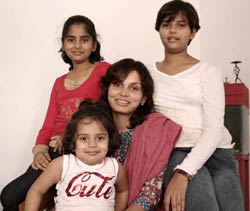
Then Parihar lost her husband because of a cardiac arrest, the family lost its only earning member. “I have three daughters and at the time the youngest was barely six months old,” she says.
Parihar moved in with her parents, saving on rent. She gets her husband’s pension (he served as a Lieutenant Colonel in the Indian Army) of Rs 19,000 a month. But that left little to save. So Parihar took up a job as a school teacher. Her monthly salary is a modest Rs 6,500, but it ensures that she has some money left to save.
The biggest asset for single parents is often their earning potential. Improvement in career tops the agenda of single father Sourav Chatterjee, a 38-year-old artist with an e-card company in Kolkata. “I wish to increase my income significantly. Therefore, I spend most of my post-work hours honing my skills as a painter,” he says. This means that he has little time to spend with his three-year-old daughter, who is taken care of by her aunt. “But it is the concern for her future that motivates me to enhance my career,” says Chatterjee.
However hard you try, there will be times when your expenses shoot up and your income falls short. The temptation to take a loan to finance the deficit is great. In fact, most of the single parents we spoke to are repaying personal loans. Sen says that no sooner has she repaid one than she has to take another. Planners say that this is a trap single parents should be particularly wary of as there’s nobody to bail them out of a deepening debt. That’s why they advise single parents to stay away from loans for depreciating assets like cars or washing machines.
It is a common perception that single parents should stay away from risky investments such as equities. Shah debunks this idea and actually encourages them to invest in equities, especially through mutual funds, for their long-term goals. In fact, as the burden of all investments is always on one income, high-return asset classes like equities should be integral, he says.


 One asset that’s essential is real estate, as rents could eat into even the most robust income. Shah rates a house to be as important a goal as the children’s education. But with other expenses jostling for attention, a home moves down the priority list of a single parent. Some wait till they’ve saved a sufficient amount before buying a house, while others prefer to wait till other goals are met. But this is simply putting off something that’s better started as early as possible.
The insurance needs of a single parent are higher than that of a family with one breadwinner. Experts suggest that single parents should take a high cover, possibly in the form of a term plan.
A rough-and-ready method of figuring out how much insurance a single parent needs is to add up the family’s expenses for another 30 years, value of all loans and a buffer equivalent to equity investments. Apart from life cover, it’s also important that a single parent takes health and accident insurance, as hospital bills could prove crippling. If you are divorced and some of the child-related expenses are met by your ex-spouse, it is a good idea to ask him/her to take adequate life insurance.
Another worry for most single parents is their retirement. As with a house, the need to build a nest egg is not felt till quite late in life.
Ranchi-based Poonam (Nigam) Sahay teaches in a government college, and is therefore eligible for a pension. But the amount is likely to fall short of her needs. “I want to build a nest egg on a shoestring budget,” she says. At 48, Sahay has lost precious years for building her retirement corpus, but it isn’t too late. She could invest Rs 4,000 every month in equity diversified mutual funds. In 14 years, assuming that the money earns 15% annualised returns, she should have a corpus of Rs 22 lakh. After scrambling to fulfill your responsibilities, you deserve to live comfortably. As Sahay says, “I owe myself a good retirement.”
Monthly cash flow:
*Retirement age assumed to be 65. Inflation assumed to be 5%. Expected annualised returns from balanced fund: 12%. Expected annualised returns from equity diversified fund: 14% |
Monthly cash flow: • Education of all three daughters • Buy a term insurance policy of Rs 30 lakh for 20 years |