








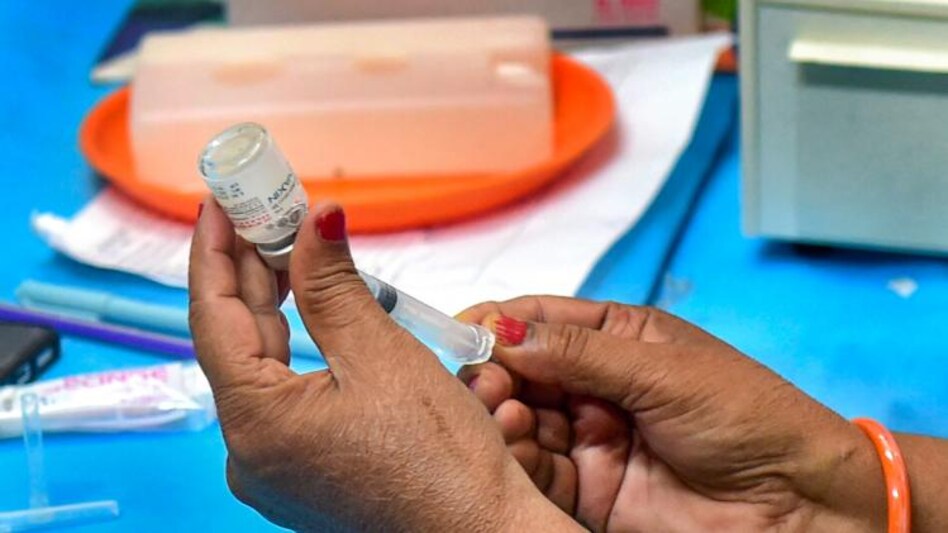
 Oxford study looks into feasibility of mixing two vaccinesOxford study looks into feasibility of mixing two vaccines
Amid discussions on the impact of mixing doses of two different vaccines, Oxford University has come out with a study to shed some light on the matter. The study says that alternating doses of AstraZeneca-Oxford and Pfizer-BioNTech vaccines have shown a robust immune response against COVID-19.
Mixed schedules of these vaccines induced high concentrations of antibodies against SARS-CoV2 spike IgG protein when doses were administered four weeks apart.
The study published on the Lancet pre-print server indicates that all possible vaccination schedules with AstraZeneca-Oxford and Pfizer-BioNTech vaccines could be used against COVID-19. This comes as a ray of hope amid reports of vaccine shortage.
Professor Matthew Snape, Associate Professor in Paediatrics and Vaccinology at the University of Oxford, and Chief Investigator on the trial said, “The results show that when given at a four-week interval both mixed schedules induce an immune response that is above the threshold set by the standard schedule of the Oxford/AstraZeneca vaccine."
However the interval of four weeks is considerably shorter than the eight to 12 week gap schedule commonly used for the Oxford-AstraZeneca vaccine.
UK Deputy Chief Medical Officer Professor Jonathan Van-Tam called it a vital step forward.
The Com-COV study run by the National Immunisation Schedule Evaluation Consortium (NISEC) is led by the University of Oxford. The study aims to look at the feasibility of using different vaccines for the initial ‘prime’ vaccination to the follow-up booster vaccination.
Also read: Govt to spend additional Rs 23,220 cr for COVID-19 preparedness, special focus on children
Also read: COVID-19: Current vaccines may be less effective against Beta variant, says UK study
 India-US BTA: Harley Davidson bikes to get 0% duty, gradual tariff reduction on luxury cars
 India-US interim trade agreement: 'No GM modified product allowed, agri sector protected,' says Piyush Goyal
 'Decided to give 0% tariff on some cancer medications, neuro treatment': Piyush Goyal on what US got
 Cyberattack impact on Tata Motors PV earnings crosses Rs 3,200 crore; losses still mounting
 India-US interim trade pact: 'Boeing, Airbus looking at India as largest OEM partner,' says Piyush Goyal
 The Fairway Fixes Everything. Mindset, Life, Relationships
 BT Golf LIVE: Join AU Small Finance Bank Presents BT Golf 2025-26 For Its 4th Leg In Kochi, Kerala
 AI Will Change MBAs, Not Leadership: IMD President On India’s Global Education Rise
 Golf & Life: Handling Every High And Low
 It’s Time More Women Picked Up The Club. Golf Welcomes Women At Every Stage Of Life.
 RIL, SBI, Kotak Bank, Kalyan, HAL, BEML, BDL among stocks in focus next week; here’s why
 NSE IPO may unlock mega gains for billionaire investors RK Damani, Premji
 SBI Q3 Results: Profit jumps 24% to Rs 21,028 crore; asset quality improves
 IDBI Bank stake sale: Kotak Mahindra Bank says ‘has not submitted a financial bid’
 BDL, Mazagon Dock, MRF, Hindustan Copper, RVNL, others to turn ex-dividend next week