"The ongoing COVID-19 pandemic has tested health systems to their limits, and sometimes beyond them - with tragic consequences. For instance, the global shortage in health care workers, which was already a concern in 2016, was underlined and exacerbated by the pandemic," said Shyam Bishen - Head of Health and Healthcare at the World Economic Forum.
"The World Health Organisation predicts that the health workers shortage may more than double from 7 million in 2016 to 18 million by 2030 - so steps should be taken to address this challenge now. Clearly, the world was caught unprepared by this crisis and we must learn lessons from it in order to prepare for and avert the worst health impacts of any future pandemic and the looming climate crisis - which is the single biggest health threat facing humanity," he said.
Taking India into context, apart from the Covid-19, the country also has a high burden of non-communicable diseases which are a major hurdle in achieving universal health coverage.
Meanwhile, Apollo Hospitals, on Wednesday unveiled the Health of the Nation 2022 report highlighting the prevalence and distribution of non-communicable diseases (NCDs) across the country.
Key findings of the report for Diabetes Mellitus show an increased prevalence in the southern and eastern parts of the country with an average national prevalence of 6.96 per cent. Urban areas showed a higher prevalence at 7.01 per cent as compared to rural areas with 6.70 per cent. The study also showed obesity in women over 35 years of age leading to poor diabetes control and increasing risk of heart disease and other complications. Data also indicated poor diabetes control in women with high cholesterol with a 0.5 increase in HbA1c diabetes marker levels.
In Hypertension, the study showed a national prevalence of high blood pressure at over 8.18 per cent with a higher incidence in North and East India. Data also indicated that adult males between the ages of 36 and 50 years have a 36 per cent higher chance of developing hypertension than adult females in the same age range. Urban areas at 8.6 per cent showed a higher incidence as compared to rural areas with 7.58 per cent.
Chronic Obstructive Lung Disease (COPD) and asthma showed an incidence similar to global numbers at 2 per cent. Here, females between 36 to 50 years of age showed a 1.3 times higher chance of developing COPD as compared to males.
NCDs pose devastating health consequences for individuals, families and communities with socioeconomic costs that can derail India's achieving the target of reducing premature mortality from NCDs by one-third by 2030 in line with the United Nations Agenda for Sustainable Development. At the same time, the treatment and insurance coverage remain abysmally low in India among populations.
Anup Malani, Lee and Brena Freeman Professor of Law; Professor at the Pritzker School of Medicine, The University of Chicago Law School, which recent conducted research on India's healthcare coverage said that, less than 50 per cent of children live in villages without healthcare facilities whereas the private sector provides 75 per cent of health care. There is a limited demand of health care facilities, the healthcare spending is only 3-4 per cent of GDP. There is inadequate financing; 75 per cent of healthcare spending is out-of-pocket, 25 per cent untreated diseases are due to lack of financial support.
"The Government has made a strategy to solve this issue including building hospitals, training doctors, running public health campaigns, etc. In 1990s, we witnessed a shift where private supplies expanded thematically. In 2000s, the Government changed its strategy and started supporting demands with states then central finances schemes emerged like Rashtriya Swasthya Bima Yojana (RSBY) and Ayushman Bharat - Pradhan Mantri Jan Arogya Yojana (PM-JAY). Despite the shift, demand subsidies are a small share of spending," said Malani.
"The health insurance's main value is not health but a financial protection from large expenses. The clinically significant health effects can also not be ruled out and there is a need for larger and deeper studies to find health impacts. Health insurance has primarily financial benefits," he said.
Mental health issues have come up significantly after the covid-19 pandemic. Mental health conditions cause 1 in 5 years lived with disability and more than 80 per cent people with mental health conditions don't have access to quality and affordable treatment, according to health experts.
"It is identified that stress, anxiety, depression are the most frequent concerns highlighted for youth population in India and are not properly addressed. To do so, there is a need to fully integrate mental health plan in universal health coverage and the need of neglected people such as children should be addressed as about 9.8 million adolescents aged 13-17 years need active mental health care intervention," said Seeba Anam, Associate Professor of Psychiatry and Behavioral Neuroscience, University of Chicago.
The Indiangovernment has issued a program on "Minding our minds during COVID-19" which addresses and promotes mental health concerns. "The recent data shows 1 of 7 youth has depression and unfortunately only 41 per cent agrees to take help for mental health issues which is significantly less than other countries. The need of the hour is to raise awareness about the importance of mental health across among people and human and financial resources for mental health should be brought in line with the needs which will be able to help to contribute to need assessment study," she said.
Also read: India's first XE variant of COVID-19 case: Govt denies report
Also read: Mask mandate can be removed as COVID restrictions ease: Experts



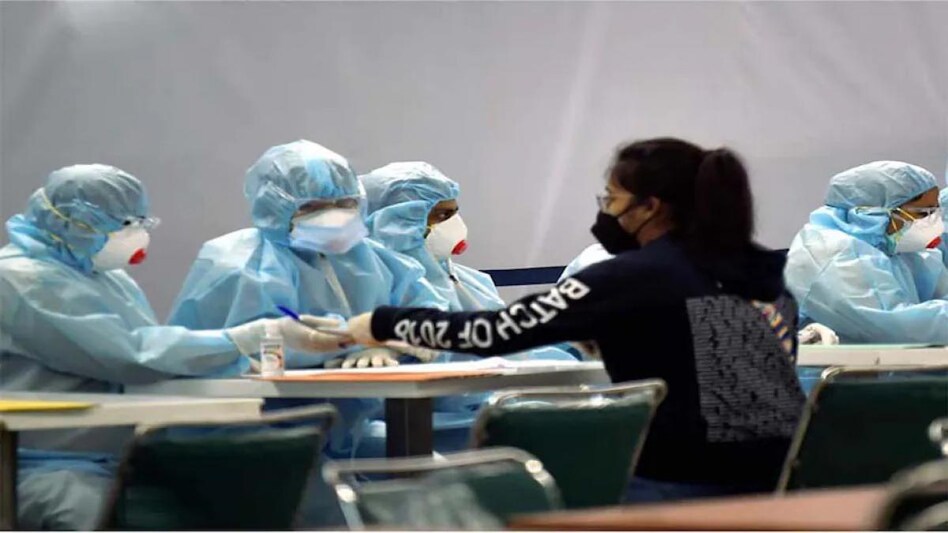 Marking the World Health Day, the forum said that only strong partnerships between the public and private sectors can improve the resilience of healthcare systems globally so they perform better in the face of a crisis.
 LTCG, STT debate: FM Sitharaman to 'tread cautiously' on taxation ahead of Budget
 UPI MDR on select person-to-merchant transactions to be implemented after Diwali
 'Chips are the future': Tata Sons' N. Chandrasekaran flags demand, management risks in India’s semiconductor push
 'Retaining capital is not a unilateral thing I can do': FM Sitharaman on India’s capital outflows
 BT BIG STORY: India Inc is more confident about Q3, but unwilling to hire or invest
 LTCG Tax To Be Scrapped? FM Sitharaman Open To Suggestions | Bloomberg Forum 2026
 FM Sitharaman Explains RBI's Strategy Amid Rupee Volatility | BNEF 2026
 Bizarre Paris Attack: Hackers Heat Supermarket Fridges To 80°C! Cyberattack Destroys Food
 HD Fire IPO Opens Today | Should You Subscribe? Price Band, GMP Analysis & Broker Views
 Air Chief Marshal AP Singh Flies His Last Fighter Sortie In Tejas Ahead Of Retirement
 Tonbo Imaging IPO: Akash Bhansali, SBI Funds among investors buying shares worth Rs 413 crore
 Bandhan Bank shares jump 9% as IHC explores buying promoter stake; bank says unaware of talks
 PNB Gilts shares jump 12% as firm returns to black in Q2
  Infosys shares jump 5% amid IT rally, firm makes key announcement
  TCS vs HCL Tech: How two IT giants stack up in the AI race after Q2 results
 NPCI Postpones UPI MDR Till Diwali Amid Concerns Of Impact On Festive Sales
 TCS, HCLTECH Rally Upto 8%! 3 Reasons Behind The Massive Move in I.T. Stocks
 Nirmala Sitharaman On How The Chip Manufacturing Strategy Was Finalised 2-3 Years Ago
 Gold prices fall 23% from peak: How vulnerable are gold lenders and borrowers in current situation?
 Anthropic warns AI could soon hijack smart devices to replicate itself, study finds












