

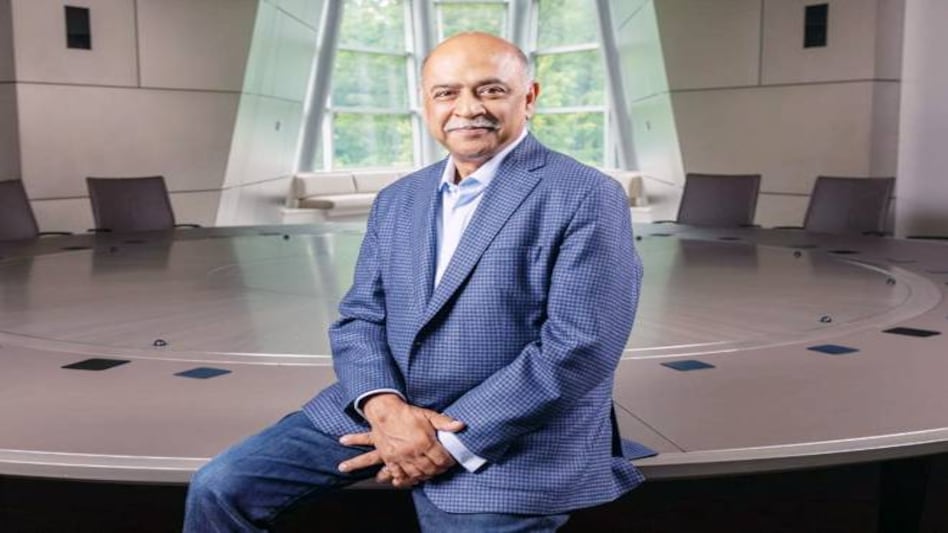
 IBM's newly-appointed CEO Arvind Krishna
Finance Minister Nirmala Sitharaman's Budget speech was replete with geeky terms. One of them was quantum technology. "Quantum technology is opening up new frontiers in computing, communications, cyber security with wide-spread applications. It is expected that lots of commercial applications would emerge from theoretical constructs which are developing in this area," Nirmala Sitharaman, Minister of Finance, said. "It is proposed to provide an outlay of Rs 8,000 crore over a period five years for the National Mission on Quantum Technologies and Applications," she announced.
One could argue India is far behind in quantum computing and the money allocated is hardly enough for a catch-up. Arvind Krishna, the new CEO of IBM, wrote a guest column for Business Today in 2018, where he highlighted that "for many business leaders, quantum computing seems like a technology that is still years away from practical use. The truth is, the technology exists and a practical quantum future is closer than we think. The field has more than 50 years of scientific advancements already behind it".
 NDA may win 326 seats, BJP 261 if Lok Sabha polls held today: India Today-CVoter MOTN
 India eyes ₹13,000 crore battery component push to reduce reliance on China: Report
 BT Explainer: Why E10 could make a comeback via premium fuel dispensers
 Subhash Chandra says NCLT insolvency claim is ₹3,992 crore, not ₹22,000 crore as reported
 HDFC Bank share price: Fifth-worst Nifty performer of 2026 offers maximum upside
 Commodity Outlook: Gold & Silver Prices Set To Rebound — Should You Invest? | Money Today
 U.S. Spy Chief In Moscow? Secret C-17 Flight Sparks Mystery Over Ukraine Peace Talks
 Mohan Bhagwat In New York: Mamdani’s RSS Attack Sparks Political Showdown
 Gurugram’s Monsoon Crisis: Garbage-Choked Badshahpur Drain Turns Millennium City Into Flood Zone
 India Market Outlook: Why Global Yields, Not Crude, Could Derail The Earnings Recovery
 HDFC Bank shares hit 52-week low, down 28% YTD; experts see further downside
 Fintech firm Paramotor Digital gets Sebi nod for IPO
 Wipro ADRs jump 7% on Google Cloud partnership; key details
 Internet stocks look expensive, but Nykaa and Lenskart remain long-term bets: Mayuresh Joshi
 Gujarat Pipavav shares: JM Financial retains target, sees 27% upside
 BT Explainer: Why JSW Group is putting its plans to make battery cells in India on holdNDA may win 326 seats, BJP 261 if Lok Sabha polls held today: India Today-CVoter MOTNIndia eyes ₹13,000 crore battery component push to reduce reliance on China: Report
 China warns new barrier lake near Nepal border could breach, trigger another flood in 3 days
 10,500 targeted, only 2,790 students enrolled: Panel flags government free coaching scheme gaps












