








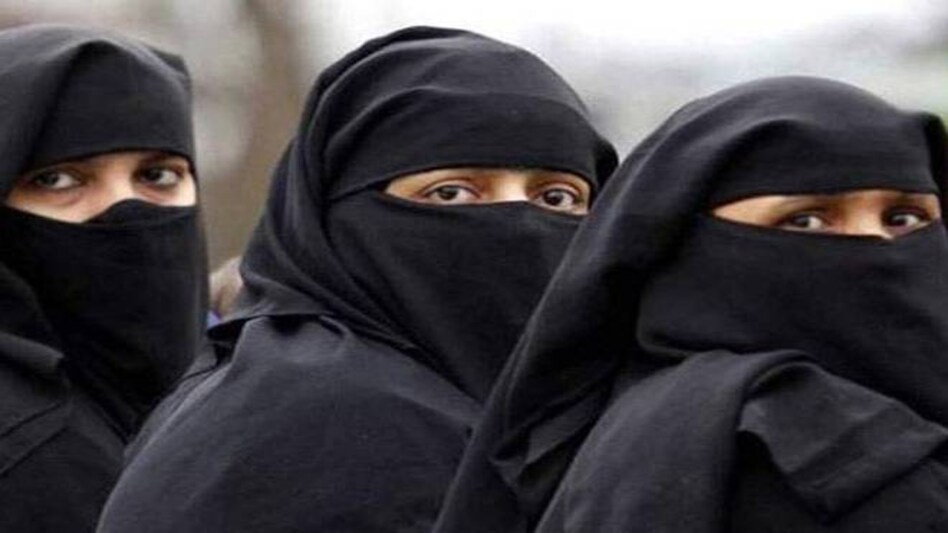
The Supreme Court today delivered a landmark verdict by setting aside the practice of divorce through triple talaq among Muslims. The apex court said the triple talaq practice is "void", "illegal" and "unconstitutional". It further held that the triple talaq is against the basic tenets of Quran. The landmark judgement was delivered by a five-judge bench that comprised Chief Justice J S Khehar, Justice S Abdul Nazeer, Justices Kurian Joseph and R F Nariman and U U Lalit.
The verdict was divided in 3:2 ratio as Chief Justice Khehar and Justice S Abdul Nazeer were in favour of putting on hold for six months the practice of triple talaq, asking the government to legislate a law in this regard. However, Justices Kurian Joseph, R F Nariman and U U Lalit ruled that triple talaq must go as it was violative of the Constitution. The Chief Justice and Justice Nazeer asked the political parties to set aside their differences and help the Centre in coming out with a legislation. If government fails to bring a law within six months, then the judiciary's injunction on triple talaq will continue.
Triple talaq is a practice among Muslims that dissolves a marriage when the Muslim husbands say 'talaq' thrice. This practice is banned in 22 countries of the world including several Muslim-dominated countries. However, it has taken 70 years for India to abolish the practice.
LIST OF COUNTRIES WHERE TRIPLE TALAQ IS BANNED
Pakistan, Bangladesh, Turkey, Cyprus, Tunisia, Algeria, Malaysian state of Sarawak, Iran, Sri Lanka, Jordan, Indonesia, UAE, Qatar, Sudan, Morocco, Egypt, Iraq, Brunei and Malaysia. India is the latest to join the list.
PRIME MINISTER ON TRIPLE TALAQ
Prime Minister Narendra Modi has been speaking against the discriminatory practice of triple talaq on various forums. Earlier this month on August 15, the Prime Minister assured that the whole country would support the muslim women's fight against triple talaq. Before this, the Prime Minister had raised the triple talaq issue during last assembly elections in Uttar Pradesh where he said that constitutional rights of Muslim women must be protected. He further said: "Is it fair for a man to say talaq thrice over the phone and a Muslim woman's life to be ruined? The government will ensure that constitutional rights of Muslim women are protected. This issue shouldn't be politicised. there are some political parties which are indulging in vote bank politics and doesn't want Muslim women to get their natural rights."
HERE IS HOW SUPREME COURT REACHED TO THIS CONCLUSION
The whole process started in October 2015 when a Supreme Court bench asked Chief Justice of India to set up an appropriate bench to examine if Muslim women face gender discrimination in divorce cases. The apex court asked then Attorney General Mukul Rohatgi to assist it on the pleas challenging constitutional validity of 'triple talaq', 'nikah halala' and polygamy. In 2016, the Supreme Court asked Centre to file report of a high-level panel on 'Women and the law: An assessment of family laws with focus on laws relating to marriage, divorce, custody, inheritence and succession'. In the same year in June, the apex court made it clear that 'triple talaq' would be tested on "touchstone of constitutional framework". In October 2016, the Central government made a bold move and for the first time in India's constitutional history it opposed triple talaq and favored a relook on grounds like gender equality and secularism.
This year in Febuary, the highest court said that a five-judge constitution bench would be set up to hear and decide the challenge to 'triple talaq', 'nikah halala' and polygamy. However, in March, All India Muslim Personal Law Board or AIMPLB told the court that pleas were not maintainable as the issues were outside judiciary's realm. To which the Supreme Court said that these issues were "very important" and involved "sentiments" and added that a constitution bench would start hearing in the case. It also said that it would examine whether the practise of triple talaq was fundamental to the religion. The SC said that it would examine whether triple talaq was an essential part of the religion under Article 25 of Constitution.
The most important observation of the apex court came in May when it observed that the practise of triple talaq was the "worst" and "not desirable" form of dissolution of marriages. In May this year, the Centre told the SC that it would bring new law to regulate marriage and divorce among the Muslim community if triple talaq was struck down. However, AIMPLB opposed it and told the SC that matters of faith couldnt be tested on grounds of constitutional morality. The Muslim board further said that triple talaq is a matter of faith for last 1,400 years. The Centre later told the highest court that triple talaq was neither integral to Islam nor a "majority versus minority" issue but rather an "intra-community tussle" between Muslim men and deprived women.
After hearing both the side, the Supreme Court on May 18 reserved the verdict on triple talaq. Meanwhile, on May 22, the AIMPLB filed another affidavit in the court saying it would issue an advisory to 'Qazis' to tell bridegrooms that they will not resort to triple talaq to annul their marriage. However, the Supreme Court wasn't satisfied with the arguments and today it ended the year-long court battle by saying triple talaq is void, illegal and unconstitutional and against basic tenets of Quran.
 ‘Absolutely no compromise on agriculture, dairy, sugar’: Piyush Goyal on India-US trade deal
 Exclusive: Adani Group to start coal gasification work this year, expand MRO operations, says Jeet Adani
 Kalyan Jewellers, Vaibhav Global, Thangamayil, Senco, PN Gadgil & Goldiam jump up to 15%; here's why
 Shipping Corp shares zoom 14% on Q3 earnings, dividend; check details
  Elon Musk shifts SpaceX focus to ‘self-growing’ Moon city over Mars colony
 India-U.S. Trade Deal Triggers Political Storm As Congress Says Trump Wins, Modi Loses On Farmers
 US Map On Trade Deal Shows Full J&K As India, Sending Sharp Signal To Pakistan And China
 “India’s Trade Policy Has Shifted Fundamentally After The US Deal,” Says Piyush Goyal
 Govt Scraps Small Car Concessions In Emission Norms; Maruti Seen Most Impacted
 Bhaijaan Meets Bhagwat: Salman’s RSS Appearance Triggers Political Firestorm
 Zerodha's new 'Terminal Mode' on Kite trading platform: How it proposes to change user experience
  FIIs turn buyers in February so far: Temporary bounce or start of a new trend?Kalyan Jewellers, Vaibhav Global, Thangamayil, Senco, PN Gadgil & Goldiam jump up to 15%; here's whyShipping Corp shares zoom 14% on Q3 earnings, dividend; check details
  YES Bank shares snap two-day fall; analysts advise caution on near-term outlook