Cognizant, as a leading technology solutions provider, encapsulates this approach in twin principles: “Infra for AI” and “AI for Infra.” In simple terms, Infra for AI means building infrastructure that can power AI-driven business, and AI for Infra means using AI to intelligently manage and optimize infrastructure. This perspective is particularly relevant in India, where a young digital ecosystem and minimal legacy constraints allow companies to leapfrog into the future.
Key Trends Shaping Enterprise Infrastructure
Several strategic forces are reshaping how Indian enterprises design and run their IT infrastructure:
1. AI-First Infrastructure (Infra for AI)
AI is now at the heart of infrastructure strategy. The advent of high-performance computing (like GPU-based parallel processing) has turbocharged AI adoption. Generative AI, particularly, has seen phenomenal uptake in India – an AWS study found 98% of Indian organizations use GenAI tools, with 43% fully integrating AI into workflows. This near-universal adoption is fueling demand for AI-ready infrastructure that can handle intensive model training, large-scale data processing, and real-time AI services.
India’s AI boom is driving demand for GPU clusters and AI-optimized IaaS to enable scalable, on-demand compute. India’s data center capacity is expected to reach 2,000+ MW and digital hub investments are set to exceed $100B by 2027ii.This reflects a massive shift toward AI-ready ecosystems without heavy upfront costs. Enterprises are racing to build efficient infrastructure to support high-throughput AI workloads.
2. Cloud Diversification and Data Sovereignty
Enterprises are becoming cloud-smart, diversifying their cloud strategy. In the past, many organizations tried to go “all-in” on a single public cloud. Now, with growing data volumes and compliance demands, companies are adopting multi-cloud and hybrid cloud models. They distribute workloads across multiple public clouds, private clouds, and on-premises systems to optimize for cost, performance, and regulatory compliance.
Enterprises are adopting multi-cloud strategies to avoid vendor lock-in and boost resilience—using different providers for apps, analytics, and sensitive data. To manage complexity, they’re deploying cloud management platforms and FinOps for unified visibility across environments.
In India, rising data sovereignty concerns are driving adoption of sovereign clouds, especially in banking and public sectors. By 2030, hybrid architecture and Zero Trust + SASE frameworks will be critical for secure, compliant, and portable multi-cloud operations.
3. Sustainable and Resilient Infrastructure
Sustainability has become a core requirement, not an afterthought. As digital infrastructure expands, so does its environmental footprint. Data centers consume vast amounts of electricity for servers and cooling. According to industry analysis, India’s data center capacity is projected to require an additional 45–50M sq. ft. of real estate and 40–45 TeraWatt hours (TWh) of incremental power by 2030. Business leaders and regulators alike are increasingly concerned with the carbon emissions and energy efficiency of IT operations.
• India’s data centers are embracing liquid cooling, renewables, and cloud migration to boost energy efficiency.
• The rise of Green Cloud practices—like auto-scaling and idle workload shutdowns—is cutting both carbon and costs.
• CIOs now track CO₂ per transaction and energy per AI model, aligning IT with ESG goals and rising energy risks.
• At Cognizant, we have reduced the emissions associated with IT infrastructure by 60% since 2019 by shifting our focus from on-site data centers to the cloud, encouraging the use of virtual collaboration tools and eliminating waste in end-user computing behaviors.
In short, building resilience and sustainability into infrastructure is now seen as key to “future-proofing” it. A sustainable infrastructure is not only good for the planet but tends to be more robust (e.g., less likely to overheat or suffer power outages) and cost-effective in the long run. Going forward, winning enterprises will likely be those that manage to scale their digital capabilities while shrinking the energy and carbon impact through clever engineering and continuous optimization.
The Road Ahead – Adapting for an AI-First Era:
For CIOs and IT leaders, the challenge now is operationalizing these trends. How can organizations pivot from traditional setups to AI-first, cloud-smart, sustainable infrastructure? Cognizant recommends a phased transformation roadmap:
• Immediate (0–3 months): Assess and strategize. Take stock of current infrastructure and its readiness for AI. Audit where your data lives and evaluate compliance requirements. Identify quick wins – e.g., consolidating unused servers or enabling basic cloud services – to start building momentum. Set clear goals, such as “enable GPU cloud for data science team within 3 months” or “cut legacy hosting costs by 20%.”
• Near-term (3–6 months): Pilot and secure. Experiment with multi-cloud by moving a non-critical workload to a second cloud provider or deploying a new app on a domestic (India-local) cloud to test latency and integration. Implement Zero Trust security frameworks to tighten access control across your now-spread-out infrastructure. Also set up observability tools – integrated dashboards and AIOps platforms – to get visibility into how systems are performing across on-prem and cloud. This is also the phase to introduce AI in IT operations on a trial basis: for example, use an AI-based monitoring tool that can predict and auto-remediate common server issues.
• Mid-term (6–12+ months): Scale and institutionalize. With lessons from pilots, start rolling out a unified infrastructure platform. This means providing your developers and business units a self-service catalog of infrastructure services (cloud environments, containers, database instances, etc.) with defined SLAs and cost controls. Establish a FinOps practice to continuously track usage and spend. Importantly, invest in talent upskilling and process change: train your IT staff in cloud architecture, AI/ML basics, and new tools. Break down silos between infrastructure, development, and analytics teams – perhaps create a cross-functional “AI Infrastructure” center of excellence. Cognizant often aids clients at this stage by running talent transformation programs – for instance, it recently conducted “Vibe Coding Week,” a company-wide AI hackathon event with over 250,000 employees, to accelerate AI literacy across the organization. Such initiatives can be emulated to build an AI-ready culture in IT teams. By
Throughout these steps, Cognizant works as a partner to its clients, bringing templates, playbooks and experts for each stage – whether it’s assessing an SAP landscape for cloud migration, or designing a sovereign cloud solution for a bank, or implementing an AIOps toolchain. This holistic approach ensures companies aren’t left to figure it out alone; they leverage Cognizant’s accumulated best practices and solution accelerators.
Conclusion:
The landscape of enterprise IT infrastructure in India is being reshaped at a breakneck pace by the twin engines of AI and cloud. Organizations that successfully ride this wave stand to gain massively in terms of agility, innovation, and market leadership. India is uniquely positioned with its strong tech talent and late-mover advantage to jump ahead in this journey.
Cognizant’s vision is clear: the future is AI-first, powered by cloud-smart infrastructure, executed with an agile product mindset and responsible practices. In this future, GenAI is the spark, infrastructure is the engine, adaptive governance is the steering wheel, and talent is the fuel driving India Inc. forward.















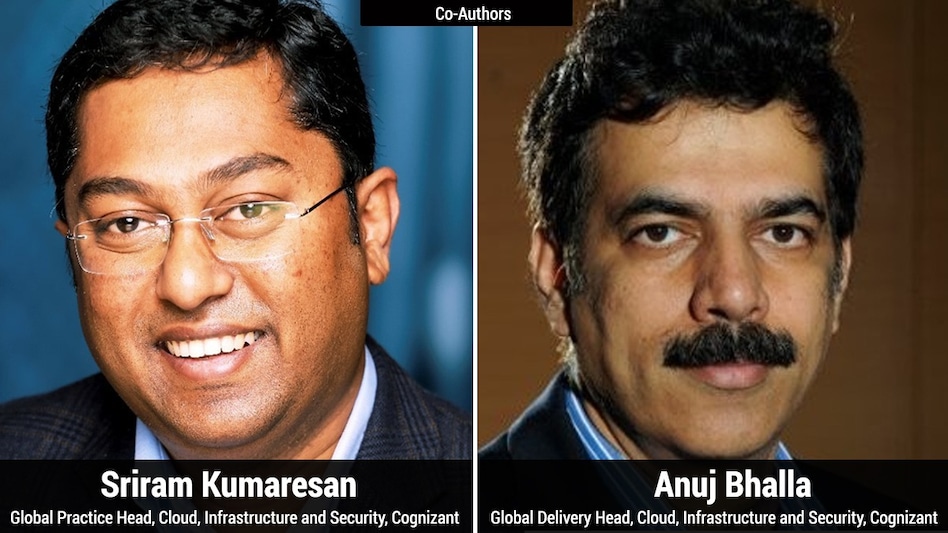 Co-authors: Sriram Kumaresan, Global Practice Head, Cloud, Infrastructure and Security, Cognizant, and Anuj Bhalla, Global Delivery Head, Cloud, Infrastructure and Security, Cognizant
 ‘Welcome the decision wholeheartedly’: Shapoorji Pallonji on RBI’s decision on Tata Sons listing; full text
 NSE IPO: India's largest exchange gets 55% subscription on Day 2 so far; NIIs, employee portions fully booked
 NSE IPO, Hero Motors IPO, SS Retail IPO, Jindal Supreme IPO: GMP of four ongoing issues rises up to 32%
 ‘An Indian consumes 1/10th of an average American’: Amb Kwatra says energy security comes first
 UPI MDR: BharatPe distances itself from Ashneer Grover's remarks, says UPI to remain free for consumers
 Midcap Stocks To Auto & Metals: Where Investors Can Find Market Opportunities Amid Earnings Growth
 What To Watch This Weekend? 5 OTT Picks From Lust Stories 3 To Zakir Khan’s Papa Yaar
 From Putin To Meloni: World Leaders Send Birthday Wishes As PM Modi Turns 76
 Tata Sons Board Votes To Bring N Chandrasekaran Back As Chairman For 5 Years
 Corporate Health Insurance Vs Retail Policy: Why You Need Personal Health Cover Too
 IndiGo shares rise 2% as Jefferies retains Buy call, sees 20% upside
 Bharat Electronics wins additional orders worth Rs 648 crore, check stock reaction
  Elevate Campuses IPO opens Sept 23: Check price band, key details, business model, risks and more
 NSE IPO: Nirmal Bang and Sparks say 'Subscribe', cites structural growth potential
 A kill switch won’t save us from rogue AI, tech leaders say amid growing concerns


