


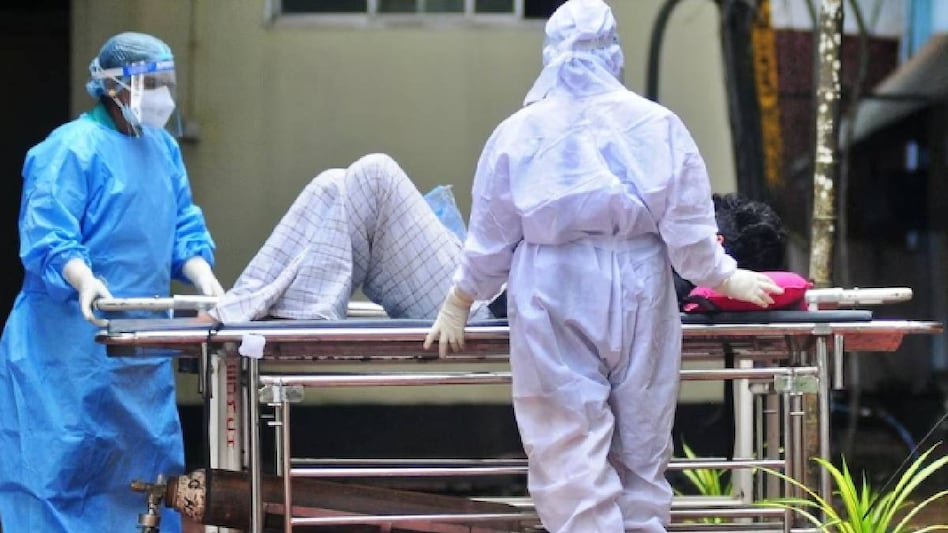
 West Bengal's first Nipah virus death confirmed: Nurse succumbs to complications
A 25-year-old nurse died on Thursday at a private hospital in Barasat, North 24 Parganas district, due to complications arising from a Nipah virus infection. This marks the first fatality from the virus in West Bengal in recent history. While health ministry sources clarified that the death could not be entirely attributed to the Nipah virus, they acknowledged that the infection triggered complications that led to her decline.
The nurse had tested positive for the Nipah virus in December, along with another member of the nursing staff. However, despite testing negative for the virus in recent weeks, her health remained critically compromised. She had been under intensive treatment for several weeks.
Hospital officials reported that the nurse had been in a prolonged coma, which weakened her immunity, and she later developed a lung infection. Although she had been removed from ventilator support at the end of January, her condition worsened in early February, and she was placed back on the ventilator on Wednesday. Sadly, she passed away from cardiac arrest around 4 p.m. on Thursday.
An official explained, "Though she had recovered from the Nipah infection, she was suffering from multiple complications."
The National Centre for Disease Control (NCDC) confirmed two cases of Nipah virus in the state: one male nurse who was discharged in January after recovery, and the 25-year-old nurse who passed away.
The Union Health Ministry had earlier acknowledged that one of the two Nipah-positive nurses, critically ill and under intensive care, died due to cardiac arrest. In response to these confirmed cases, the central and state health agencies initiated comprehensive public health measures, as per established protocols. This included identifying and monitoring 196 individuals who had come into contact with the confirmed patients. These contacts were tested and found to be asymptomatic and negative for the virus.
While these efforts continue, the Union Health Ministry also urged the public and media to avoid spreading speculative or incorrect information about the virus and to rely on confirmed figures. The government emphasised the importance of rigorous surveillance and timely intervention to prevent any further spread.
The WHO identifies Nipah virus as a zoonotic disease, transmitted primarily from animals to humans, but also through contaminated food or human-to-human contact. It poses significant health risks, with the virus capable of causing severe encephalitis and other neurological complications.
(With inputs from PTI and Tapas Sengupta)

 Exam reforms: Tech titan Nandan Nilekani picked by PM Modi to fix national public examination system
  'Tax officers struggled for own land': Nirmala Sitharaman slams laidback attitude of govt depts
 CBDT issues new crypto reporting guidance: No new tax, but exchanges must track and report all transactions
 Did Cockroach Janta Party's 'Chalo Sansad' 2.0 threat trigger Dharmendra Pradhan's resignation? What we know so far
 'Will discharge my responsibilities with complete humility': Pralhad Joshi after being appointed Education Minister
 AI Data Centers, Aerospace & Gas Turbines: What's Powering Indo-MIM's Future Growth?
 Best Healthcare Stocks: Gaurang Shah's Outlook On Apollo Hospitals, Fortis & The Manipal Health IPO
 Is Indo-MIM's IPO Valuation Justified? Here's Why The Company Sees Strong Growth Ahead
 Treasury Bills Explained: Why T-Bills Are One Of The Safest Short-Term Investment Options
 FDs vs Markets: Where Should You Keep Your Short-Term Money?
 Gland Pharma stock: Price target of Rs 3,250 likely in medium term, says analyst
  Metal recycling stocks to buy: Gravita, Pondy Oxides, Jain Resource among top picks
 TRIL shares: Should you average the falling stock? Here's 'fixed and final' stop loss
 Adani Power: 45 GW target, Rs 2 lakh crore capex plan among conference call highlights
  ITC Hotels, Chalet, Ventive, IHCL, SAMHI: Hotel stocks to buy despite travel disruptions
 'Ashamed of it...': Manoj Muntashir calls Adipurush his biggest mistake, seeks country's forgiveness Exam reforms: Tech titan Nandan Nilekani picked by PM Modi to fix national public examination system 'Tax officers struggled for own land': Nirmala Sitharaman slams laidback attitude of govt depts
 Delhi targets traffic bottlenecks on Aruna Asaf Ali Marg with ₹1.97 crore elevated road studyAI Data Centers, Aerospace & Gas Turbines: What's Powering Indo-MIM's Future Growth?









