









 Former NITI Aayog Vice-Chairman Arvind Panagariya

 Former NITI Aayog Vice-Chairman Arvind Panagariya
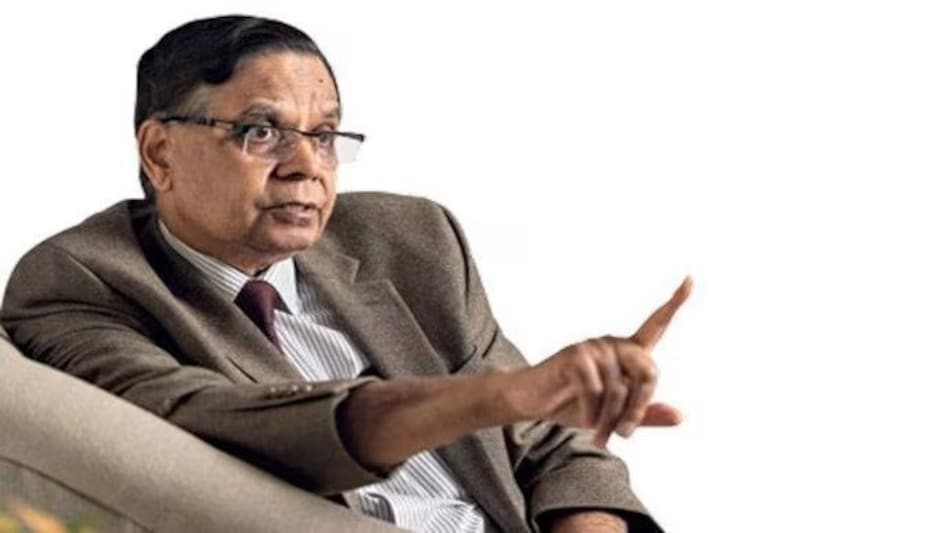
Former NITI Aayog Vice-Chairman Arvind Panagariya has revealed why he changed his stance on India's trade with China, which enjoys a massive trade surplus with New Delhi. In an interview, the noted economist said that while he had been arguing for India to join the Regional Comprehensive Economic Partnership (RCEP), the Galwan clash persuaded him that "China could no longer be fully trusted as a trading partner".
"In practice, politics also plays an important role in our decisions on international trade," he said in an interview with Moneycontrol. "In the past, I have written multiple times arguing the case for India to join the RCEP - a free trade agreement (FTA) among 15 Asian countries, including China."
Panagariya, the chairman of the Sixteenth Finance Commission, said that his case for India to join the RCEP was based on the benefits of trading freely within a large market, thus taking advantage of both competition and scale economies. "However, the Galwan Valley incident persuaded me that China could no longer be fully trusted as a trading partner."
"Therefore, in writings since Galwan, I have argued for distancing our trade relationship from China," he said. But he added that it should not be done by imposing barriers on imports as this will inflict on India a disproportionately large economic cost by denying domestic producers access to many critical inputs at competitive prices.
"Instead, we should achieve this goal by getting closer to like-minded countries by forging free trade relationships with them. This means bringing the FTA with the United Kingdom to a quick conclusion and proceeding immediately to negotiate a similar agreement with the much larger European Union," the economist said.
Panagariya, currently a professor of economics at Columbia University, said that an FTA with the UK and European Commission would be beneficial economically and geopolitically. "Economically, because it exposes our producers to greater competition while giving our consumers access to cheaper imports and geopolitically because it shifts our trade away from China towards friendlier countries," he added.
The Galwan clash refers to a deadly fistfight in June 2020 between Indian and Chinese soldiers, in which 20 Indian troops were killed. Since then, the bilateral relationship between New Delhi and Beijing has not been normal even as several rounds of talks have been held to resolve the dispute at several friction points along Eastern Ladakh.
In December 2022, Panagariya had said that cutting trade with Beijing would amount to sacrificing India's potential economic growth. "Engaging China in a trade war at this juncture will mean sacrificing a considerable part of our potential growth...purely on economic grounds, it will be unwise to take any action in response to it (transgressions on the border)," the eminent economist told PTI.
The professor further said that both countries can play the trade sanctions game but the ability of a $17 trillion economy (China) to inflict injury on a $3 trillion economy (India) was far greater than the reverse. "Now there are some who want trade sanctions on China to 'punish' it for its transgressions on the border...if we try to punish China, it will not sit back, as amply illustrated by its response to sanctions by even the mighty United States," he observed.
 After WhatsApp, Telegram and Signal face government scrutiny over ‘usernames’ features
 'Iran agreed to just about everything': Trump claims deal close as Doha talks skip nuclear issue
 Mojtaba Khamenei unlikely to attend father Ayatollah Ali Khamenei’s funeral: Iranian representative
 Virtual digital assets like cryptocurrency a threat to economy: RBI tells parliamentary panel
 US alerted Iran of Israeli plot to assassinate top peace deal negotiators: Report
 EPF Overhaul: Voluntary Contributions Above ₹1,800, New Withdrawal Rules Explained
 Raipur Demolition Row: 90+ Families Homeless For MLA Colony, Villagers Protest Amid Tears!
 Market Volatility Ahead? Fund Manager Sunil Shah Reveals His Portfolio Strategy & Top Investment Bet
 Silver Supply Crisis In India? Physical Market Premiums Rise As Imports Slow
 Kunal Shah Says, Gold May Rally Ahead After Recent Correction | Check Upside Potential
 Bank of Baroda shares slide 8% in two days: What's weighing on the stock?
 Nestle India announces special dividend FY26: Check dividend amount, record date
 Coforge, Mphasis, Hexaware, TechM, LTM, Infosys, TCS among Nuvama's top IT stock picks
 KPIT Technologies shares: Price targets and earnings expectations post weak Q1 guidance
  PC Jeweller shares extend gains: Here's why the stock is rising