


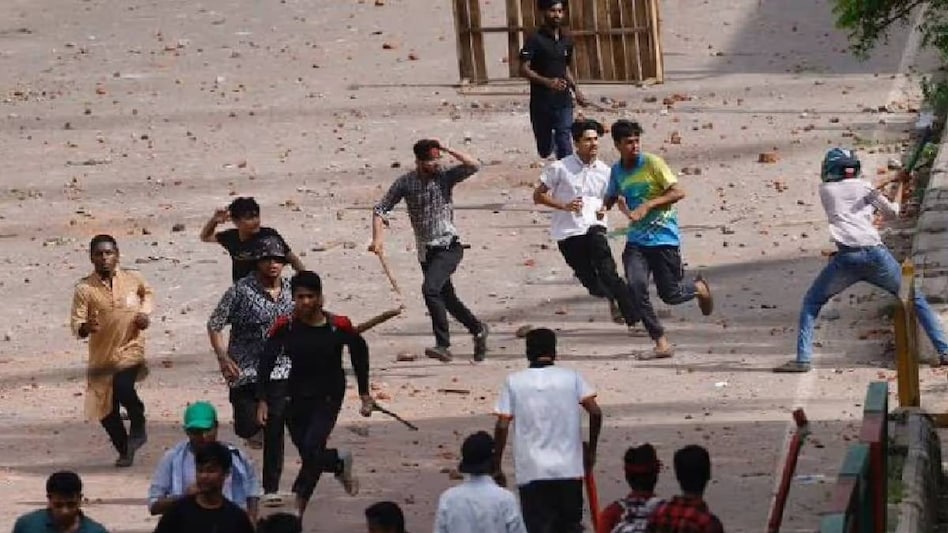
 The advisory was issued in response to recent violent clashes between students and police in Dhaka, following the Bangladeshi government’s decision to close all public and private universities.
 Indian High Commission has issued an urgent advisory for Indian citizens and students in Bangladesh to avoid non-essential travel and minimise movement over the escalating unrest in the country.
The advisory was issued in response to recent violent clashes between students and police in Dhaka, following the Bangladeshi government’s decision to close all public and private universities.

 Crude oil could crash to $40 after Iran war ends, says US Treasury Secretary Scott Bessent
 600% dividend stock: Check dividend per share, record date, payment date and other key details
 'Pack and go' order: Tata Chemicals claims full regulatory compliance as Kenya demands exit from Lake Magadi
 What is Pickaxe Mountain? Inside the Iranian nuclear site being threatened by Trump
 IPO rush next week: 11 issues eye to raise Rs 7,055 crore; 6 IPOs to open on same day, check details
 Midcap, Smallcap Funds: Strong Profit Growth Could Keep Investor Flows Robust, But Valuations Matter
 Travel Insurance Guide: Where To Buy, How Much Cover You Need & When To Get It
 MINI Countryman C Tech Overview | Tech Gear EP 17 | ASUS Jelly75 Keyboard | Business Today
 From LIC At 70 To 100: CEO Doraiswamy’s Big Promise To Policyholders & Shareholders
 LIC CEO On Changing Insurance Needs, Younger Customers & The Rise Of Retirement Planning
 IPO rush next week: 11 issues eye to raise Rs 7,055 crore; 6 IPOs to open on same day, check details600% dividend stock: Check dividend per share, record date, payment date and other key details
 56% rally in TBZ stock: Upper circuit led to record high today; here's why
  Sensex, Nifty snap four sessions of losing streak; RIL, Tata Steel, Bajaj Finance boost sentiment
  Physicswallah shares jump 9% as Motilal Oswal sees 66% upside
 From chai & maggi to lifelong bonds: BITS Pilani VC shares touching story of campus legend PappujiMidcap, Smallcap Funds: Strong Profit Growth Could Keep Investor Flows Robust, But Valuations Matter
 Monsoon update: These Delhi-NCR areas to see heavy rainfall today. Check latest detailsCrude oil could crash to $40 after Iran war ends, says US Treasury Secretary Scott BessentTravel Insurance Guide: Where To Buy, How Much Cover You Need & When To Get It












